Mobility as a Service: the future of corporate mobility
How businesses are learning to think differently about mobility
Our attitude to mobility is changing. Businesses recognise the need for more sustainable mobility and are giving employees more and more opportunities to use mobility as a service. This gives employees the chance to make more informed choices about which modes of transport they use. What is more, companies that have yet to do so will eventually price themselves out of the market.
The way we approach mobility is changing rapidly. The shift to electric vehicles and rising petrol and diesel prices are contributing factors. Mobility as a Service (MaaS), a concept that combines different forms of mobility, is becoming increasingly important. It is seen as a key part of the solution in the fight against climate change and the growing mobility problem.
A broad church
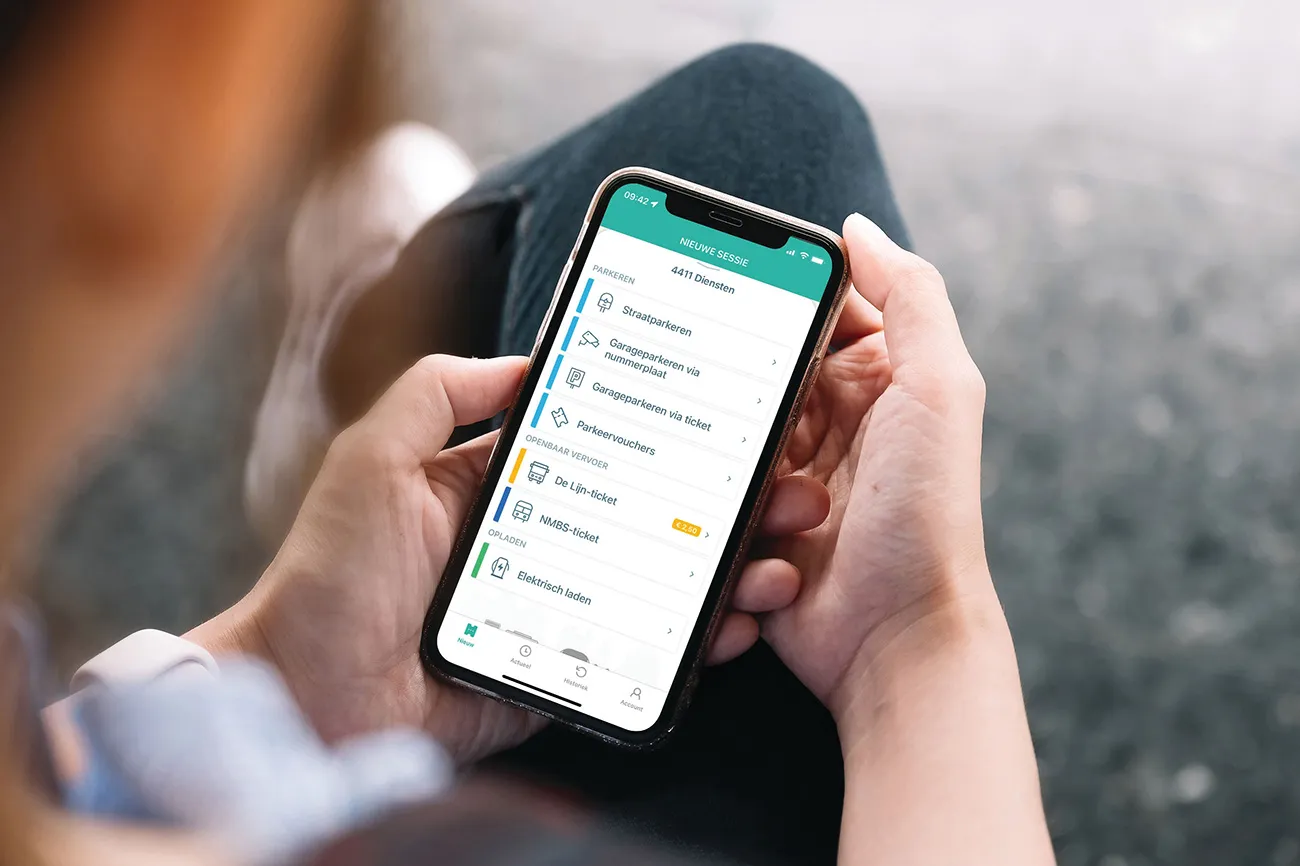
MaaS is an umbrella term encompassing many elements, but its key building blocks are that the offering is always made available through a digital platform or app, and that costs are calculated according to the time a vehicle is used or the distance travelled. In practice, this means that MaaS users choose the specific modes of transport that best meet their mobility needs at any given time: their own car, public transport, a shared car, bicycle or e-scooter, a taxi, and so on.
The way such an as-a-service concept is delivered therefore varies according to the individual user’s needs. “Someone who delivers products by lorry and uses the 4411 app to pay for parking in different cities is also using a simple form of MaaS, for example,” says Kirsten Velghe of Ghent-based smart mobility service provider Be-Mobile, best known for the 4411 app.
The ideal context: business
For private individuals, it does not (yet) go beyond that. “People have been thinking for years about a viable MaaS business model for private individuals, but it has proved difficult in practice. This is mainly due to the poor digital maturity of our country’s public transport operators: De Lijn, NMBS, TEC and MIVB do not yet offer products that would make it attractive for MaaS providers to target the consumer market,” says Koen Van De Putte, Managing Director of mobility provider Olympus Mobility.
The picture is entirely different at company level. The conditions for a successful business model are clearly in place today. As well as the need to focus on sustainability, companies are facing a sharp rise in new forms of mobility, a government that is actively promoting MaaS, particularly through the now successful mobility budget, and a growing number of young employees who are less attached to cars.
Companies that are not looking at this kind of mobility offering are missing out on opportunities. They are missing out on tax incentives, while such an offering also has significant potential to strengthen their employer brand and attract young talent. “The current context makes it almost impossible for a company not to consider a new approach to its mobility policy,” says Van De putte.
The trend is clear
A number of new service providers have emerged to facilitate the shift to more sustainable mobility. Olympus Mobility offers a MaaS platform for both employees and employers, accessible via an app, which brings together the associated administration and invoicing. The success of these young companies is a measure of the pace of the mobility transition. “Our clear growth figures not only show that we are doing a good job as a company, but also prove that there is a clear shift in attitudes in the business world,” explains Van De Putte.
Be-Mobile is seeing the same trend. “Although a company car remains an established perk for many, plenty of people consciously choose to commute by other means. Giving people options makes a big difference. The fact that 65,000 companies have already chosen to offer their employees different modes of transport through our app also shows how MaaS is becoming part of everyday life,” concludes Velghe.
Question about this story? Ask your question
Keep following this
Get an email when a new story is published. No account needed.
- ThemeAttracting and retaining people
- SubjectMobility