Mercedes-Benz CLA 250 e: refreshed and tech-savvy
Text Dieter QuartierImage Ilse Bauwens
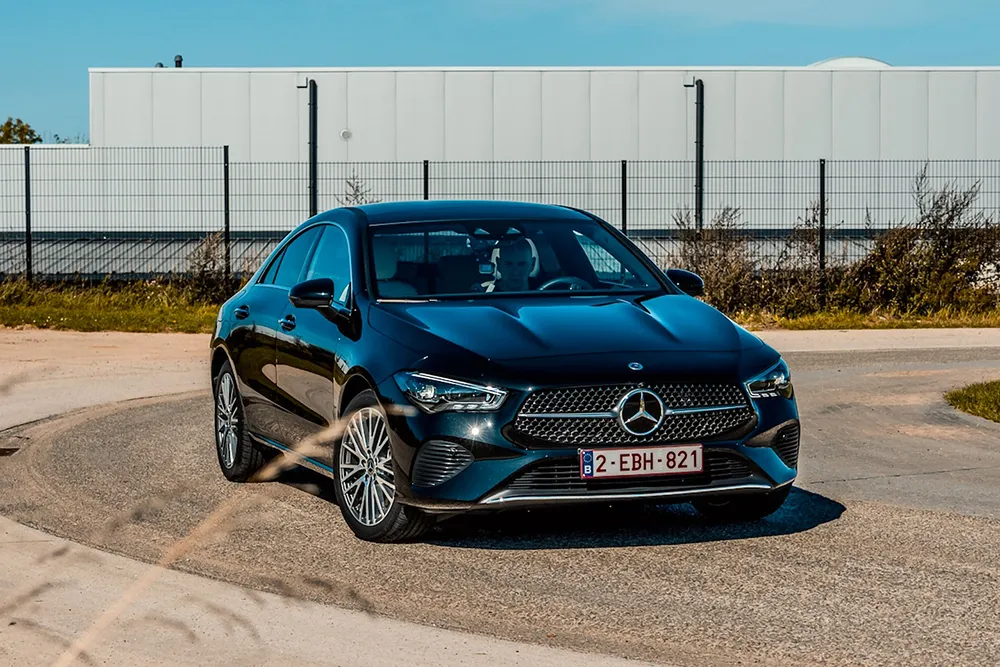
Facelift sharpens the four-door coupé’s looks and extends its electric range
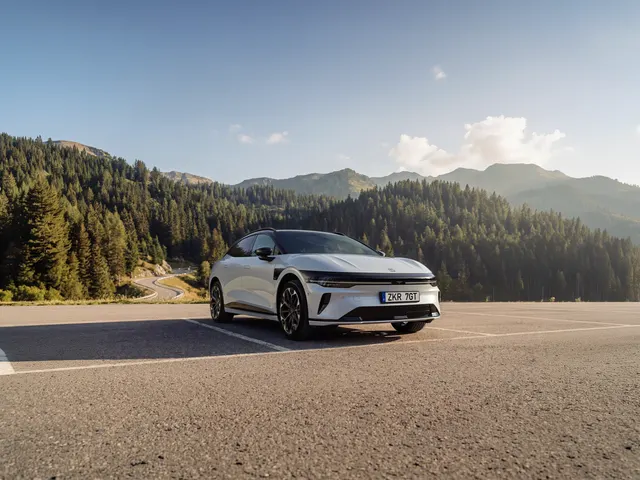
The elegant CLA sits between Mercedes’ A-Class and C-Class. Midway through its life cycle, it has had a nip and tuck and gained an expanded digital skillset. The 250 e plug-in hybrid also benefits from an upgraded electric motor and greater battery capacity.
The Star’s four-door coupé still makes an impression with its sleek profile. It’s no surprise, then, that Mercedes has limited the styling changes to a new front apron, an updated grille with a “star pattern” and a redesigned rear diffuser. Those in the know will also recognise the upgraded CLA by the revised graphics in its standard LED headlights.
You can now also have your CLA finished in the exclusive Hyper Blue or Spectral Blue. But you’ll need to opt for the Luxury Line or AMG Line: the Business Line is limited to the no-cost Digital White and the optional Cosmos Black, Iridium Silver and Mountain Grey. Dull, but probably what 90% of customers choose … Not least because company car policies and concerns about residual values often leave them little choice.
Better, but not perfect
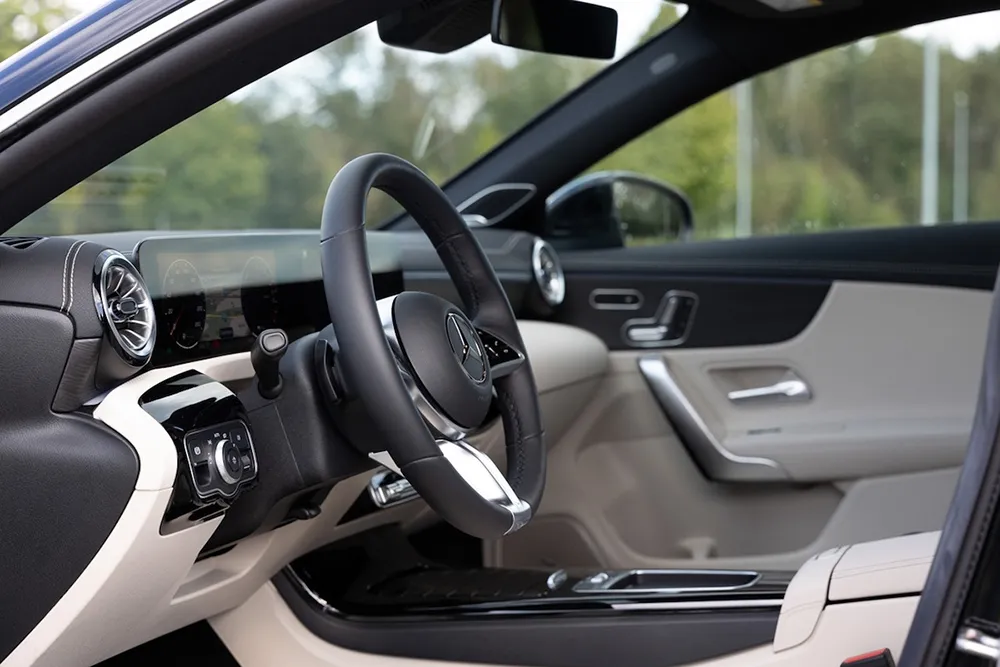
Mercedes has also given the interior a light makeover. The materials now feel more premium. To reduce production emissions, the CLA also makes greater use of recycled materials, without this being visible. Vegans and those with a strong environmental conscience can rest their bottoms on Artico synthetic leather, which looks surprisingly authentic and is available in macchiato beige, grey or black.
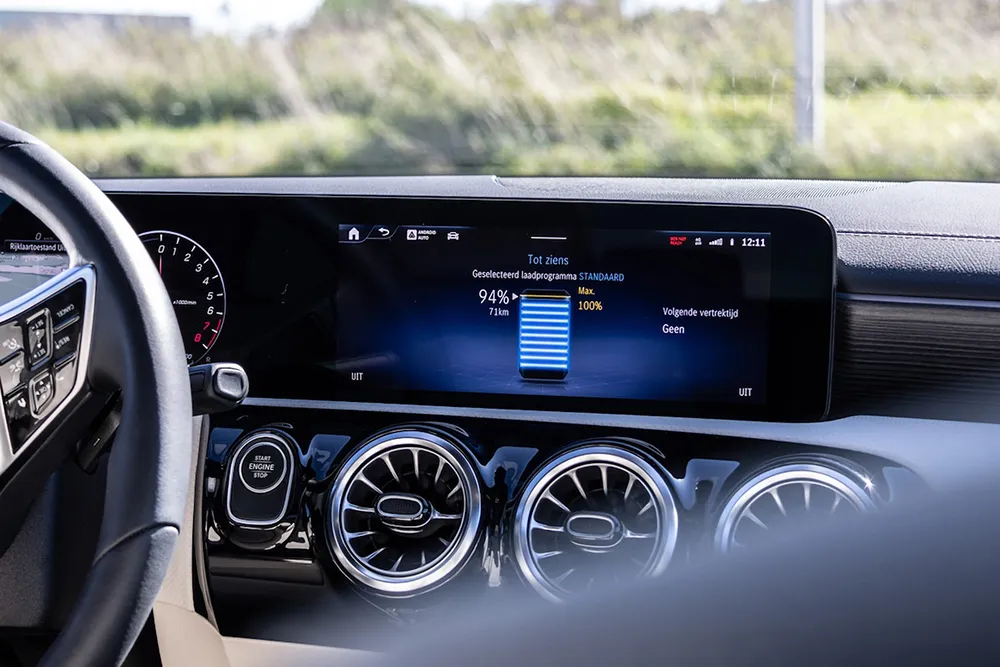
The interior’s main highlight is the MBUX display, which stretches across the left half of the dashboard. It can be extensively personalised and continually expanded with new functions thanks to over-the-air updates. The navigation module does its job well and provides clear visual directions, especially if you pay extra for the Augmented Reality feature, which projects dynamic arrows onto live camera footage.
The complex steering-wheel controls remain a source of frustration. You’re supposed to operate the driver display with your left thumb and the infotainment system with your right. Even after a week, you still haven’t got the hang of it. Back to the drawing board, Mercedes!
More ‘e’, less CO2
The 250 e’s plug-in hybrid powertrain has also been revised for the facelift. The traction battery still has a capacity of 15.6 kWh, but Mercedes claims that more of this can now be used in practice. In theory, you should be able to cover 78 kilometres with zero emissions. In reality, expect an average of 60. It can be charged at 11 kW.
Mercedes has also boosted the electric motor’s output by 5 kW to 80 kW, so the petrol engine should, in principle, need to work a little less often. It remains a 1.3-litre four-cylinder producing 120 kW, which does its job economically, if not always discreetly. Even with a flat battery, you can get by on 6 l/100 km. The eight-speed DCT is responsive and can be tailored to your preferences using the drive mode selector.
Balanced, but restrained, handling
The petrol and electric motors work together seamlessly for the most part, but at low speeds you may occasionally feel a slight judder. The brake pedal is also difficult to modulate. At first, nothing happens, so you press it further, only for the car to come to a sudden stop. It’s best, then, to make as much use as possible of regenerative braking from the electric motor. This works well in adaptive mode, which proactively slows the car as it approaches a roundabout, a bend or the vehicle ahead. With combined output and torque of 160 kW and 450 Nm respectively, the CLA 250 e can complete the traditional sprint in 7.6 seconds. The suspension prioritises comfort, but the pleasant steering feel means keen drivers won’t feel short-changed.
Technical specifications
- Powertrain 1.3-litre 4-cylinder petrol engine + electric motor
- System output 160 kW (218 hp)
- Transmission 8-speed automatic, front-wheel drive
- Electric range 78 km (WLTP)
- CO2 emissions 19 g/km (WLTP)
- On-board charger 11 kW (three-phase)
- Starting price € 52,541 (Business Line)
Question about this story? Ask your question
Keep following this
Get an email when a new story is published. No account needed.
- SubjectMobility