Businesses can accelerate the growth of shared mobility
Text Bavo BoutsenImage Autodelen.net

Shared mobility, where users share the vehicles they use for their journeys, is on the rise. This is cause for optimism, as the trend offers many benefits for both users and society. To help it gain further traction, careful thought needs to be given to the target audience. Some bold choices by businesses could set the tone.
The rise of shared mobility has clearly reshaped the streetscape in cities in recent years. A few years ago, shared e-scooters and bikes were still an occasional rarity. Today, they can be found on almost every street corner in major cities. The same trend is taking place with car-sharing. In 2023, car-sharing platform Cambio surpassed 1 million journeys for the first time. Its distinctive cars with red roofs can now also be found in more than 100 cities and municipalities.
Market tensions
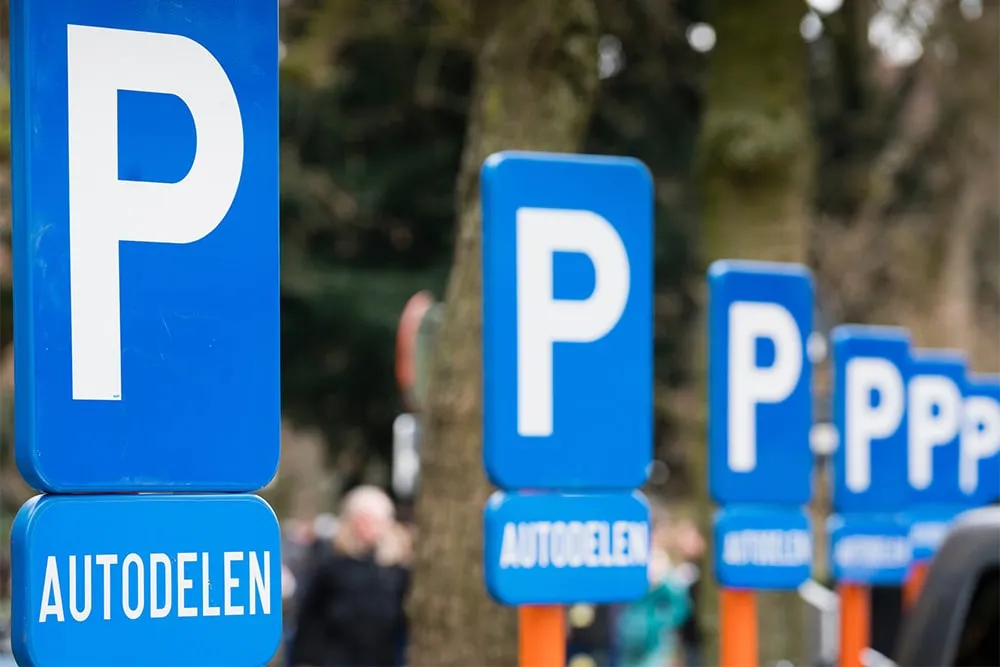
This growth reflects the broader shift towards a more climate-friendly society. “There is no doubt that shared use is part of the solution and that more and more people are recognising this,” says Jeffrey Matthijs, director of network organisation Autodelen.net. “In Brussels, for example, 10 per cent of driving licence holders already use car-sharing or have a subscription with a shared-mobility provider.” At the same time, some forms of shared mobility are also facing opposition. “What is happening now with shared bikes, and especially shared e-scooters, is typical of the market tensions involved in the transition from a linear to a circular model,” explains Lieven D’hont, founder of Wij Delen vzw, an organisation campaigning for greater shared use in our society. “Providers are primarily looking to gain market share. They do not handle the materials with care, so consumers do not either. Collectively, we still have a lot to learn here.”
But the transition is under way, and policymakers appear to have recognised this too. “Our review of all the political parties’ manifestos ahead of the elections showed that every party cited shared mobility as an objective,” says Matthijs. “This builds on the vision of recent years, with initiatives such as the so-called hoppin-points and the basic accessibility policy. Shared use has a crucial role in all of them.”
Businesses as a potential catalyst
Shared mobility is likely to receive a fresh boost in growth in the years ahead. Businesses hold the key. Jeffrey Matthijs says: “Some bold choices could set the tone. For example, we believe that the mobility budget should become the norm, rather than simply replacing company cars or salary cars, as it does now.”
The more businesses do, the greater their impact on the image of shared mobility. “The great strength of car-sharing is that it appeals to both the left and the right of the political spectrum. The left supports it for its environmental benefits, while the right is attracted above all by the extra opportunities it offers to use more expensive and exclusive cars,” says Matthijs.
Examples of initiatives that have already succeeded in this respect include Claus2you and ValckenierShare, launched by Claus garage in Zonnebeke and Valckenier in Aalst respectively. “Both garages realised a few years ago that the traditional garage business model would come under increasing pressure. They deliberately chose to enter this market.”
Inclusion must be the starting point
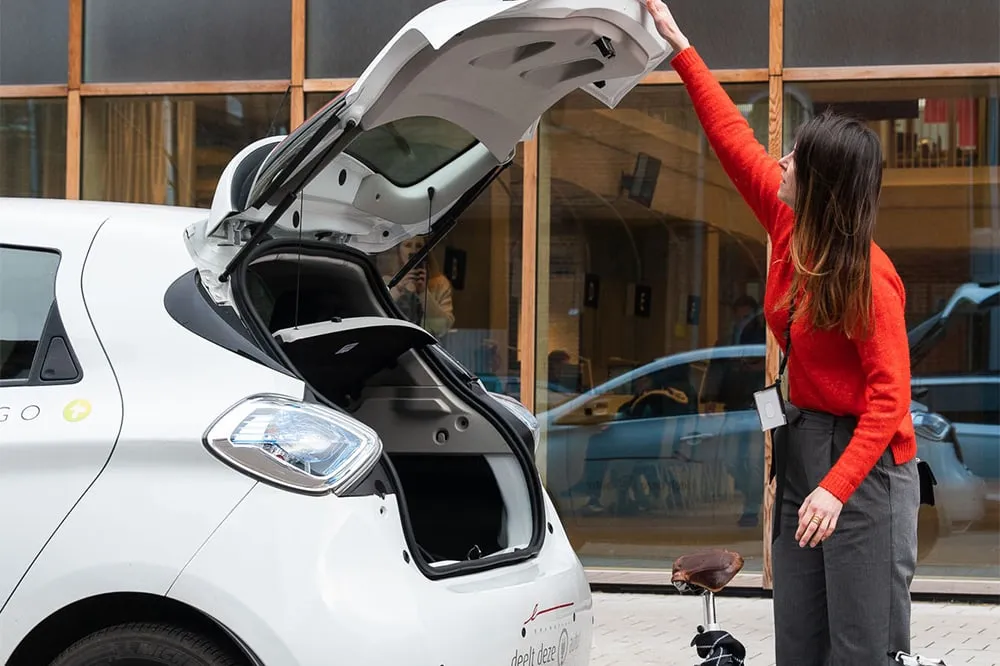
However, shared mobility should not be limited to businesses. There is also significant potential among groups outside the middle class. “Although shared mobility is currently primarily an urban phenomenon, it does not reflect the diversity of our cities,” says Hassan Al Hilou, founder of CAPITAL vzw, a social organisation working on diversity and inclusion.
“By failing to pay attention to diversity, shared-mobility providers are missing out on significant economic opportunities,” Al Hilou continues. “So you need to find ways to remove the initial barriers for people with less economic clout.”
“In Ghent, for example, a pilot project is under way in which the city takes on that role by providing financial support and personal guidance for people’s first journeys with a car-sharing platform,” adds Jeffrey Matthijs. “In our new policy plan, which takes effect next year, inclusion will have a much more prominent place, allowing us to launch more initiatives of this kind.”
Question about this story? Ask your question
Keep following this
Get an email when a new story is published. No account needed.
- SubjectMobility