UGent and Imec to build an AI Campus Hub in Zwijnaarde
Text Bavo Boutsen en Eron BerishaImage UGent
“This must become a crucial link in Europe’s AI strategy”
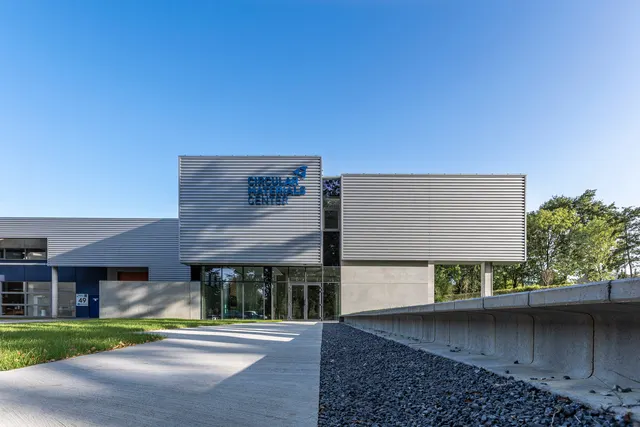
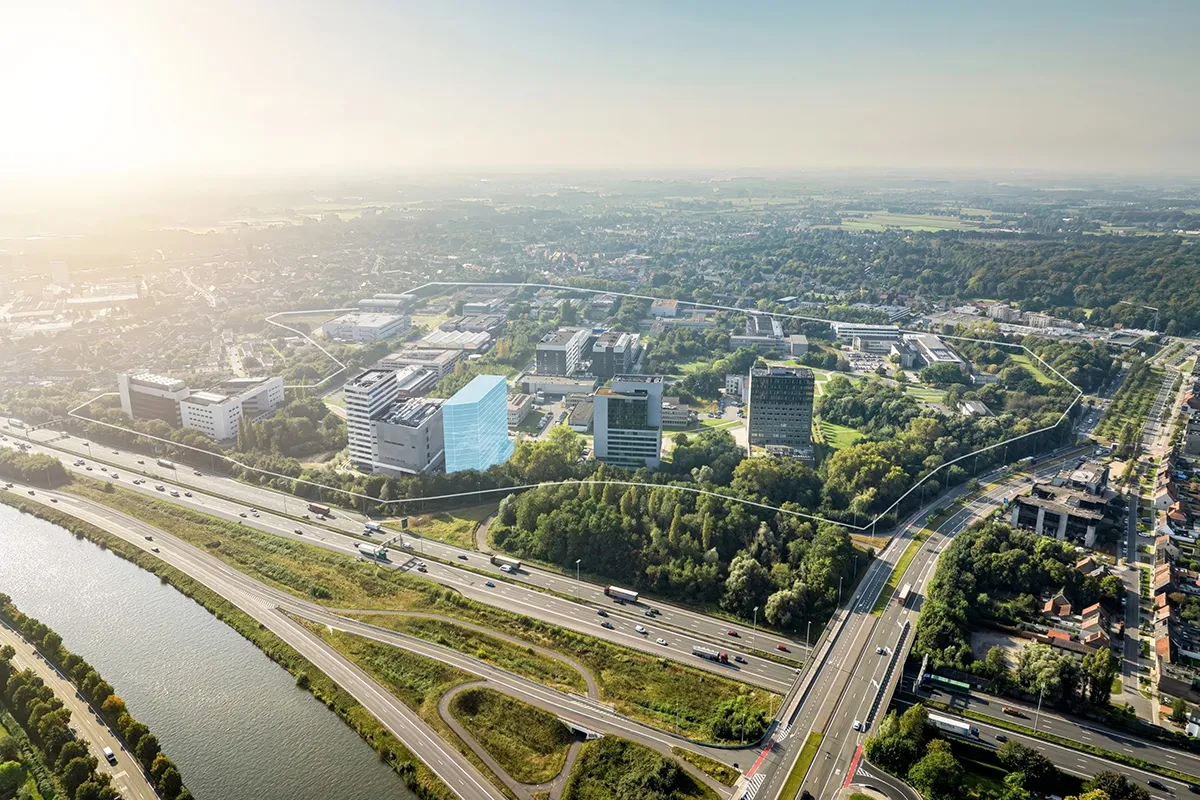
From 2027, UGent’s science park in Zwijnaarde will be home to the brand-new AI Campus Hub. The complex is set to become the epicentre of Flanders’ AI ambitions and take Ghent’s existing technology ecosystem to the next level. By bringing academia and industry together under one roof, the aim is to develop practical, scalable AI applications.
The rapid evolution of AI in recent years has affected everyone. It has created a new reality and is reshaping the technological, social and geopolitical forces shaping our society. Yet Europe is still lagging behind in this evolution. That is why efforts are under way to find ways for our country to take action at both national and regional level and raise its profile.
“We must above all realise that we are only at the very beginning of AI. If we want to create truly intelligent AI, we need 100 times more computing power,” says Wim De Wispelaere, Business Developer at UGent/imec. He is quick to highlight the valuable assets Flanders already has. “We have many leading researchers in our universities and research institutions. In addition, we have a highly developed landscape of innovative AI startups, whose work is also made possible in part by financial support from organisations including VLAIO, the Industrial Research Fund IOF and Flanders AI Research.”
For now, Europe’s Achilles heel in this story is its lack of scale-up. In other words, much of today’s groundbreaking research is not being translated into practical applications capable of gaining a foothold in the market on a large scale. “The AI Campus Hub, funded by Alides with support from the EU, Flanders, the province of East Flanders and the city of Ghent, aims to change that. There is a need for a central hub to inspire and encourage the adoption of AI in business, enabling the ecosystem to make significant progress in developing practical applications and scaling them up,” De Wispelaere continues.

Working side by side
“Flanders has a great many players working in AI across the entire value chain. To support them, we need to enable them, quite literally, to cross paths and learn from one another,” says Professor Lieven De Marez, who is also affiliated with UGent and imec. “Our ambition is to create one of Europe’s largest concentrations of AI researchers under one roof. There will be around 1,000 data scientists in total. 75 per cent will come from industry, with the remaining places going to academic researchers,” adds De Wispelaere.
Energy efficiency will certainly be a key focus at the hub. “This is undoubtedly one of the hot topics. Within our ecosystem, we want to address it at both the nano level, by exploring more efficient chips, and through software optimisation. DeepSeek technology shows that performance improvements can deliver huge gains,” they say.
Political momentum
Ghent already has a strong, thriving ecosystem of AI startups, including the flourishing Wintercircus. “This is driving growing demand for infrastructure, which we want to meet. In time, we will build a fully fledged AI community and consolidate Ghent’s position as a market leader. That is why we are also specifically targeting established players. Now that the permits have been secured and preparations for construction have begun, we are aiming to open the new hub at Tech Lane Ghent Science Park in 2027,” say the UGent/imec representatives.
The political momentum around AI is also providing a tailwind. “During the previous legislative term, Europe did a good job on regulation and protecting citizens. That was necessary, but it is at least as important that the focus is now firmly on implementation, to strengthen economic clout and competitiveness. One example is the ambition to build four AI gigafactories in Europe. This shows that there is a clear recognition that we are at a turning point and must be bold in exploring practical AI applications across a wide range of fields. Ghent’s AI hub must become a crucial link in our European AI strategy,” concludes Wim De Wispelaere.
Question about this story? Ask your question
Keep following this
Get an email when a new story is published. No account needed.
- SubjectIndustry