Scandinavian style is in demand among Flemish businesses
Text Anse KeisseImage Kinnarps
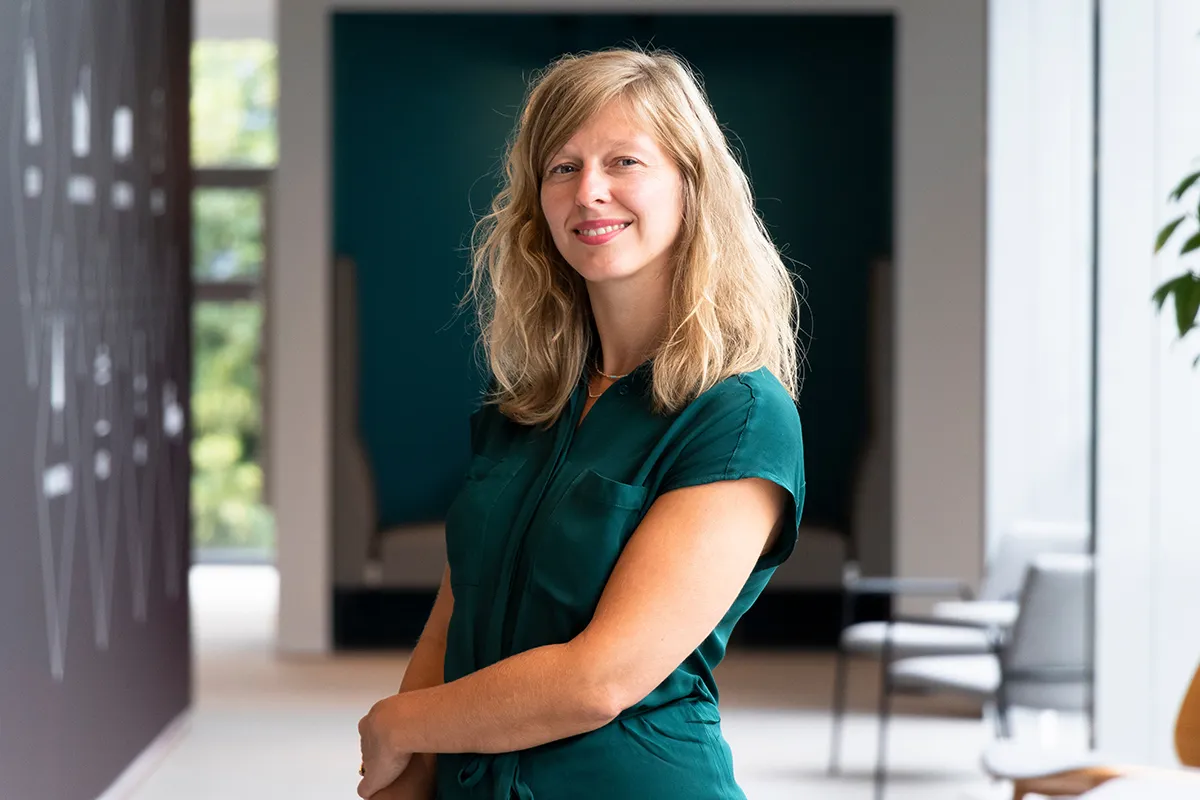
“Workplace design has a major impact on wellbeing”
The way we work has changed significantly in recent years. Flexibility, wellbeing and sustainability are now central to workplace design. Swedish office design company Kinnarps has long been a pioneer in this field. The company has been active in Belgium since 1993, with a clear mission: not simply to supply furniture, but to provide a complete solution for a future-proof workplace.
Kinnarps was founded in Sweden in 1942 by Jarl and Evy Andersson. What began as a modest furniture manufacturer has grown over the years into an international group operating in more than 40 countries. The family-owned company remains true to the values on which it was founded: a focus on quality, sustainability and human-centred design. In Belgium, the company operates from Wemmel, with a team of 35 employees.
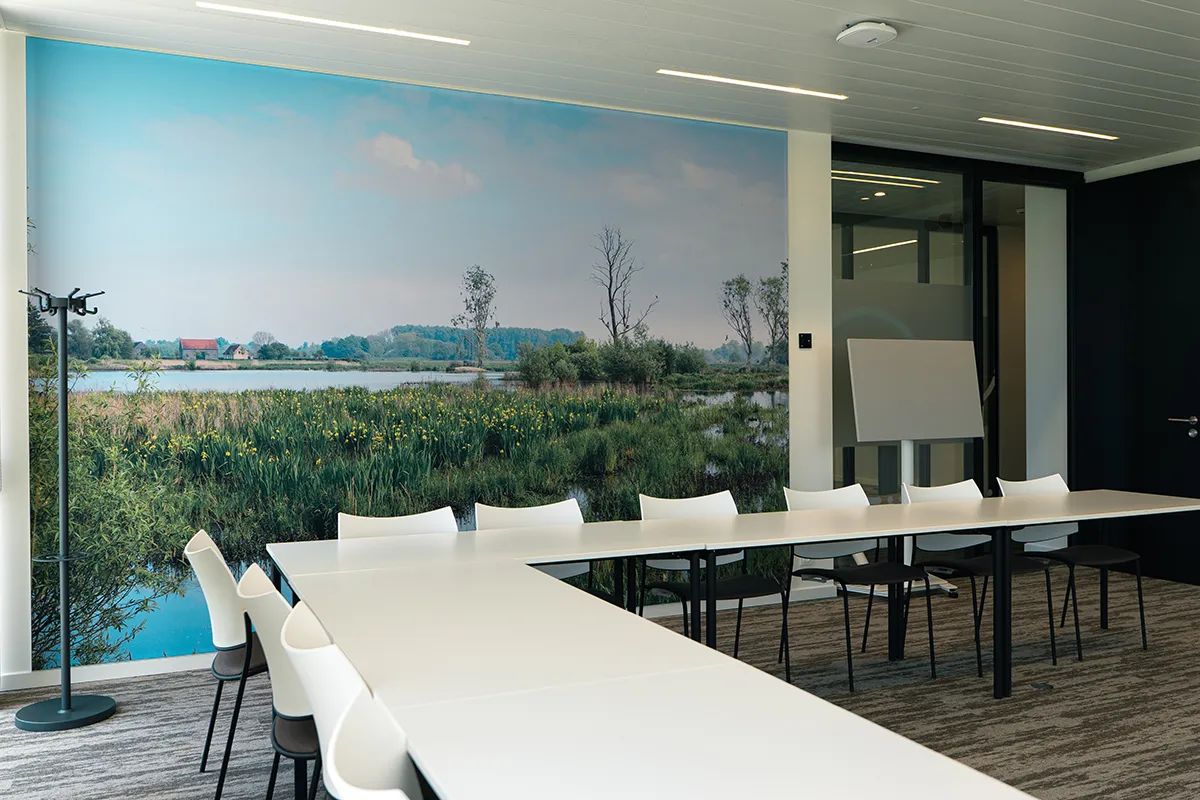
Holistic ergonomics
“We want to be more than a supplier,” says Katrijn Vekens, marketing manager at Kinnarps België. “We see ourselves as a partner to our clients. That means thinking with them from the outset of a new project about what the office should look like and how the company can best support its employees.”
A key concept in Kinnarps’ approach is ‘holistic ergonomics’. This vision goes beyond an ergonomic office chair or a correctly adjusted screen. “We look at the workplace as a whole. Lighting, acoustics and air quality all play a part, as do the social and organisational aspects of an office,” Vekens explains. “People need to feel good in their jobs, and the design of their workplace has a huge impact on that.”
That is why employees are involved in the design process through workshops and surveys. “Giving them a say from the start creates buy-in and results in a design that truly meets their needs.”
Sustainability in every detail
As a Swedish family-owned company, Kinnarps has always attached great importance to sustainability, from the choice of raw materials to packaging and transport. “Our office chairs, for example, are fully modular. Every part can be replaced, so a chair lasts for years,” says Katrijn Vekens. “Even production waste is given a second life, for example as acoustic panels or heating briquettes.”
Kinnarps also builds sustainability into every step of its logistics process. “We stack the furniture in our lorries, wrapped in blankets and separated by cardboard. We reuse those materials afterwards. This allows us to transport the furniture as compactly as possible, with no risk of damage. What’s more, a lorry can deliver more products in a single trip, significantly reducing the number of journeys.”
Biophilic design: bringing nature indoors
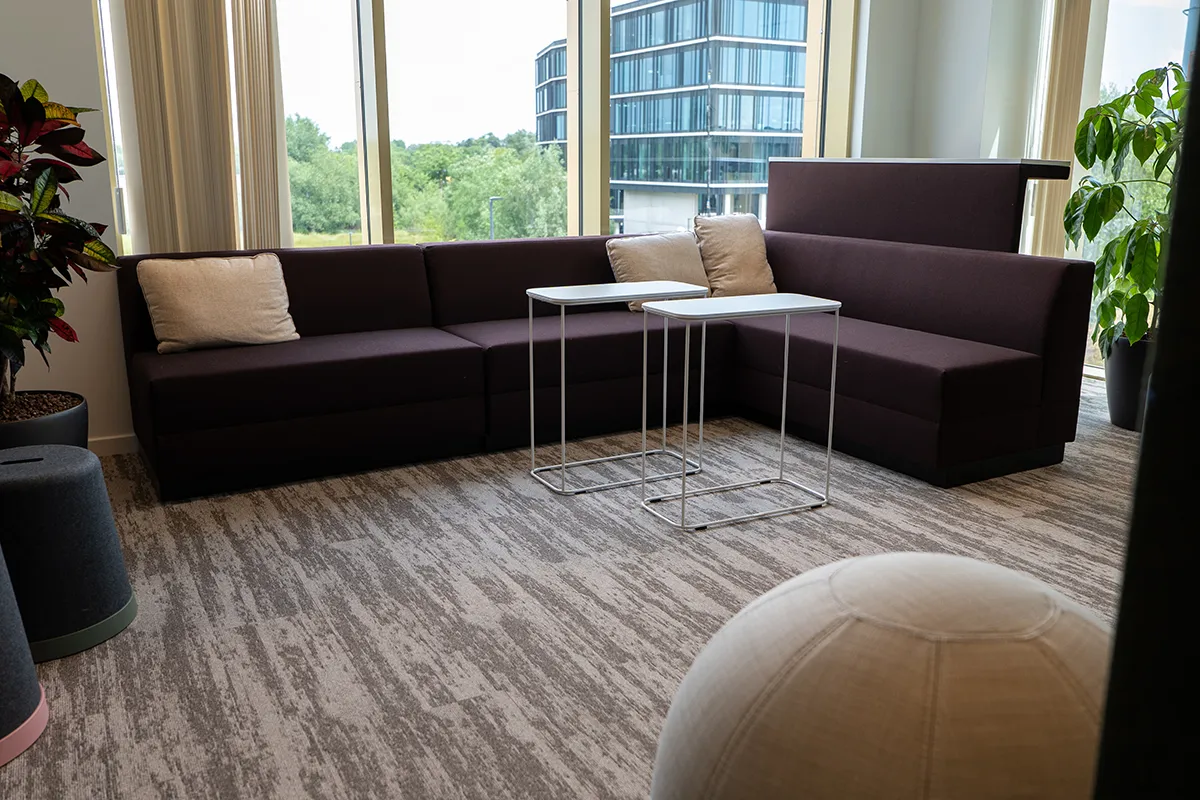
Alongside ergonomics and sustainability, Kinnarps sees biophilic design as an increasingly important pillar. This means deliberately incorporating nature and natural elements into office spaces. “We are seeing more and more natural materials, warm wood tones and plants in our projects,” says Vekens. “It creates a homely atmosphere and boosts employee wellbeing.”
In a recent office project for 140 employees of grid operator Fluvius in Ghent, the fit-out specialist provided a range of areas for focused work, meeting spaces and multifunctional rooms, tailored to collaboration, innovation and individual needs. Biophilic features, such as themes of air, water, forest and earth, create a sense of calm and define different zones. “Floor space is precious. We work with clients to find ways of using spaces efficiently and for multiple purposes. A cafeteria, for example, can also be used for informal meetings or gatherings with clients.”
A partner for the future
Kinnarps serves not only businesses and office environments, but also educational and healthcare institutions. Katrijn Vekens says: “The needs of a school, hospital or residential care centre are very different from those of a business. But the fundamentals remain the same: we design spaces where people feel good and can function at their best.” Since the coronavirus pandemic, businesses have been experimenting with hybrid working models and looking for ways to bring employees back to the office. “A flexible working concept is not right for every client,” Vekens concludes. “The most important thing is to listen to employees. That is the only way to create a working environment where people feel good and which will serve a company well over the long term.”
Question about this story? Ask your question
Keep following this
Get an email when a new story is published. No account needed.
- ThemeAttracting and retaining people
- SubjectIndustry