How is policy securing the future of industrial construction?
Efficient use of space is more relevant than ever
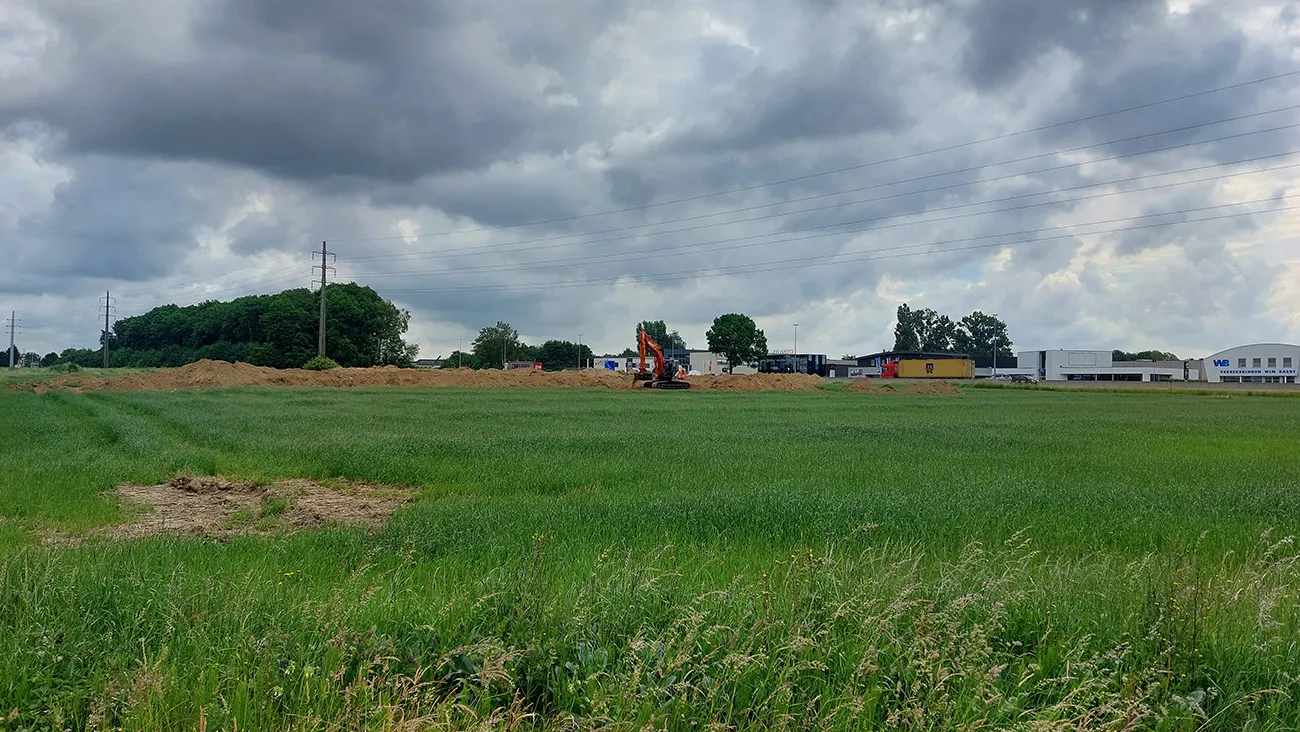
Continued demand for additional space for industrial construction and increasingly stringent rules governing the development of open space present a dilemma: where will businesses still be able to expand in the future? By focusing on making sites more sustainable and using space more efficiently, the various levels of government are seeking to create new opportunities: “This is a process that puts long-term needs first.”
The land set aside in Flanders for industry and business is gradually being built up. At the same time, demand for additional space for economic activity continues to grow. This is an indisputable reality, creating a tension that policymakers must find an appropriate response to.
As this issue has a far-reaching impact, all levels of government are involved. The provinces, for example, play a crucial role. Jean de Bethune (CD&V), West Flanders’ provincial executive for the economy and SME policy, says: “There is a clear need for new business parks. In West Flanders, for example, this need is estimated at 430 hectares. Together with the Flemish Government and the municipalities, we are investigating where they could be developed.”


“On the other hand, our provincial policy is very clearly geared towards making the best possible use of the space already allocated to business parks. To this end, West Flanders has developed two concepts: ‘saving space’ and the ‘business park of the future’. We have developed a long-term vision around these concepts,” says de Bethune. In practice, this means building upwards, providing more shared facilities, and paying greater attention to sustainable mobility and biodiversity.
“In this way, we will make existing sites as sustainable as possible. The same principles will also be applied to new sites,” says the West Flanders provincial executive. The same message is coming from East Flanders. “Floor area ratios are increasingly rising. Taller industrial buildings, multifunctional use and stacking different functions are now more than ever a reality,” says An Vervliet (N-VA), provincial executive for spatial planning and the economy in East Flanders.

Practical action on the ground
Although this policy vision is relatively recent, it has been guiding action on the ground for some time. “The strong economic momentum, combined with increasingly stringent conditions for occupying open space, has made it clear for much longer that the shortage of sites will only become more acute,” says Geert Sanders, managing director of the West Flanders intermunicipal organisation WVI. “That is why we have been focusing for years on redeveloping existing sites, such as vacant military barracks, which are being converted into business parks. We are committed to building upwards, with sustainability given the highest priority.”
Leiedal, the intermunicipal organisation for regional development in the south of West Flanders, is taking the same approach. “We want to develop the land already zoned for business and ongoing redevelopment projects as quickly as possible to meet demand. Through our projects to strengthen town centres, we also aim to give growing businesses every opportunity in the centres of our cities and municipalities. We systematically screen for vacancy and underuse,” explains Steven Vanassche, Public Project Development Coordinator.

The construction shift
The objective is clear: to provide sufficient space for economic activity in the long term. “We are doing everything we can to make sites more sustainable and use space more efficiently. This is a process that puts long-term needs first,” says Jean de Bethune. This should be understood as the practical implementation of the construction shift, the Flemish Government’s plan stipulating that no new open space may be built on in Flanders from 2040 onwards.”
“The construction shift gives our redevelopment projects extra momentum and also makes it easier to bring everyone on board. The days when business leaders still had to be convinced of the need for a future-proof construction policy are well and truly behind us,” concludes Geert Sanders.
Question about this story? Ask your question
Keep following this
Get an email when a new story is published. No account needed.
- ThemeBuilding and using business premises
- SubjectIndustry