“Hard work and getting on with it are the hallmarks of this region”
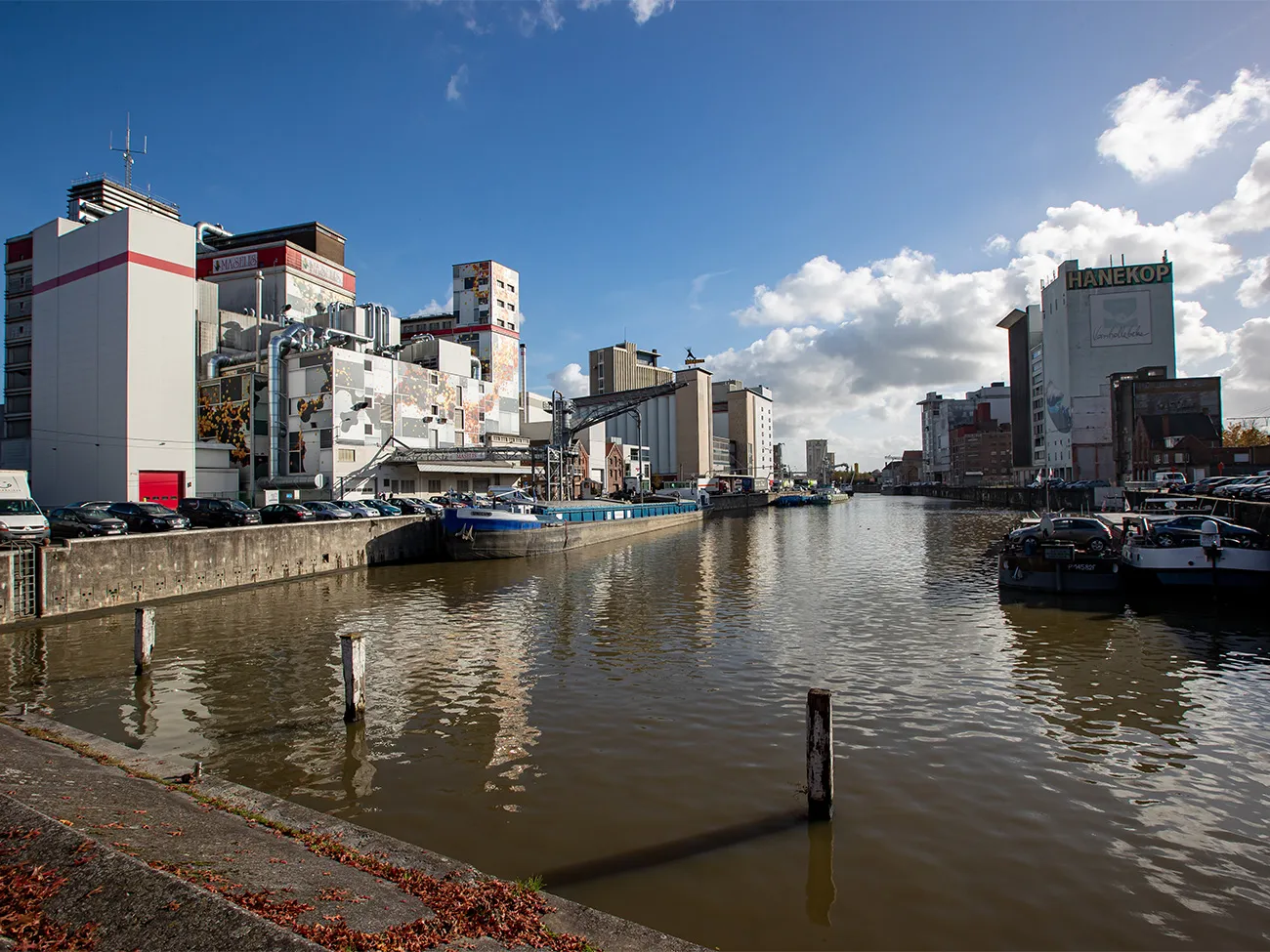
Roeselare has long been known as an enterprising city. It is home to a number of well-known large companies, including bus manufacturer VDL Bus and pasta producer Soubry. Yet the city is not resting on its laurels. With an action plan and closer cooperation across the region, Mayor Kris Declercq (CD&V) wants to continue attracting new companies, preferably in manufacturing, healthcare and food.
Mayor Kris Declercq speaks
What economic strengths can the city council draw on in 2021?
Kris Declercq: We have always been a city of entrepreneurs, with the right ‘soil’ for a business to grow. Our location has a lot to do with that: we are centrally located in the province of West Flanders, at a logistics hub served by the E403 motorway and the Roeselare-Leie Canal. The city also has a very supportive policy: we create physical space for businesses, have abolished all business taxes, are committed to processing administrative matters and permits smoothly, and take part in innovative partnerships that help entrepreneurship move forward.
The results speak for themselves: we have a thriving business community that has weathered the coronavirus pandemic relatively well so far. Roeselare has the lowest unemployment rate in the country, and we see that start-up businesses here have one of the highest survival rates. Hard work and getting on with it are the hallmarks of this region.
Which sectors are strongly represented here? What are you particularly good at?
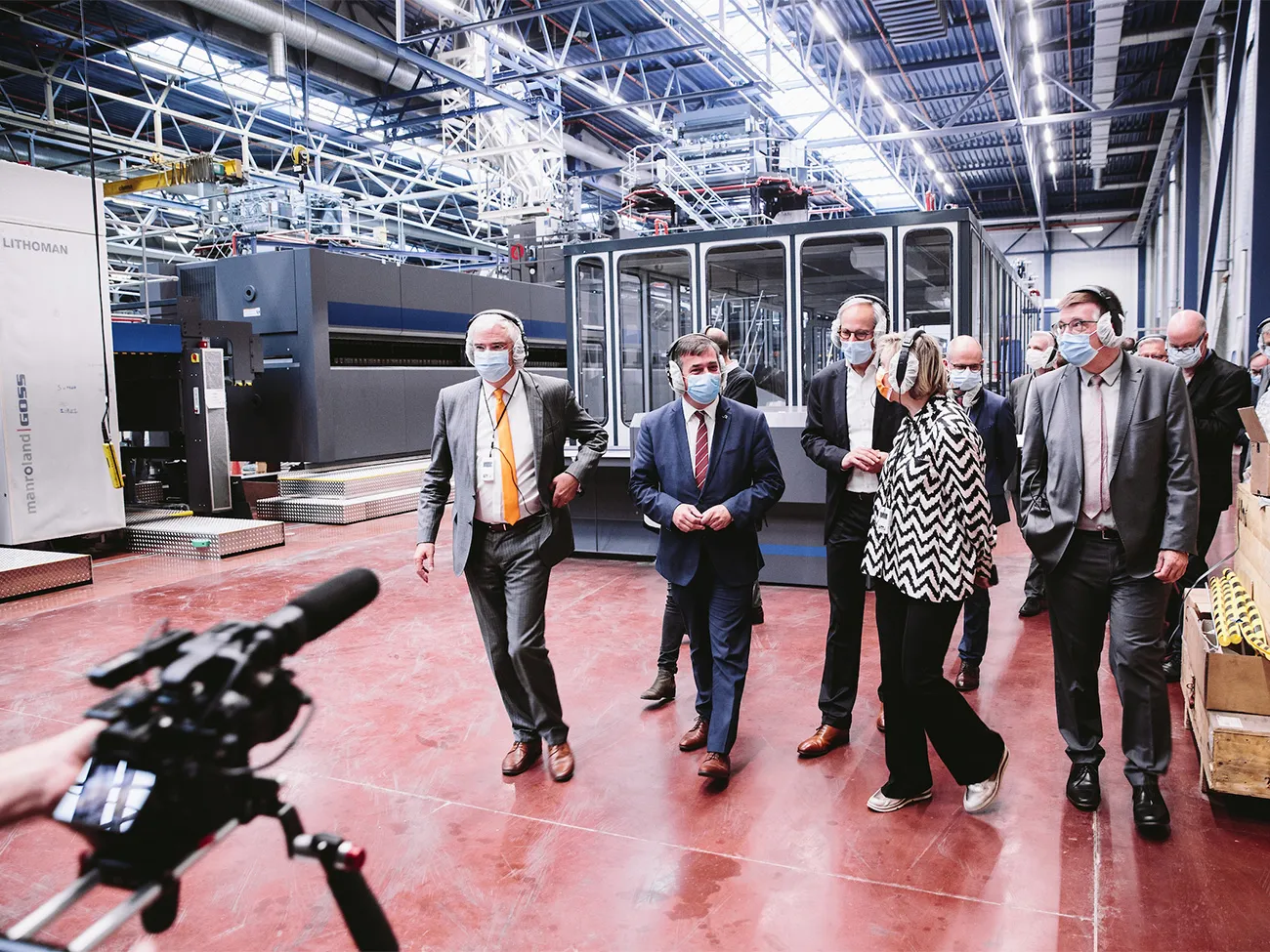
Kris Declercq: There are three major sectors in the region that we want to develop further. First, manufacturing, with a number of larger companies and bus manufacturer VDL Bus as its flagship. Then there is the healthcare economy, with AZ Delta at the heart of the TRIaz hospital network, where we see opportunities for spin-offs. And last but not least, there is, of course, the ‘Food Valley’. Agriculture and horticulture remain sectors with great potential in Central West Flanders. Think of the frozen vegetable companies, the REO auction, Mulder Natural Foods, Poco Loco and Soubry.
What does the future hold?
Kris Declercq: Innovation and research are crucial to developing these sectors further. Agrotopia, the new research institute on the roof of the REO Veiling, opened recently. We also see knowledge institutions and higher education providers coming together on projects that combine expertise in food and health. I see a food and health boulevard taking shape in the future, with a range of companies developing around it. This need not be limited to food: it could also involve innovative packaging or ways of measuring the health of food products. We want to be a true pioneer in this field.
What does your city offer entrepreneurs starting out and start-ups?
Kris Declercq: I take a broader view than Roeselare alone. West Flanders faces a brain drain problem: young people leave the province to study and then do not return. We need to promote the economic diamond within our province, the area
Bruges-Roeselare-Waregem-Kortrijk, much more. This is a region where it is easy to start a business, where there is a strong ecosystem, where B2B business is straightforward and where local authorities and organisations such as Voka and Unizo work well together.
As an entrepreneur, you can do your own thing here, and for start-ups the motto is: ‘start small, think big’. A number of young companies are proof that it can be done. Take Nanopixel, for example, with its 3D technology, which is now expanding into the Netherlands, or Sunday, which specialises in stylish corporate clothing and counts major, prestigious brands among its clients.
How does the city pursue its own economic policy?
Kris Declercq: To begin with, as mayor I am also responsible for the economy. I see this as essential because there are important links between the economy, mobility, sustainability and communications. It helps me take a broad view and tackle issues holistically. A few years ago, together with economic stakeholders, we also developed ‘Plan Roeselare Ondernemen’: a plan of concrete measures to support businesses. We monitor these initiatives continuously and make adjustments where necessary. An important part of the plan is our ongoing work with the other local authorities in the Midwest region to build a prosperous and competitive region. We want to keep this area economically attractive and strengthen it further, beyond party politics or the individual interests of any one municipality.
The war for talent is raging: many companies are looking for staff but struggle to find new employees. How is the city council trying to play a role?
Kris Declercq: Labour shortages have always been an issue here, and we are indeed seeing the problem get worse. Together with the social partners and educational institutions, we are looking at how to better match labour market needs with education. We want to give young people a good education, make them job-ready quickly and also encourage them to become entrepreneurs.
At the same time, we are showcasing the city’s strengths to show people who come here to work that Roeselare is an attractive, people-friendly city: accessible, with affordable homes and plenty of opportunities for sport, activities and leisure. We are seeing people in their 30s return. And we also have a ‘silver’ generation who stay in the city. They, too, are part of our workforce potential.
Which project that matters to businesses in Roeselare would you like to deliver in 2022?
Kris Declercq: Above all, I hope to see a breakthrough in the renovation of the Roeselare-Leie Canal in 2022. This renovation, which will make the canal accessible to larger vessels, is essential to expanding multimodal transport and increasing the share carried by inland waterways. The project is also part of the international Seine-Scheldt link network. Together with the provincial government and Flemish Minister for Mobility Lydia Peeters, I have managed to set up a task force for the project. 2022 must be the year in which we show plenty of ‘force’ and make progress with this project.
Question about this story? Ask your question
Keep following this
Get an email when a new story is published. No account needed.
- SubjectIndustry