Converting office buildings into homes is the future
Text Bavo BoutsenImage Jasper Van der Linden, ZIN, CONIX RBDM
Projects repurposing office buildings as homes are likely to be the biggest trend in urban development in the years ahead. This complex transition is a response to the range of societal challenges we face. It offers plenty of opportunities for construction companies and architects. “Historically, buildings have always been multifunctional.”
Urban planning in cities is evolving rapidly. One noticeable trend is the growing number of conversion projects involving old factories, as well as outdated office buildings. Several factors are driving this. First, there is a clear ambition to increase density and preserve existing open space as much as possible. That aim was also enshrined in law last year in Flanders’ construction shift. In practical terms, this means looking wherever possible for new uses that better meet today’s needs.
The shift towards circularity
Against this backdrop, the need for office space has undeniably fallen in recent years. This is due to changing attitudes towards working from home and the design of workplaces, a shift that has accelerated since the pandemic. As a result, many existing office units are underused or completely vacant. With the housing shortage remaining acute in all major cities, large-scale conversions are becoming essential.
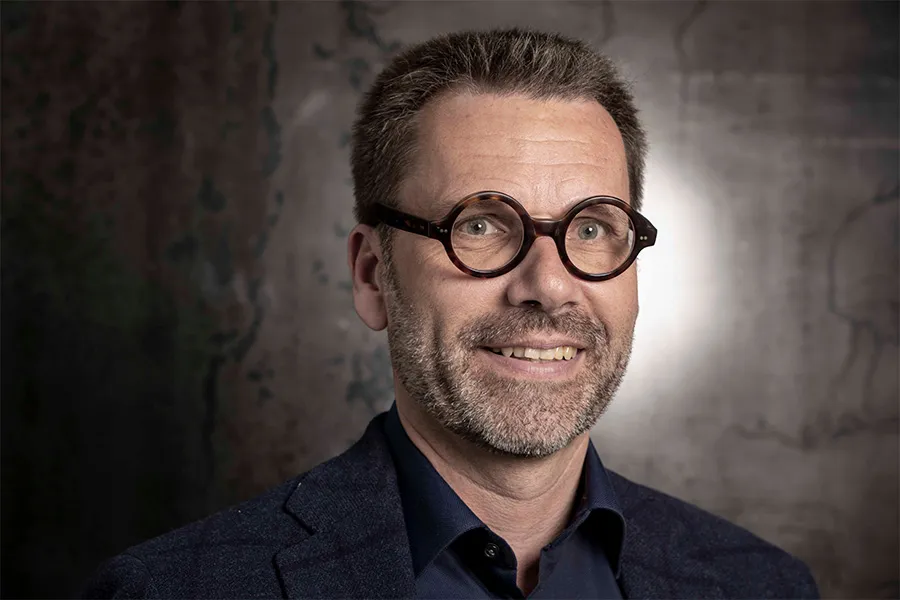
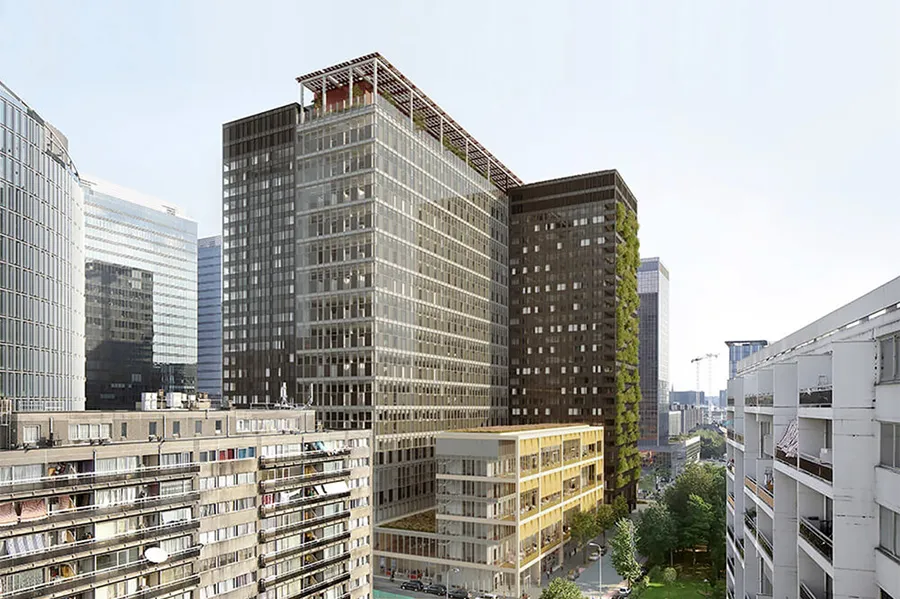
“Another important driver is the shift towards circularity. Making circularity a starting point is essential to securing finance for major construction projects,” says Frederik Jacobs, an architect at CONIX RBDM. In recent years, the Antwerp-based architecture firm has completed a number of conversion projects, including the Multitoren in Brussels. “These projects currently account for around 15 per cent of our work, but we expect that share to continue to rise.”
Multifunctionality
Another pressing factor is the changing way we think about urban planning. Drawing on extensive sociological and architectural research, urban planners are now advocating multifunctionality more than ever. This means combining several uses in a street or even a single building. The result is a healthier relationship between people and space, which is lacking in single-use buildings or districts.
“You should always aim for mixed use, as this means heat sources are used more efficiently and therefore more sustainably,” Jacobs adds. “It is also a return to a former reality, when this was simply taken for granted. Historically, buildings have always been put to multiple uses. The same goes for reusing construction materials.”
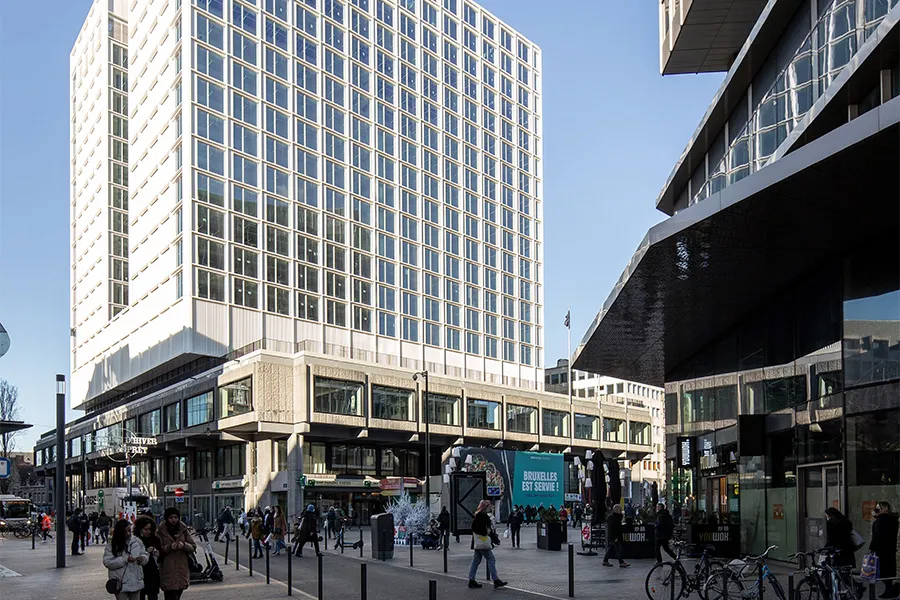
Single-use development also means there is hardly any interaction with the area beyond the office building. This tension is nowhere clearer than in Brussels. Decades of ill-considered urban policy in the capital have created highly single-use districts, such as the Northern Quarter and the European Quarter. The difficult situation in and around several Brussels railway stations located in these districts can be seen as one manifestation of this.
Conversions gathering pace
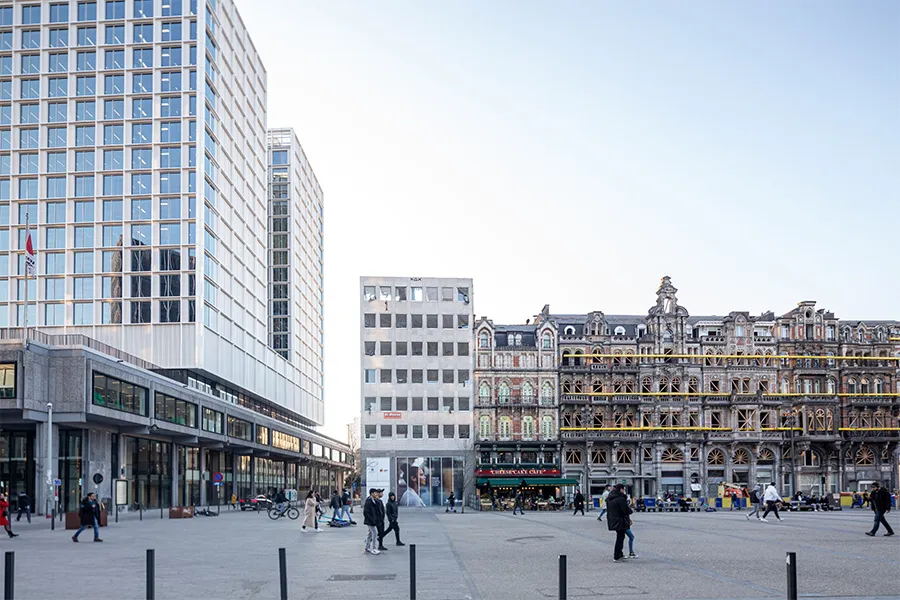
Important steps have already been taken in recent years to change this. The ZIN project by property developer Befimmo, a brand-new tower a stone’s throw from Brussels North station, is now in its final phase. From 2024, it will provide a workplace for 6,000 Flemish civil servants, alongside a hotel and a number of homes. The project is intended to become a model building for the still overly uniform Northern Quarter. Work is also expected to begin next year on converting the Proximus towers, an office complex that is ultimately set to include a large number of student rooms and a public footbridge.
The European Quarter is also set for large-scale transformation in the years ahead. More than 300,000 m² of office space is to be redeveloped in total, with around 30 per cent converted into homes or services. The trend is also reflected in the figures: 40 per cent of all planning applications for major construction projects in Brussels concern office buildings being converted into homes.
These trends, which present opportunities for construction companies and property developers, are also evident in other cities. In Antwerp, the Boerentoren is to be given a mix of uses through a partnership between West Flanders-based property developer ION and Katoen Natie. After the renovation, it will house cultural facilities, hospitality venues, offices, shops and flats.
Inventiveness required
Researchers are keen to give this positive shift as much momentum as possible. Paulien Beeckman, a researcher at VUB Architectural Engineering, used a study of 60 conversion projects across Belgium to identify which office buildings are suitable for conversion into homes. “Sometimes the relevant characteristics are obvious, such as the dimensions and load-bearing capacity of the structure,” she says. “Think, for example, of the dark zones inside an office building, which are unliveable without a clear architectural intervention. But the most decisive factor in determining whether an office building can be reused is its façade.”
Frederik Jacobs also stresses the complexity. “For architects, repurposing projects involve a more extensive research phase, because you have to work out how an existing building is put together. And that is often more complex than you might think. Many buildings were not built as they were drawn. This calls for greater creativity, which many designers actually enjoy,” he concludes.
Question about this story? Ask your question
Keep following this
Get an email when a new story is published. No account needed.
- ThemeBuilding and using business premises
- SubjectIndustry