Battery park takes shape in Ruien near Kluisbergen
An essential link in the energy transition
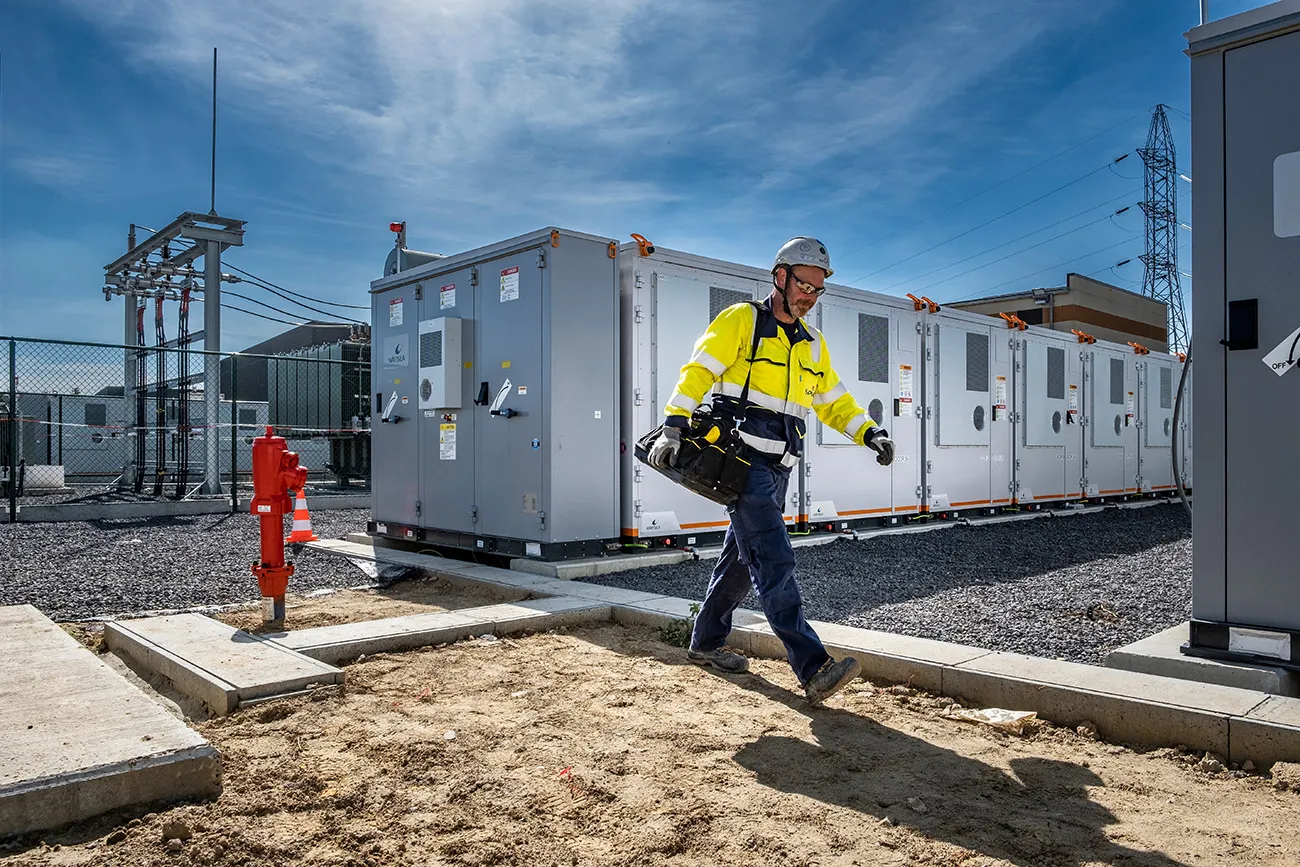
The brand-new “Ruien Energy Storage” battery park is being built in Ruien near Kluisbergen for Nippon Koei Energy Europe. The work is expected to be completed by the end of the year. It will then be the largest battery park ever connected to the Belgian high-voltage grid. Multi-technical services provider SPIE Belgium is helping to deliver the project.
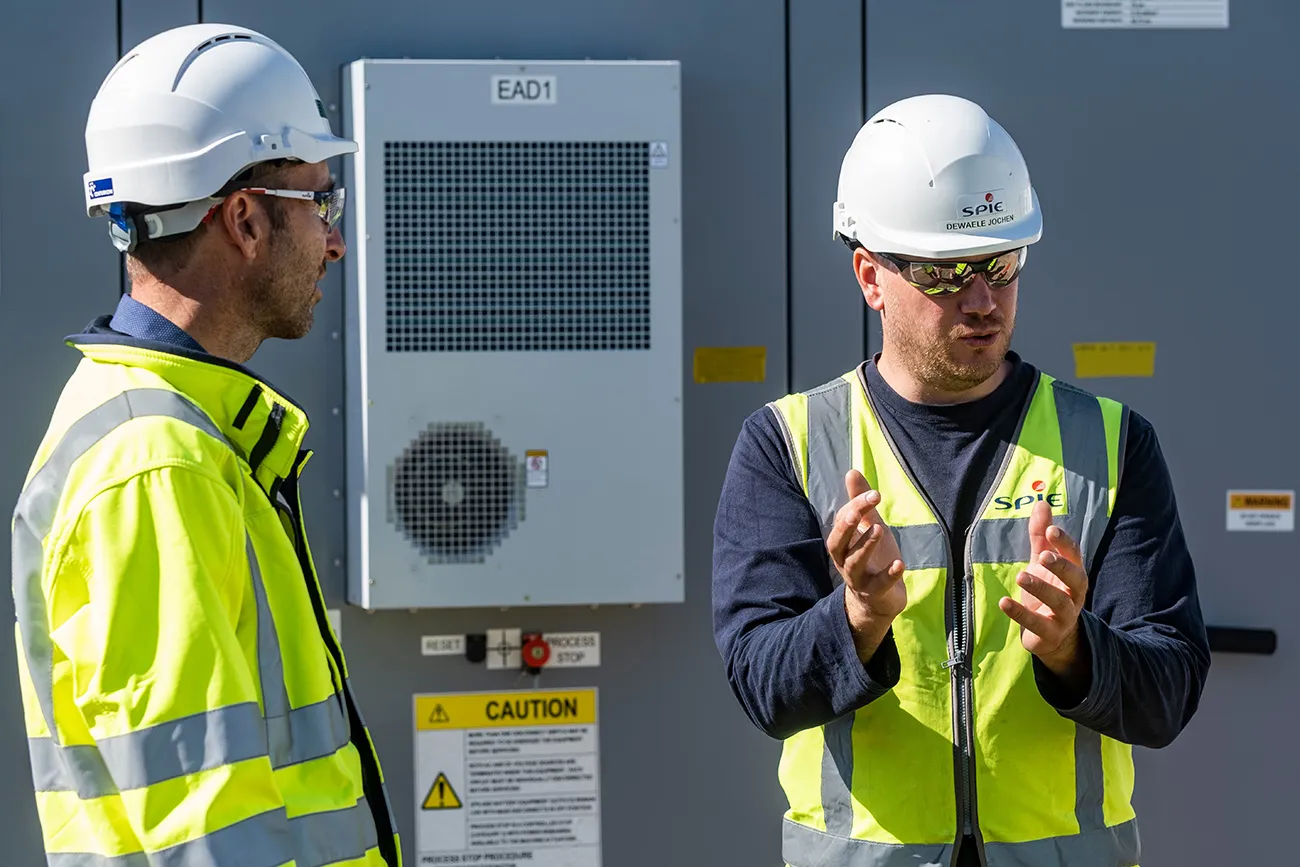
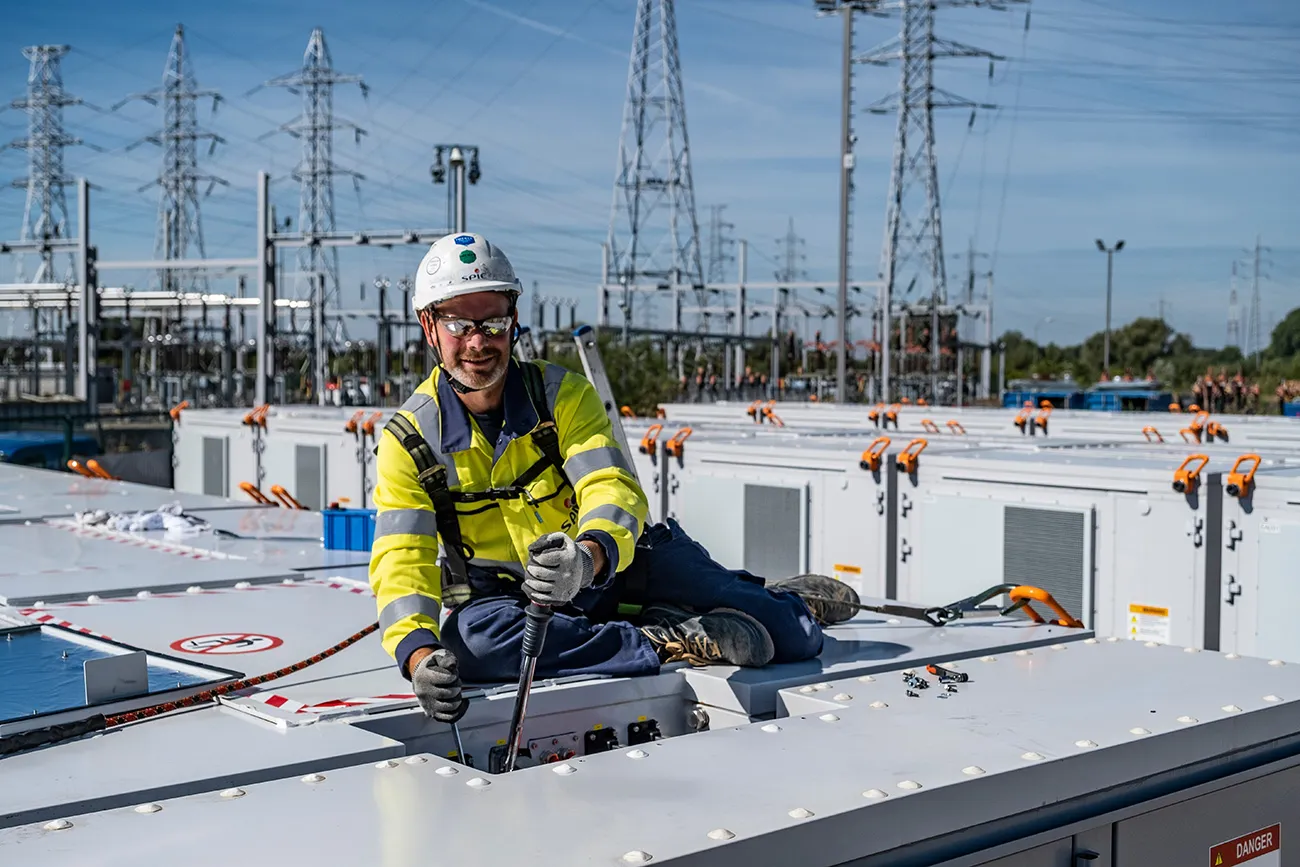
SPIE Belgium is responsible for carrying out work directly linked to the installation of the batteries: foundations, cabling, transformers, switchgear infrastructure, CCTV, lighting, fencing and more. Jochen Dewaele is the project manager responsible for “Ruien Energy Storage”.
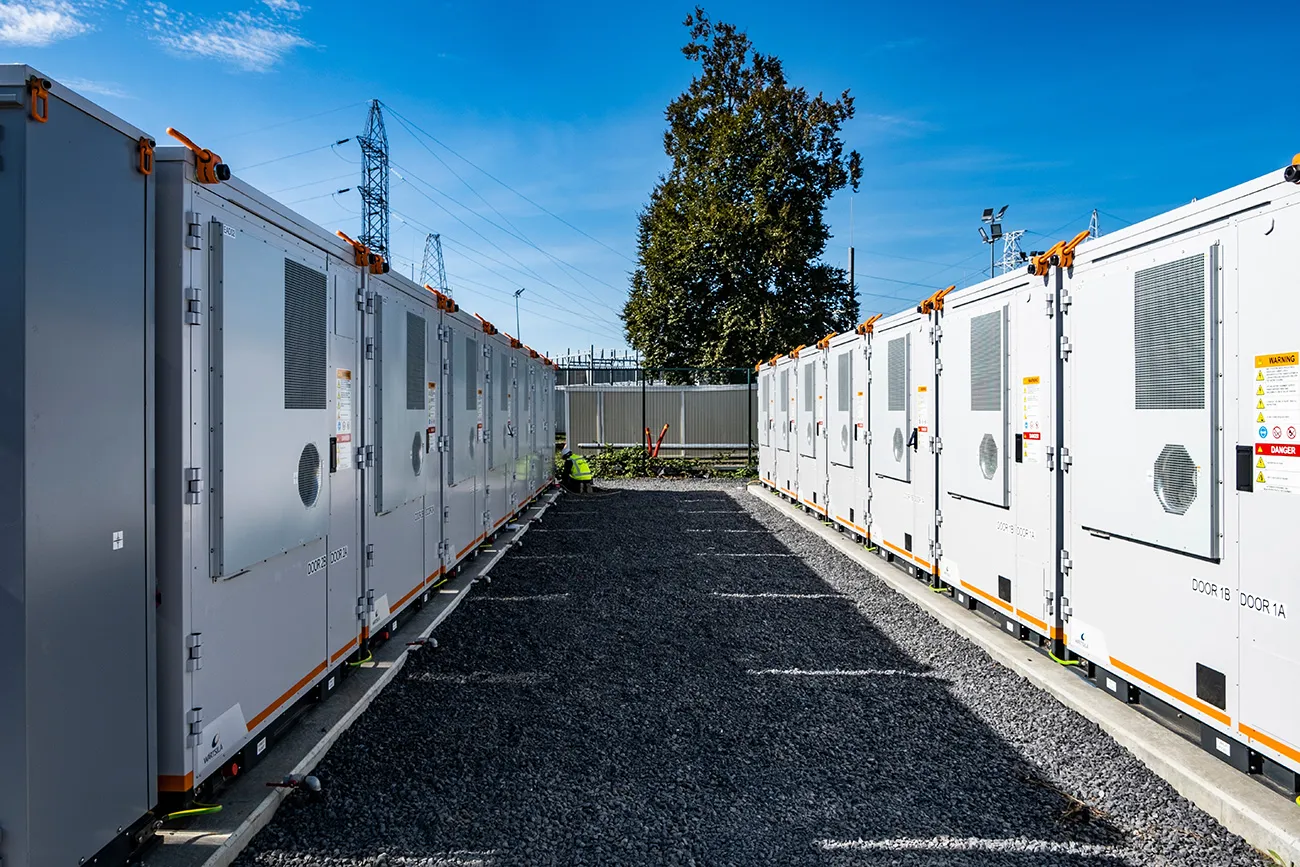
Jochen Dewaele: We are proud that SPIE Belgium was able to play its part in this green initiative. The battery energy storage system in Ruien is the largest battery park in Flanders. It comprises 84 battery containers with a total capacity of 100 MWh. That is comparable to 22,000 home batteries. The batteries are connected directly to Elia’s high-voltage grid.
How will this battery park operate in practice?
Jochen Dewaele: The batteries themselves are charged to 50 per cent. This means they can absorb or supply electricity at any time. When there is a surplus of electricity, they store energy. When there is a shortfall, they feed energy back into the grid. In practical terms, energy is stored at midday, for example, when the sun is shining brightly. A few hours later, it is released when people are using a lot of electricity and no solar power is available. This is for short periods. The aim is not to store large amounts of energy here. This system is designed to smooth out short-lived dips and peaks in energy supply. That way, we can stabilise Elia’s grid.
What is the ‘green’ benefit of a battery park like this?
Jochen Dewaele: Battery parks like these make it possible to integrate green energy into the grid. They also ensure the stability and flexibility of the electricity grid. For example, more solar panels and wind turbines can be connected to the grid without compromising its stability. When there is too much wind power, wind turbines sometimes have to be shut down because more energy is being produced than consumed. This prevents overproduction, which could overload the electricity grid. A battery park allows us to store surplus energy that would otherwise be lost, but only for a short time.
How do you see this developing in the future?
Jochen Dewaele: In the coming years, more and more green electricity will be generated, including in the Belgian North Sea and on land. Battery parks such as the one in Ruien will therefore be essential. These storage systems will play an increasingly important role in balancing the electricity grid and storing renewable energy for times when there is little sun or wind.
But to reiterate, a battery park can only store and supply energy in the short term. It cannot cover entire days without wind or sunshine. Other technologies, such as hydroelectric power stations and hydrogen, will be needed for that. At a later stage, more battery parks could potentially help prevent gas-fired power stations from starting up.
Can battery parks help solve the energy problem?
Jochen Dewaele: They are certainly part of the solution. Battery parks are an important part of addressing energy challenges and can help tackle energy shortages. The more flexibly we can manage energy, the more we can opt for green and affordable solutions. One battery park makes a difference, but we need more of them to fundamentally change the way we manage energy.
For example, this one battery park cannot keep all wind turbines in Belgium running continuously. We need more parks for that. But it is certainly a good start!
How important is this project for SPIE?
Jochen Dewaele: The energy transition is under way, as the various projects and initiatives around it show. Renewable energy plays a very important role in this. Being able to play our part as an ‘enabler’ of the energy transition through SPIE’s development of this battery park in Ruien is important to us.
We are involved in as many green projects as possible. We aim to increase our contribution every year. “Switching as much on as possible without switching off the planet” is our slogan for a reason. We put it into practice through the projects we commit to.
Are battery parks really sustainable projects?
Jochen Dewaele: The technology used in batteries is constantly evolving. For example, our partners now favour cobalt-free batteries. Cobalt is extremely harmful to the environment and is often mined in inhumane conditions. The aim is to avoid it altogether by using green, cobalt-free batteries.
We also take account of our energy consumption during a project’s construction phase. We use as few diesel engines as possible and favour new excavators with much lower CO2 emissions. We are constantly looking for greener alternatives. For example, part of our vehicle fleet is already electric. If enough charging points are installed across Flanders, that would be great too. (laughs)
Will SPIE be building more battery parks?
Jochen Dewaele: Absolutely. In the future, we would like to build more battery parks in Belgium and elsewhere in Europe. SPIE Deutschland & Zentraleuropa, for example, has expressed interest. Our German colleagues are coming to see how we have approached the project in Ruien, so they can draw on our knowledge and expertise to build battery parks in Germany. Our collaboration with the Netherlands has also grown stronger. The more countries join in, the better.
Interest in battery parks is growing rapidly, as I can tell from the large number of enquiries. That can only be positive. Strong growth is also expected in Belgium in the short term. The battery market is really gathering pace.
The location of Ruien Energy Storage is also somewhat symbolic, isn’t it?
Jochen Dewaele: It is, actually. The battery park was built on the site of a former coal-fired power station. That does have a powerful symbolic value. We are building a new energy storage technology on the remains of the old one. That is quite a transformation in environmental terms!
Once completed, this battery park in Ruien will be the largest ever connected to the Belgian high-voltage grid. For now, at least, as things are moving very quickly. We are pleased to be able to make a positive difference with our knowledge and expertise!
Question about this story? Ask your question
Companies in this story

Keep following this
Get an email when a new story is published. No account needed.
- SubjectIndustry
- CompanySpie Belgium
- CompanyDewaele