With its own model, Vandelanotte opts for consolidation while preserving identity
Text Bavo BoutsenImage Vandelanotte
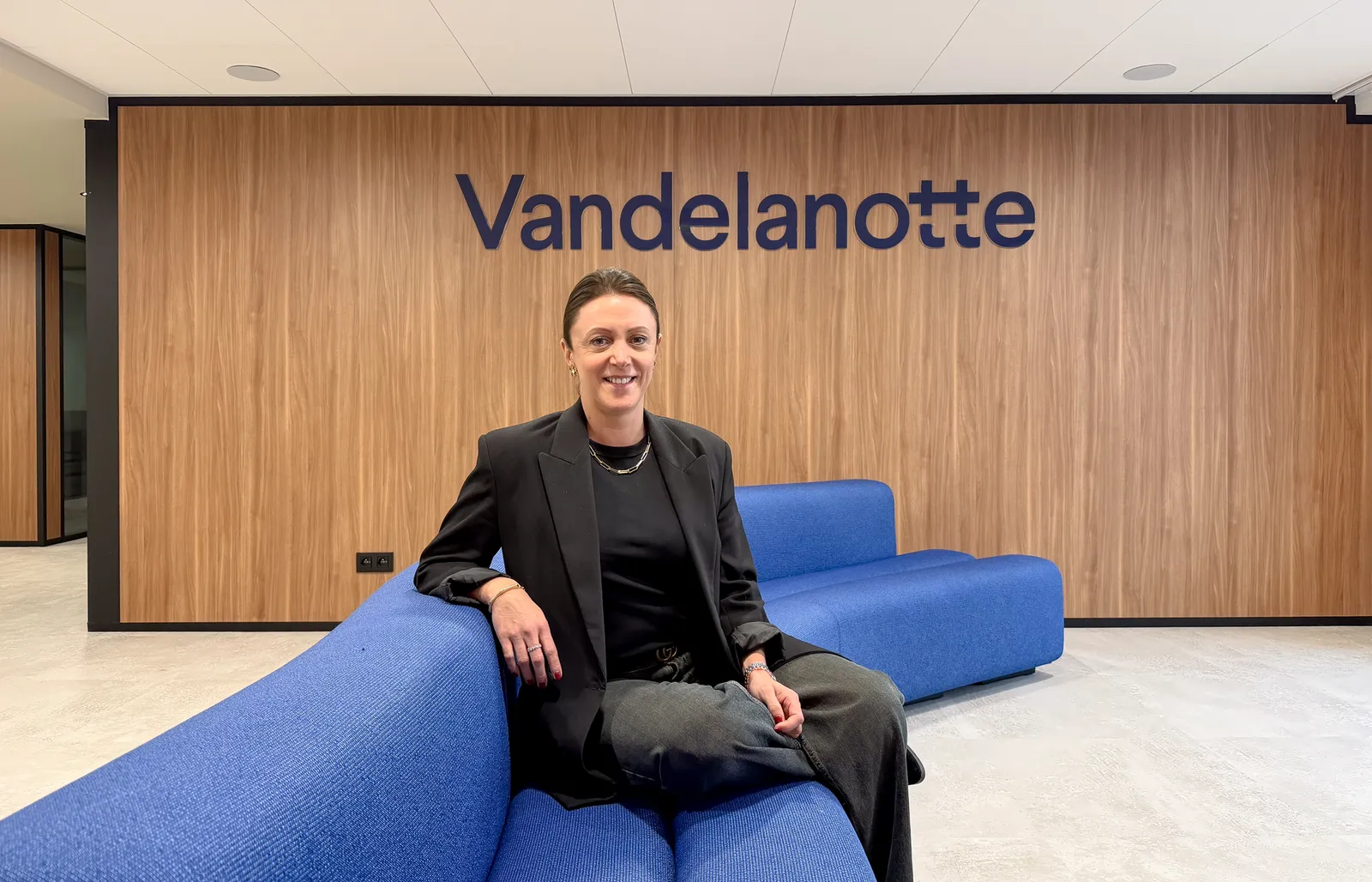
Consolidation has been a constant in accountancy for years, but the force driving this trend is broader than the appetite of large groups alone. Smaller firms are also increasingly seeking to join forces, driven by complexity, expertise requirements and pressure to work across disciplines. Vandelanotte is responding with a phased ‘part of’ model that spreads participation and integration over several years.
The accountancy sector as a whole has been marked by growth in scale and consolidation in recent years. “The trend is driven, on the one hand, by major players looking to increase their market share,” says Iris De Groote, CEO Accountancy at Vandelanotte. “But, on the other hand, and this is just as important, smaller firms are often keen to join forces too. They are facing an increasingly complex landscape and finding it difficult to bring in-house all the knowledge an accountancy firm needs today.”
“Our ambition to provide our clients with as complete a service as possible has made us a multidisciplinary player. That broad range of services is precisely why many smaller firms want to join us,” De Groote says enthusiastically. “In practice, we want to offer their clients the same comprehensive services, including tax and legal advice, digitalisation processes and HR administration. In other words, the days of the traditional accountant are long gone.”
The added value of working together is not limited to the services available to clients. Joining a larger group also offers clear internal benefits. “We also provide firms with organisational support,” De Groote stresses. “This includes guidance on regulation and compliance, quality assurance, IT infrastructure, cybersecurity, HR policy, training and talent development. We also support office operations, process optimisation and governance. This enables partners to focus more on client relationships and strategic decisions, while relying on a robust back office and specialist teams.”
Part of Vandelanotte
That does not mean, of course, that every smaller firm is willing to cast aside its own DNA, or that local roots have suddenly lost their value. On the contrary, especially in an increasingly digital world, many business owners are looking for a partner that offers a sense of proximity. “That is why we developed our so-called ‘part of’ model,” De Groote explains. “Rather than simply acquiring a smaller firm, Vandelanotte first takes a stake in it. This is the first step in a process lasting three to five years, which ultimately leads to a full acquisition.”
During this process, the firms are carefully prepared to eventually become part of a larger structure. “We have been using this approach since 2022. At the end of last year, the first two firms, in Arendonk and Brecht, completed the process. During this transition phase, the firms retain their own name, with ‘Part of Vandelanotte’ added,” she continues. “This shows how we aim to preserve the character of the firms we acquire. It is also greatly appreciated by the people who work there.”
A playbook
Vandelanotte’s considered approach is the result of years of experience with acquisitions. “We now have a clear playbook, which allows us to anticipate the pitfalls that typically arise during such a process. In any case, we only embark on this kind of process when we are absolutely convinced it has a good chance of succeeding. Acquisitions are never an end in themselves for us. They are based on the belief that there can be a cultural fit between the two parties,” she says.
This approach is a cornerstone of Vandelanotte’s future strategy. “Even in the current economic climate, we are very optimistic about the years ahead. Our sector is in a period of transition that offers many opportunities. Thanks to digitalisation and an increasingly data-driven approach, accountants can now work much more closely with business owners and become more involved in their entrepreneurial journey. The introduction of Peppol is a clear illustration of this. That is why we are convinced that our role will only grow in importance in the years ahead,” De Groote concludes.
Question about this story? Ask your question
Keep following this
Get an email when a new story is published. No account needed.
- ThemeFinancial and legal decisions
- SubjectHR, finance & IT