




The accountant as a trusted companion
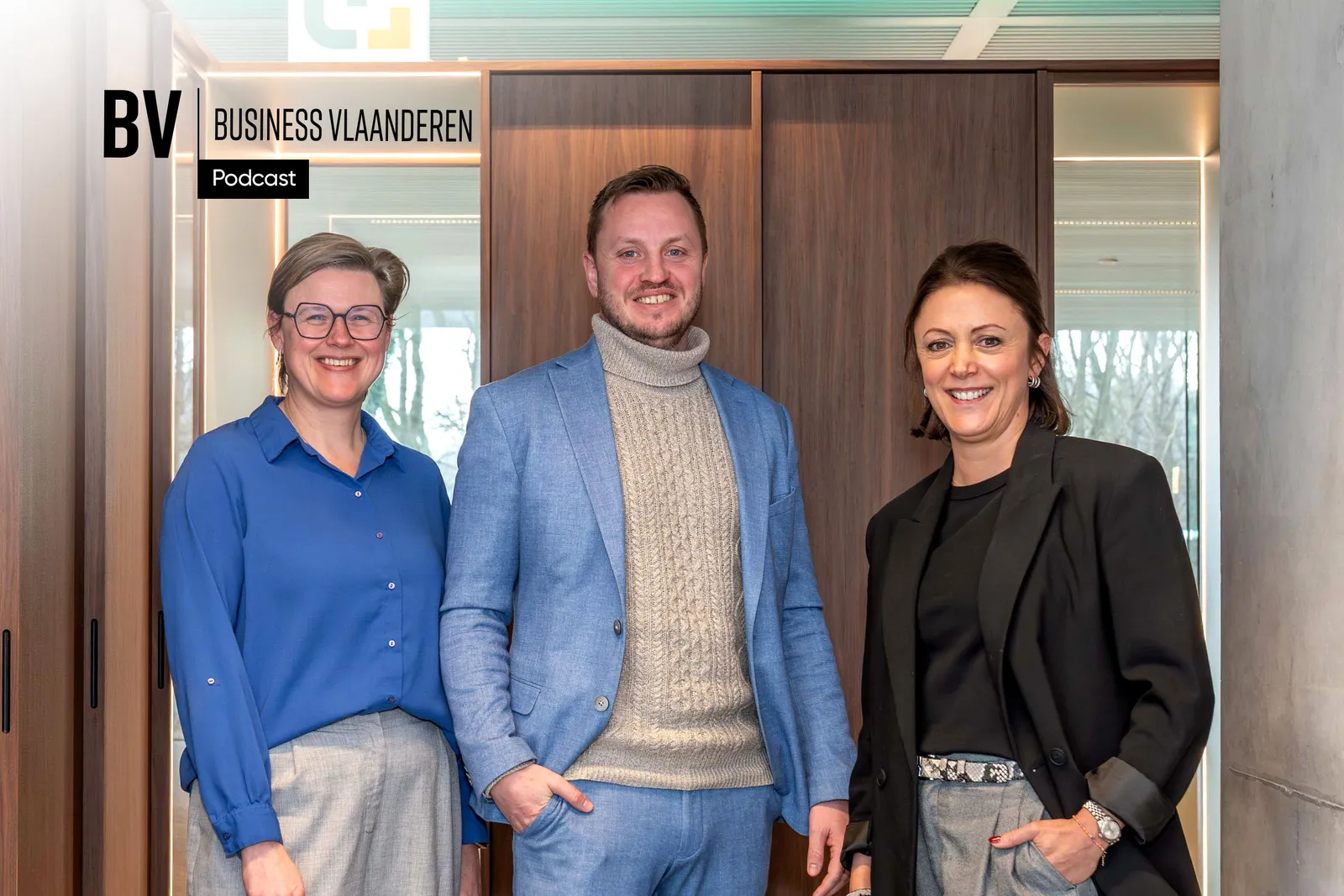
Welcome to the Business Vlaanderen podcast, where, just as in our magazine, we keep our finger on the pulse of trends and developments in the Flemish business community. In this episode, we focus on the accountancy sector. From the traditional bookkeeper to the integrated accountancy and consultancy firm, it is a sector facing many challenges at once.
What impact is increasingly complex legislation having? What do digitalisation and AI mean for accountancy? What is the state of the war for talent? Is consolidation the ultimate solution?
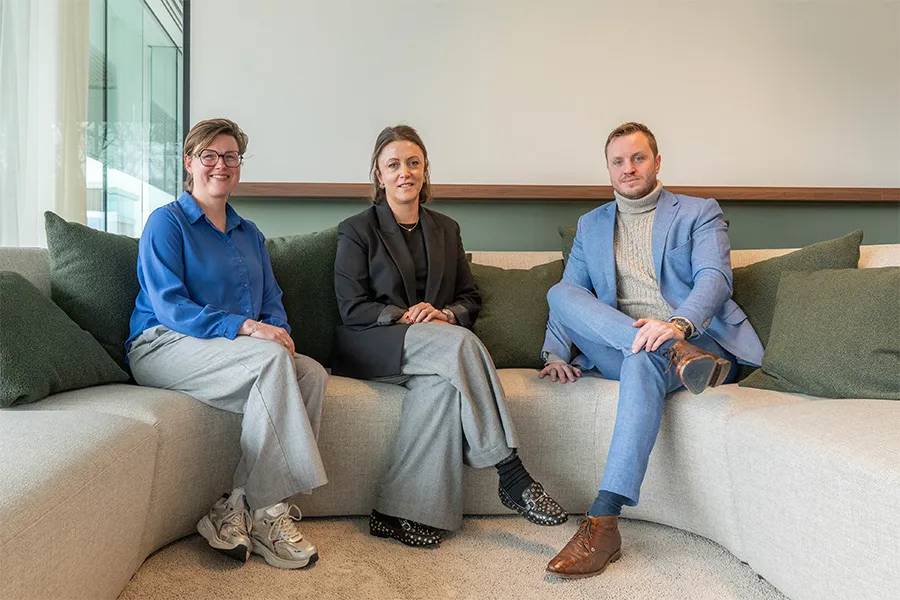
Guests:
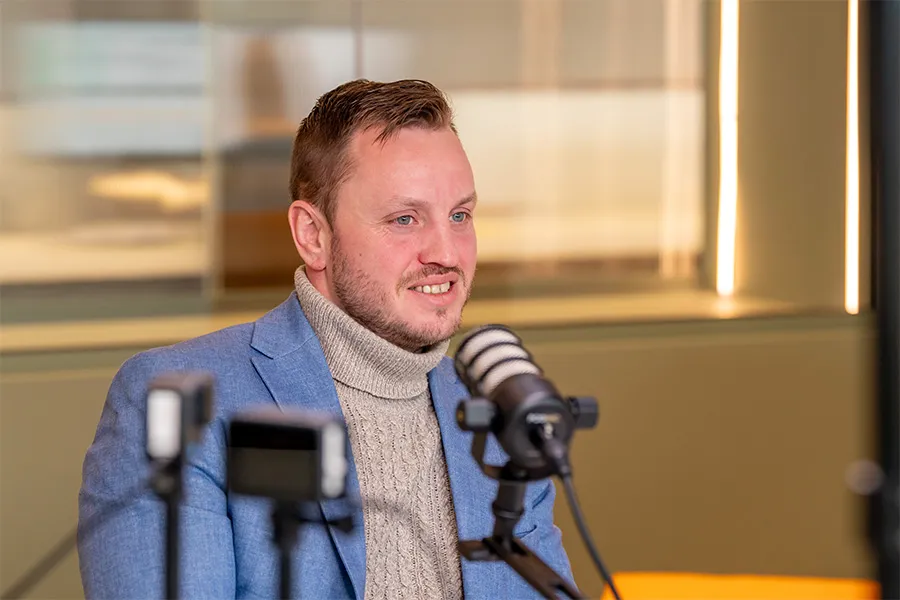
- Lennert Coopman, COO at Cobofisk accountants & consultants
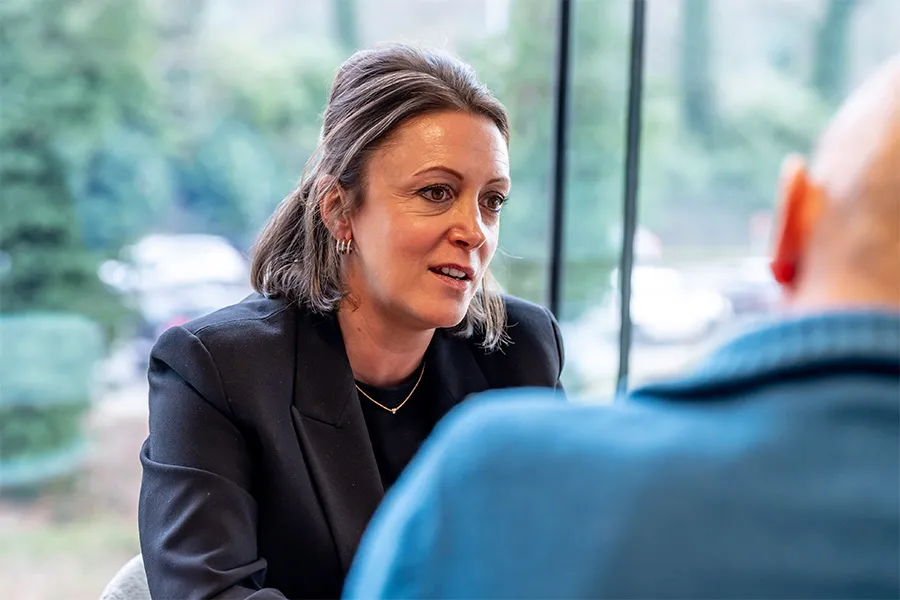
- Iris De Groote, CEO Accountancy at Vandelanotte
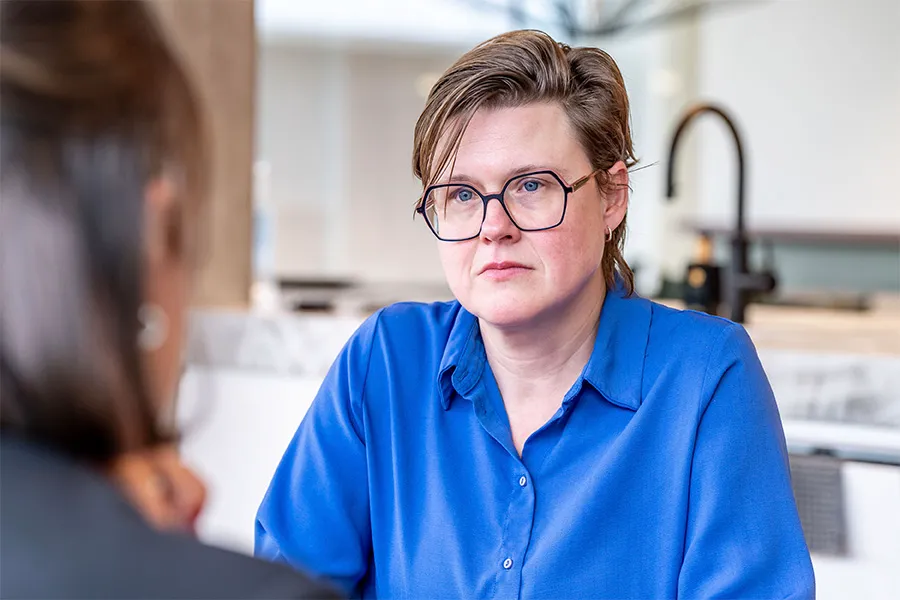
- Jurka Vanthournout, CEO at Titeca pro accountant & experts
Host: Björn Crul
Full transcript
All chapters (35)
- Introduction to the episode
- How Iris De Groote got into accountancy
- Jurka Vanthournout’s move from the legal profession
- Lennert Coopman’s path into the family business
- The biggest change in the profession
- Changing expectations and pace
- From reactive to proactive working
- Getting deeper into the business
- Growing complexity and changing expectations
- The world is becoming broader and more complex for business owners
- Digitalisation and faster access to data
- Digitalisation and employee workload
- The profession’s image and conversations on a different level
- The box of receipts and the Peppol story
- Digitalising entire processes
- The state of play with Peppol
- Guidance with new digital processes
- Automation and the accountant’s enduring role
- AI as an efficiency tool in practice
- AI at Titeca: individual efficiency
- AI and the customer experience
- AI as a tool for entrepreneurs
- Will AI mean fewer people working in accountancy?
- Different roles and new skills
- Will the need for new recruits remain just as high?
- Attracting talent at an independent firm
- Will entry-level jobs still exist?
- Are young people ready for the workplace?
- How many new starters at Vandelanotte?
- Growth and consolidation in the sector
- The position of an independent firm
- DNA and integrations at Vandelanotte
- Ambitions at Titeca
- Economic outlook for 2026
- Closing remarks
Business Vlaanderen podcast: episode 2
The accountant as a trusted companion
Guests:
Host: Björn Crul
Introduction to the episode
Björn Crul: Hello, listeners, and welcome to the Business Vlaanderen podcast, where, just as in our magazine, we keep our finger on the pulse of trends and developments in the Flemish business community. In this episode, we focus on the accountancy sector. From the traditional bookkeeper to the integrated accountancy and consultancy firm, it is a sector facing many challenges at once. What impact is increasingly complex legislation having? What do digitalisation and AI mean for accountancy? What is the state of the war for talent, and is consolidation really the ultimate solution? Those are the topics I’ll be discussing with three guests on today’s podcast. Let me introduce them: Lennert Coopman, COO at Cobofisk Accountants & Consultants, Iris De Groote, CEO Accountancy at Vandelanotte, and Jurka Vanthournout, CEO at Titeca Pro Accountants & Experts. Welcome, all three. Perhaps we can start with how you got into accountancy. Iris, tell us about it.
How Iris De Groote got into accountancy
Iris De Groote Yes, it was actually, I’d almost say, unexpected. I was in the final year of a bachelor’s degree in accountancy and tax, and I had absolutely no idea what I wanted to do. I’d actually decided to continue studying and pursue an international career. And, unfortunately for that person, someone fell ill and the lecturer was replaced by someone who was an accountant at the time. He spoke so engagingly about what an accountant’s job involved. And I thought: yes, that’s what I want to do. I’m not someone who just wants to crunch numbers. I want to connect with people. That’s why I chose accountancy. Being able to turn figures into a story, that’s why I do it.
Read the full transcriptCollapse transcriptnog 33 hoofdstukken
Jurka Vanthournout’s move from the legal profession
Björn Crul: Was it the same sort of motivation for you?
Jurka Vanthournout: Yes, that’s right. I’m a bit of an outsider. I’m not an accountant by training. I’m actually a corporate lawyer. I was always drawn to it by an interest in entrepreneurship and company law in the broadest sense. But before joining the accountancy sector, I had spent seven years in legal practice. The work of a lawyer is a little different from that of an accountant. As a lawyer, you mainly point out risks and need to keep a little more distance from your client. It’s also a more individualistic profession than accountancy, where working together is especially important. After seven years, I realised that this was precisely what made me want to move on. And it was because I found the opposite in accountancy, being close to your clients, finding solutions and working as part of a team, that I made the move. That’s why I chose the accountancy sector.
Lennert Coopman’s path into the family business
Björn Crul: Lennert, your father had an accountancy firm. Did that mean you had always planned to choose accountancy?
Lennert Coopman Not at all. Not at all. I never really knew what I wanted to do. It was always a process of searching. But at a certain point, I just sort of fell into it. I studied business economics, then accountancy and tax, and somehow started my internship and a holiday job in the accountancy sector. Then, on 1 September, I somehow stayed on at the firm and never left. So I grew up with it. I heard a lot about the dynamic between the accountant and the client, and all the problems the client had. Why clients needed someone to talk things through with, someone to sound things out with. And I think that inspired me to support them and help them.
The biggest change in the profession
Björn Crul: Iris, of the three guests, you’ve been in accountancy the longest. Looking back now to when you started your career, what has been the biggest change?
Iris De Groote I think the biggest change is that we’re much closer to our clients, have a much better understanding of what business owners are working on, and have become a trusted adviser to them. Looking back, 26 years ago, we were perhaps mainly producers of figures. We drew up balance sheets and made sure deadlines were met. That was still the era when we were granted a lot of extensions, though we didn’t always manage it. I’m very pleased with the progress we’ve made, including the digitalisation that has brought us much closer to our clients’ data and enabled us to use that data to give business owners real support with what they’re working on.
Changing expectations and pace
Björn Crul: Jurka, I saw you nodding.
Jurka Vanthournout: Yes, I can certainly confirm that. I’ve now been in the sector for 15 years, so I’ve seen that evolution too. What still surprises me most is how quickly certain things need to happen, and how clients’ expectations have changed over that time. We’ve changed what we offer, but clients expect that too. We’ve really seen in recent years that expectations have become higher and things need to happen faster than before.
From reactive to proactive working
Björn Crul: Lennert, your firm has probably grown a lot over that period too, even though you’re a smaller firm.
Lennert Coopman Definitely. Today, we have around 50 people. But I think the biggest change I’ve seen is the move from a very reactive approach, simply compiling the figures, to being able to analyse them proactively and look ahead. Working with the business owner to ask: where do I want to be in three years? Where do I want to be in 12 months? And then working out what action we need to take today to get there within 12 months. We’ve also increased the frequency of contact. In the past, you’d go through the figures once a year, but they were already nine months old. Now you sit down together in January or February to review the financial year just ended and make a projection: where do we want to be in six months? OK, how are we going to get there?
Getting deeper into the business
Iris De Groote I think that, as accountants, we’re much more involved in the business than we used to be.
Lennert Coopman Definitely. And I think there’s still a lot more we can do in that area. We have a lot of data and can draw a lot of insights from it. I think we can do a great deal with it, and there’s still work for us as accountants to do.
Growing complexity and changing expectations
Björn Crul: One of the issues facing your sector is the growing complexity of regulation, far-reaching digitalisation, more technological tools, and clients who now expect different things from their accountant. How are your firms dealing with this growing complexity, Jurka?
Jurka Vanthournout: Yes, of course, these are constant challenges. I think one challenge for us as a sector is to alert legislators to the complexity that we, as business owners, and all our clients have to deal with. We also need to ask critical questions and make sure we raise awareness among regulators so that they take action. It creates a great deal of uncertainty for business owners. That’s one aspect. On top of that, we have an important role to play in translating all this complexity into simplicity and giving our business-owner clients a sense of calm.
The world is becoming broader and more complex for business owners
Björn Crul: Lennert?
Lennert Coopman I think that, alongside highly complex regulation, the world itself has simply become much more complex. Ten years ago, a business owner only had to focus on their actual trade, so to speak. Then small and medium-sized businesses suddenly had to start thinking about marketing and sales too. Five years ago, they had to start thinking about digitalisation. And two years ago, AI came along. It’s a lot for business owners to deal with. I think they’re simply looking for someone with a certain level of general knowledge across all those areas, who can then refer them to a specialist for more in-depth help. But I think a client really needs someone by their side throughout that journey, who can bring in the right people at the right time. I think that’s the art in this complex world.
Digitalisation and faster access to data
Björn Crul: Iris, there’s digitalisation, and at the same time clients have different expectations. To what extent has that changed the work of your accountants in recent years?
Iris De Groote Yes, it has brought about enormous change. I think the main benefit of digitalisation is that we get access to our clients’ data much faster. I think everyone remembers very clearly what things were like ten years ago, when there were quarterly returns and a huge volume of invoices had to be processed. Digitalisation means data comes in more frequently, allowing you to refine your organisation’s processes and gain insight into your clients’ figures much more quickly. Clients can do the same, because they can simply log in to the portals we all provide. So digitalisation has enabled huge strides forward in giving us much better access to what business owners are working on. Now we mainly need to deliver on the future plans of those business owners and make that our focus.
Digitalisation and employee workload
Lennert Coopman I also feel that digitalisation has been a great help to our employees. At a certain point, the peaks were getting so high that the existing model no longer worked. When we looked at work-life balance, we started losing people because of the way things were organised. Digitalisation has allowed us to spread those peaks across almost the entire year. As a result, we have managed to keep this an attractive profession, with good pay and meaningful work. I think that is another important point not to overlook.
The profession’s image and conversations on a different level
Iris De Groote I’m glad you brought that up, Lennert. Because these days, or at least often, we see our profession portrayed far too negatively on social media. Yes, that’s certainly true. We have a great job. Think of what we as accountants contribute to entrepreneurs and how well equipped we are to support their businesses. I’m glad you call it an attractive job. And to pick up on the other side of that, digitalisation has also enabled us to talk to entrepreneurs on a different level. When they came in with a folder, as you say, we would have the annual review, and that was pretty much the first time they found out how their business was doing. It’s alarming, but that’s the reality. Entrepreneurs now have a much better understanding of what they’re doing, which means we can have conversations on a different level.
Jurka Vanthournout That’s right, that’s also the impact we have on those entrepreneurs.
The box of receipts and the Peppol story
Björn Crul Jurka, I hear Iris referring to entrepreneurs arriving with a folder, or perhaps a box full of receipts and paper invoices. Is that era of entrepreneurs turning up at the office with a box or folder now over?
Jurka Vanthournout Let’s say it’s almost over. Saying it’s a thing of the past might be going too far. But with the recent changes, and the Peppol story, we are definitely seeing it disappear. Of course, there are also other firms that have not embraced digitalisation, where some older clients still do turn up with that box or folder. I think it’s now up to firms, and accountants in particular, to guide them and help them make the transition to digitalisation. I think the biggest mistake an accountancy firm can make is to let things continue this way for too long, because we also have a social responsibility to make people aware that this is no longer acceptable.
Digitalising entire processes
Björn Crul Lennert, has the accountant become a digitalisation adviser for smaller entrepreneurs?
Lennert Coopman That’s exactly what I was about to say. I think our job is really to help entrepreneurs digitalise their businesses. It’s not just a matter of saying, let’s digitalise the bookkeeping, let’s digitalise the invoicing process. That’s not the point. It’s really about how the customer’s payment process works, the approval workflow, who needs to be involved in that process, who has a say in it. And on the other side, when preparing sales invoices, how do you organise things from production or the trade itself through to the full invoicing process? Is that process efficient? Is it well designed? Can I track my margins? It goes much further than just digitalising the bookkeeping. It’s about mapping out the process, facilitating it and putting it together so it runs as smoothly as possible.
The state of play with Peppol
Björn Crul Iris, I’d like to come back to e-invoicing. We now have Peppol, requiring B2B invoices to be sent digitally through that system. A number of studies have shown that smaller SMEs and self-employed entrepreneurs were not yet preparing for this, or only started very late. We hear figures such as 40 per cent being ready for Peppol, and so on. What has your experience been?
Iris De Groote It’s true, of course, that 2025 was a very challenging year in terms of getting people on board. Fortunately, we had already been working on it for some time. And fortunately, we have different figures. We’re at around 90 per cent. That means there are still a number who need to get on board, but we’ll get there. I think the key thing, in my view, is that activating Peppol is one thing. That’s only the beginning. As accountants, we have a great deal of experience with digitalisation and changes to processes. And let’s be honest, until now, entrepreneurs have simply had to work with their accountant and exchange documents. Then you explain that Peppol is an additional channel. I often say it’s the digital carrier pigeon we’ve just introduced. But you can see that entrepreneurs are suddenly looking at their bookkeeping in a completely different way. Even those who have been working digitally with us for a long time are asking: how do I pay now, where can I find everything? So it really is our job to guide entrepreneurs through the process they’re now going through.
Guidance with new digital processes
Iris De Groote And Peppol will indeed help those who are not yet digital to improve the process of submitting and exchanging documents. But now it’s up to us to help with questions such as: how do I pay? How do I keep track of my sales? What do I do if I disagree with an invoice? How do I deal with that? Today, we’re coming up against people who say: “Oh, I’ll print out my Peppol invoice, then can I send it on again?” There’s no need to do that.
Jurka Vanthournout No, that’s true. Yes, absolutely. I completely agree. And I think that’s exactly where our role as digital advisers comes in. What we’re seeing now is that activating Peppol is just a matter of ticking a box. So that wasn’t the biggest issue. Choosing the software was a challenge. But the biggest struggle is only starting now, because it’s the whole process that most entrepreneurs are struggling with: how do I move on from the old routine of printing things out, putting them in a folder and scanning them in again? That was almost absurd, but those are the steps in the process. How can I do this digitally now? I think we still have work to do there.
Iris De Groote I’m convinced that we as accountants really need to be entrepreneurs’ trusted companions. And this year, the focus will be on digitalising the way we work together. So, on the complexity you mentioned earlier, I had to bite my tongue for a moment, but I see it as a positive thing. Sometimes the regulator actually brings us closer to clients, because we manage to take things off their hands.
Björn Crul Complexity may provide a degree of job security for your sector.
Iris De Groote Yes, and it also creates opportunities. I believe we can be entrepreneurs’ trusted companions. Whatever comes along the way, we should seize that opportunity.
Automation and the accountant’s enduring role
Lennert Coopman There’s a predicted trend that everything the accountant does will be automated. But I think entrepreneurs will actually turn to their accountant more often, not for the preparation of accounts, but as a sounding board and trusted companion, to help them run their business and stand alongside them on their entrepreneurial journey.
AI as an efficiency tool in practice
Björn Crul What role will AI play in this? Lennert, is AI already a tool that helps you work more efficiently and productively? Are we there yet?
Lennert Coopman We’re there in certain areas, but certainly not across the board. One thing I already use it for a lot is taking minutes of meetings with entrepreneurs. If you can really listen to the entrepreneur during a conversation, instead of having to write down all the notes, you can take part in the discussion and challenge them. You can focus much more and capture far more of what was said, and where there might be opportunities to help that entrepreneur, by recording the conversation. Together, those two things mean you can have that conversation much more efficiently and be much more engaged in it. I think that’s already a real win. In other areas, such as analysing figures, we still see far too many reasoning errors. And in other areas, I don’t currently see much added value from AI.
AI at Titeca: individual efficiency
Björn Crul Jurka, what has Titeca’s experience with AI been?
Jurka Vanthournout Yes, I think I can largely agree with what Lennert says. What we’re mainly seeing from AI at the moment is that it takes the strain out of repetitive tasks, but it certainly doesn’t automate the entire process. It can also help with knowledge retention and, as already mentioned, meeting minutes, giving us access to more data and making it easier to keep track of it. It can also help optimise processes. So we’re seeing small steps, mainly in terms of individual efficiency, not yet on a fundamental, end-to-end level. Of course, we all hope that in the long term it will enable us to automate more, so we can focus on what really matters to us and to the client, and provide even better advice. So let’s say we may be looking for efficiency gains now, but we’re nowhere near achieving them yet. And that isn’t the ultimate goal, either. The main goal is to give our entrepreneurs better, higher-quality advice.
AI and the customer experience
Iris De Groote I feel that efficiency gains are often the first thing people focus on when it comes to artificial intelligence. That’s one pillar. I think we should also be looking at how artificial intelligence can improve the customer experience and the way we work with clients. Of course, that doesn’t mean we should not also be aiming to improve efficiency. But I’m convinced there are plenty of players in the market. At the moment, we’re seeing lots of disconnected tools. I think things will become more centralised over the coming months and years. So I think efficiency gains will also become built into the software to some extent. What matters most to me is that we use artificial intelligence to improve the advice we provide, which is what entrepreneurs need us for. At the same time, Belgium is a country of SMEs, including some large ones, but they don’t always have the people in-house to work out how to use AI in their organisation. That’s another opportunity for us as accountants to bring that knowledge to our clients.
AI as a tool for entrepreneurs
Lennert Coopman I spoke to an entrepreneur just yesterday. It was an introductory meeting, and he wanted a second opinion. He came to me for a second opinion. He wanted to hear how I viewed the business model he had in mind. We talked for an hour and a half. The idea is well thought through. It involves installing batteries at businesses and everything that goes with it. There’s a lot of complexity. After an hour of talking, he had basically laid out his entire business story and explained it all. I challenged him on a number of points. Then I said to him: why not put that story into ChatGPT and get it to write it up for you, so you can see it on paper and take things forward from there? You can also use it to put together the financial plan. So it’s up to us to guide that entrepreneur through the process too. And I do think that the efficiency gains in accountancy will mainly come from the software we use. The software providers will have to make those gains. We can’t do it ourselves. It’s harder for us. I think we’ll mainly have to use AI to improve the client experience and translate highly technical matters into language clients can understand. That’s where I think we can put AI to work.
Will AI mean fewer people working in accountancy?
Björn Crul And if AI takes another step forward and becomes even more tailored to your sector, so to speak, will that make you more efficient? Will you be able to do more work with fewer people, Iris?
Iris De Groote I believe, and honestly hope, that we’ll be able to get more work done. Whether that will be with fewer people is another question. It’s a fact that organisations and people’s roles will look different in x amount of time. But we’ll still need people to ensure the quality of what artificial intelligence produces. We often hear about the need for critical, analytical and communication skills. But those skills will be put to different use. So, fewer people? Their roles will change. We’ll have quality controllers, consultants and real tech experts. So yes, I think we’ll do more work, with people taking on different roles.
Different roles and new skills
Björn Crul Jurka, when you say people will take on different roles, might that also mean different types of people?
Jurka Vanthournout Yes, I’m convinced it will. We all have an idea of what that might look like, but the only thing we know for certain today is that things will be different. So, when recruiting and designing our training programmes, we’re very consciously considering the capabilities and skill sets people will need to remain relevant in the future. It’s a similar process to the one we’re going through with our entrepreneurs. We also need to have those conversations with our employees now. We’re not doing them any favours by wrapping them in cotton wool and telling them everything will be fine. They’ll also need to make a commitment to remain relevant in the future.
Will the need for new recruits remain just as high?
Björn Crul In recent years, the sector has launched a number of campaigns to attract young people to accountancy. I’m thinking of Accountants van Morgen, which both Titeca and Vandelanotte are involved in as partners. Will the need for new recruits remain just as acute, even as digitalisation continues to move things forward?
Iris De Groote Absolutely. I think it would be a real shame for organisations, not just accountancy firms, if we stopped recruiting young people. We’d have a serious problem in ten years’ time. Of course, we’ll be looking for different types of people. The training we provide may well look completely different too. So yes, when we recruit young people, that doesn’t mean we’ve already made a final decision that they fit into box A, B or C. That’s not what this is about. But we do need to identify people’s strengths, or give them the chance to discover them, so we can build on them from the outset. And yes, I encourage entrepreneurs to keep hiring young people, even in the digital age.
Attracting talent at an independent firm
Björn Crul Lennert, you’re an independent firm with two offices, in Aalter and Merelbeke, and around 50 people. What are your needs when it comes to new talent, and how do you attract people to join you?
Lennert Coopman On the one hand, I think we have a very good name in the sector as an independent firm. At a small firm, it can sometimes be harder to shape a particular identity around some of the bigger stories. With us, that often fits more naturally into the family feel. It’s a different kind of employee, you might say, a different type of person who feels at home here. So we’re definitely relevant in that respect. I think we’re mainly looking for people who are willing to take responsibility, show initiative, lead new projects and enjoy being entrepreneurial within a business. As a smaller firm, we can really make good use of those strengths. It’s simply about having the drive to make something of things yourself. I also think the first few years in an accountancy firm are a great time to work in the sector. You come into contact with lots of entrepreneurs, so you get a taste of all sorts of things. That’s what makes it so enjoyable and interesting. In the past, the job was simply processing documents. Now, even as a young person, you sit down with the entrepreneur and get to hear what’s on their mind and how you can help them move forward.
Will entry-level jobs still exist?
Björn Crul As AI continues to develop over the next three to five years, will there still be enough entry-level jobs for young people coming straight out of education to start in the sector?
Jurka Vanthournout Yes, I’m absolutely convinced there will be. Every business needs to keep investing in young people. And, of course, we as businesses need to be thinking about that already. But there is, and must be, room for young people. That’s beyond doubt.
Are young people ready for the workplace?
Björn Crul Are young people coming straight out of education ready to join a company and talk to entrepreneurs, or do you need to provide on-the-job training?
Jurka Vanthournout You always have two types. Some people are naturally good at it. They sometimes come from entrepreneurial families and find it easy, so they need little coaching. Then there are colleagues who find it more difficult. That’s what our training programmes are there for, to coach them. Now, perhaps that’s also one of the benefits of AI. What we’re seeing is that the learning curve is getting shorter. That’s just the reality. Looking back at when I started, the time it takes to get up to speed is shrinking. But we also have far more resources to support young people in what they need to learn. That’s changed enormously. It took us longer, and we had to work hard to find support. Now AI, as well as models and available data, provide more support. But it does take commitment. It won’t happen by itself.
How many new starters at Vandelanotte?
Björn Crul Iris, how many new people join you each year? You’re the largest organisation, with 800 employees. How many new recruits do you need each year?
Iris De Groote Last year, 50 students started with us in total, not just in accountancy, of course. Looking ahead, there are also economic circumstances we need to be aware of, and that has nothing to do with AI. But each year, we decide how many new starters we need based on our requirements and our projected growth. So we want to recruit new starters again next year. Absolutely. But training will involve a lot of on-the-job learning. I do feel that schools are already taking a different approach to the profession. But let’s be honest, that’s normal. People receive a general education, and it’s our job as an organisation to bring them up to the level they want to reach and need to be at.
Lennert Coopman I strongly believe that mentorship, bringing together seasoned professionals in our sector with 20, 25 or 30 years’ experience and a young, dynamic person who gets to grips with AI more quickly, makes for a great combination. They can both learn from each other. So I do think firms should make the most of that.
Iris De Groote I’m glad you brought that up, Lennert. Our experienced people are incredibly valuable. Technology won’t replace the human element or the knowledge of how to deal with things. So mentorship is crucial.
Growth and consolidation in the sector
Björn Crul We’re seeing more and more small firms become part of larger groups. Has growing in scale become a necessity, Jurka?
Jurka Vanthournout It depends on the choices you make as a firm. For Titeca, where we want to serve a broad client base and offer as much expertise as possible in-house or through an ecosystem, it is necessary. We need to reach a certain scale. But I’m convinced smaller firms still have a reason to exist. They’ll need to make more focused choices about niches and specialisms in order to invest strategically. Both can thrive. They’re different business models.
Iris De Groote I agree. We want to grow so we can help entrepreneurs do better. The more expertise and knowledge you have in-house, the better you can support them. Technology is another factor. We invest in our own software, and scale helps us maintain that model. But there’s still room for local firms. Their challenge is to retain a generalist perspective or work with external partners.
The position of an independent firm
Björn Crul Lennert, how do you stand out as a smaller organisation?
Lennert Coopman The reason many firms have been acquired or passed on is that fewer young people were entering the profession. The supply and demand were out of balance. But I believe smaller firms still have a reason to exist. Three of our four business partners have been entrepreneurs themselves and have grown businesses. I don’t think there’s anything an entrepreneur would value more than a business partner who has been through it themselves and wrestled with those struggles. We focus on sectors such as IT, manufacturing and construction, and support businesses with up to around 100 employees. 98 per cent of our SMEs have fewer than 50 employees. So we can serve 98 per cent of the market. We’ve chosen to specialise in digitalisation projects. In 2020, we won the operational excellence award for supporting clients digitally. We focus strongly on data and strategic discussions with clients. Attention is the business model of the future.
DNA and integrations at Vandelanotte
Björn Crul As a large organisation, how do you ensure your approach is consistent across different offices?
Iris De Groote Our mission is to help entrepreneurs realise their ambitions. We have three core values, one of which is creativity. That does not mean all 27 offices have to work in exactly the same way. We want to preserve local character. Of course, there are basic principles, procedures and tools. We have ambassadors in different areas, encourage knowledge-sharing and provide a strong onboarding programme. Connectivity between people is crucial.
Björn Crul: Does integration get easier the more often you do it?
Iris De Groote We have a playbook, but it is about people. Every integration is different. We know what the pitfalls are, but each case still requires a tailored approach. I do not believe in growth without a shared vision.
Ambitions at Titeca
Björn Crul: Jurka, what are your ambitions going forward?
Jurka Vanthournout: We want to extend our ripple-effect strategy across all of Flanders through a strong local presence. This is a strategic choice for our employees and for entrepreneurs. Growth will combine acquisitions with organic growth, but only where there is a good fit. Our vision remains to be the entrepreneur’s most trusted adviser, combining digitalisation with a strong human focus.
Economic outlook for 2026
Björn Crul: The economy is struggling in some sectors. Are you still optimistic about 2026?
Lennert Coopman I do not believe in pessimism. Entrepreneurs will continue to see opportunities. Administrative burdens could be reduced, but entrepreneurship will find a way.
Jurka Vanthournout: There is unease due to complexity and geopolitics, but with the right guidance and strong entrepreneurship, things will work out.
Iris De Groote Throughout history, there have always been cycles. There are challenges, but we need to stay alert, hold up a mirror and intervene in good time when necessary. In good times and bad, the accountant must be a partner.
Closing remarks
Björn Crul: That is a fitting conclusion. Let me thank you for this exchange of views: Iris De Groote, Jurka Vanthournout and Lennert Coopman. Dear listeners, I hope you have gained some new insights from this podcast. Thank you for listening, and I hope you will join us again next time. And of course, you can find more inspiration on our website, businessvlaanderen.be. See you soon.
Companies in this story
Keep following this
Get an email when a new story is published. No account needed.
- ThemeFinancial and legal decisions
- SubjectHR, finance & IT
- CompanyTiteca







