




Yves Leterme and Johan Vande Lanotte: “We must restore the Belgian art of compromise”
Text Björn CrulImage Dieter Meyns
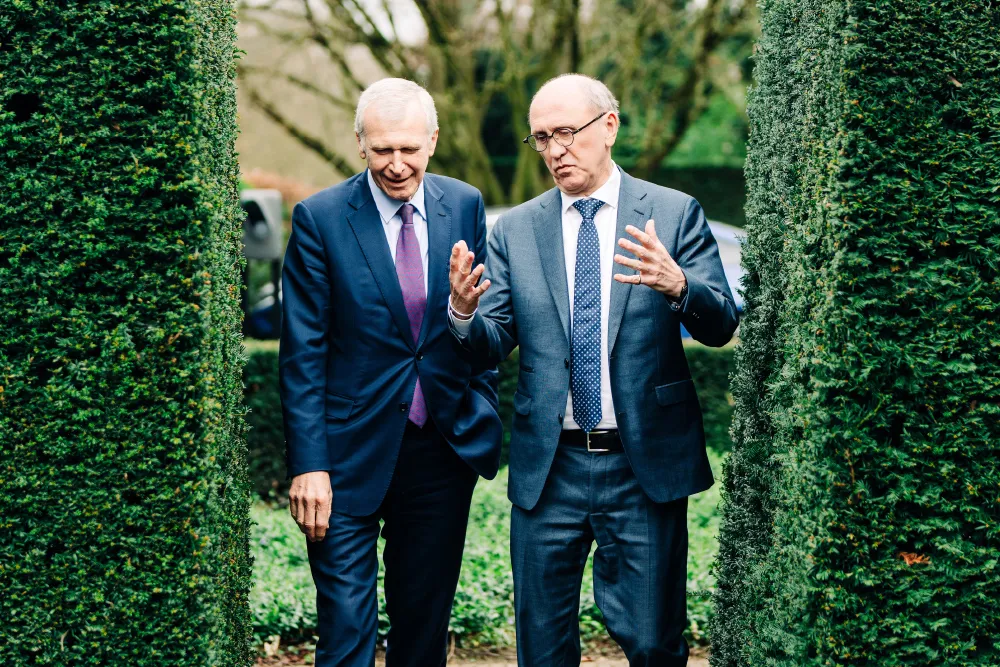
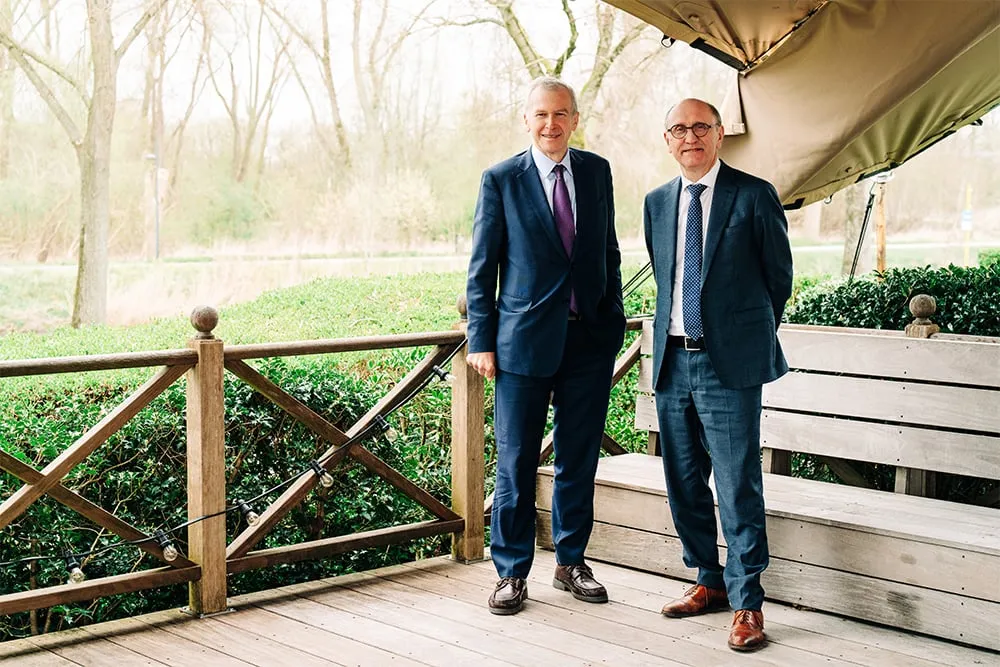
For years, Christian Democrat Yves Leterme and socialist figurehead Johan Vande Lanotte played in the Champions League of Belgian politics. But they have both been out of active politics for some time. Today, in their sixties, they can comment on current affairs with a degree of detachment. Business Vlaanderen brought the former prime minister and former deputy prime minister together for a joint interview, naturally focusing on the upcoming elections: “Our slow political system is no longer suited to the pace of society.”
The Flemish, federal and European elections in June are approaching, and the campaign is getting under way. Do you still follow the ins and outs of Belgian politics closely?
Johan Vande Lanotte: I read the newspapers and mainly follow the news on VRT. But when you are no longer in the thick of it, you do miss the background to some things. It is dangerous to pass judgement in that situation. Both Conner Rousseau and Melissa Depraetere have asked for my opinion from time to time, but I am no longer involved in the party’s decision-making. I am still on the provincial board of Vooruit West Flanders, but mainly because of my experience, I think.
Yves Leterme: I have been following things a bit more closely again because of the elections. But I am the first to acknowledge that the picture presented in the media does not always match reality. That makes it difficult to fully grasp the finer points of a dossier or certain debates. I deliberately keep some distance. But people who want to speak to me know I am available. Today, rather by chance, I have more contacts outside CD&V than with fellow party members, Georges-Louis Bouchez, for example. And because of my European engagement on homelessness, I have contacts with ministers including Karine Lalieux, Frank Vandenbroucke and Caroline Gennez.
The polls suggest that Vlaams Belang is among the winners, while the political centre is taking a hit. What do you make of that?
Yves Leterme: The traditional membership-based parties and civil society are continuing to dwindle. It is clear to me that the political centre needs to regroup, because too much choice makes it harder to choose decisively. We must safeguard our representative democracy and try to bring it up to date. Our political institutions date back to the 19th century, our operating frameworks were devised in the 20th century, and politicians are expected to tackle the problems of the 21st century. But the current system leads to a lack of structured debate, inertia and delays. That is increasingly at odds with a society that is active 24/7, where everyone can immediately air their views on social media.
Johan Vande Lanotte: The big difference from our time in active politics is that there is much more fragmentation and the extremes on the left and right are gaining strength. In the 1990s, our parties had a larger share of the vote. Losing 2% when you have 20% or more is not such a big deal. But now that you have governments with parties polling at only 10%, losing 2% almost means losing your security of existence. I understand why some people are genuinely panicking.
There were no major reforms at federal level during the last term of government. Will the next government manage to implement the necessary reforms, for example on the labour market and taxation, in an even more difficult budgetary context?
Johan Vande Lanotte: There will be no choice. The European Commission will impose its stamp on budgetary discipline in the coming years. The problem will not be the size of the deficit, but sustaining the effort. Savings will have to be made year after year. That is difficult, but it should not stop politicians. Politics is often paralysed by fear of the voters’ reaction. I would remind people that in 1991, as the SP, we worked with Prime Minister Jean-Luc Dehaene on the global plan. It involved spending cuts and tax rises, two things people do not like. But they were necessary. And ultimately, we did not lose votes because of that policy. It can be done, if you explain it properly.
Yves Leterme: Federal politics must get back to basics. There are a lot of problems, and finding solutions will not be easy. For me, the point is to understand what people want, not to handle that populistically, but to look for real solutions. That also means, for example, building good contacts across the language border and being able to reach compromises. The failings of federal politics, and at times even Flemish politics, have a lot to do with that. We must restore the Belgian art of compromise.
Johan Vande Lanotte: I completely agree. Politicians only see each other in parliament now, and too rarely outside it. Some also think: our party is twice as big, so our coalition partner must give way, because we should get twice as much. But that is not how it works. I hope today’s generation of political leaders rediscovers the art of compromise. Compromise is often seen as a negative thing, while every business leader knows it is necessary to make progress.
Yves Leterme: Better a bad compromise than a good court case. Everyone knows that, don’t they? (laughs)
Looking at some of the recent issues facing our politicians: calls for a robust industrial policy, the nitrogen issue and its impact on permitting, farmers’ protests … Europe is often cast as the villain. Are we too tightly bound by European directives and regulations? Or do we transpose them too readily?
Johan Vande Lanotte: Our problem, like the Netherlands, is that we are extremely densely populated. That does indeed make the European Habitats Directive, Natura 2000, and the agreements on nitrogen more difficult to implement here. The regulations do allow for compensation, but we no longer have the space to do that. Housing, nature, agriculture and industry are all very close together. Take the chemical cluster in the port of Antwerp, which is comparable to the chemical industry in Houston, USA. But next to the global city of Houston, Antwerp is just a large parish, though people in Antwerp will not like hearing that. (laughs)
Yves Leterme: In our democratic system, too, it takes time to implement major transitions like these. Take the switch to electric mobility. In the Guangzhou region of China, in principle, you can only get a number plate if you drive an electric vehicle. If you still want an internal combustion engine, you have to enter a lottery in which you have a one-in-ten chance of getting a number plate. People here would not accept that kind of directive policy. On the other hand, Europe is over-bureaucratic and has its shortcomings. But thank goodness we have the EU: politically, it is the most fantastic post-war achievement. It has certainly helped us get through successive crises. Belgium would have fared much worse on its own.
Johan Vande Lanotte: That is certainly true! Belgium also has the disadvantage that the European Commission is based in Brussels. This means that commissioners are confronted with the Belgian situation every day, have many contacts here and therefore keep a closer eye on what happens here. It is a very different story for a country such as Slovenia, to give just one example.
Europe is becoming increasingly conservative. Look at the recent elections in the Netherlands and Portugal, the success of Marine Le Pen in France and Viktor Orban’s influence in Eastern Europe. Are you worried about that?
Yves Leterme: It is a sign of the times. There is a groundswell of people who feel neither respected nor represented, and who blame the current political leaders for that. But their political response is often irrational. Take France: Vincennes is the most prosperous municipality in Val-de-Marne, a department south of Paris. And yet, historically, working-class municipalities there have had quite a few communist councillors and local governments. So what happened in the last national elections? The far-right Front National won. Many people turn to the extremes above all to say “to hell with it”. And that applies just as much here.
Johan Vande Lanotte: I am not pessimistic. Look at Italy, where Prime Minister Meloni has shifted quite a long way in terms of her policy choices. Marine Le Pen also sounds very different from her father back then. But we must safeguard the fundamentals: respect for the rule of law and human rights must always come first. Turkey and Russia are in a very different situation from ours. I remain convinced that the European project, with its strong economic foundations, will help us safeguard democracy.
Yves Leterme: I agree. Western Europe is one of the best places to live, but relatively speaking, we are falling behind. The BRICS countries have done a great deal to lift their people out of extreme poverty. As a result, the European economy is struggling. Europe also wants to lead the way on climate policy, privacy, healthcare, its own ethical principles and generous social provision. That is noble. But we must not lose sight of our competitiveness. We also need to be careful not to make the wrong choices on AI. Europe is a regulatory superpower, America a financial and military superpower, and China the world’s largest market.
Johan Vande Lanotte: We still have fierce competition within Europe, while at the same time we are part of a global economy in which both the US and China heavily support their industries. We must continue to invest in local companies with great potential. imec is certainly one such gem as a research institute. But look at what our brewers did with AB Inbev, creating the world’s market leader … We should have more stories like that.
Finally, politics is a tough business and often leads to clashes of egos. Do you ultimately look back fondly on your time in office?
Yves Leterme: Personally, I look back on my commitment with satisfaction. As the son of a painter and decorator from the Westhoek, I would never have had the same opportunities without the chances politics gave me. I was active for just under 20 years. I left politics at the age of 51 because I wanted to pursue other dreams and preferred to be active in a broad-based people’s party rather than a stand-alone, shrinking Christian Democratic party. So be it, and no hard feelings … What I do regret is that I was unable to change the system and my party more thoroughly. The time was not yet right.
Johan Vande Lanotte: In my mind, my main occupation has always been as a professor at university. I saw politics as a hobby, even though it was more than a full-time job. It makes me happy that most judges and fellow lawyers still recognise me as a professor today, even though I am now emeritus. As far as politics is concerned, the French economist Thomas Piketty has pointed out that Belgium is one of the few countries where social inequality has fallen over the past 30-40 years. Belgium is the only country in the world where the ‘American Dream’ really exists. As a socialist, I am proud of that. At the same time, I have always avoided socialism driven by envy. I saw myself more as a liberal socialist. The more wealthy people there are, the more they can help those in need. We need to create prosperity so that as many people as possible can share in it. I think we succeeded in doing that.
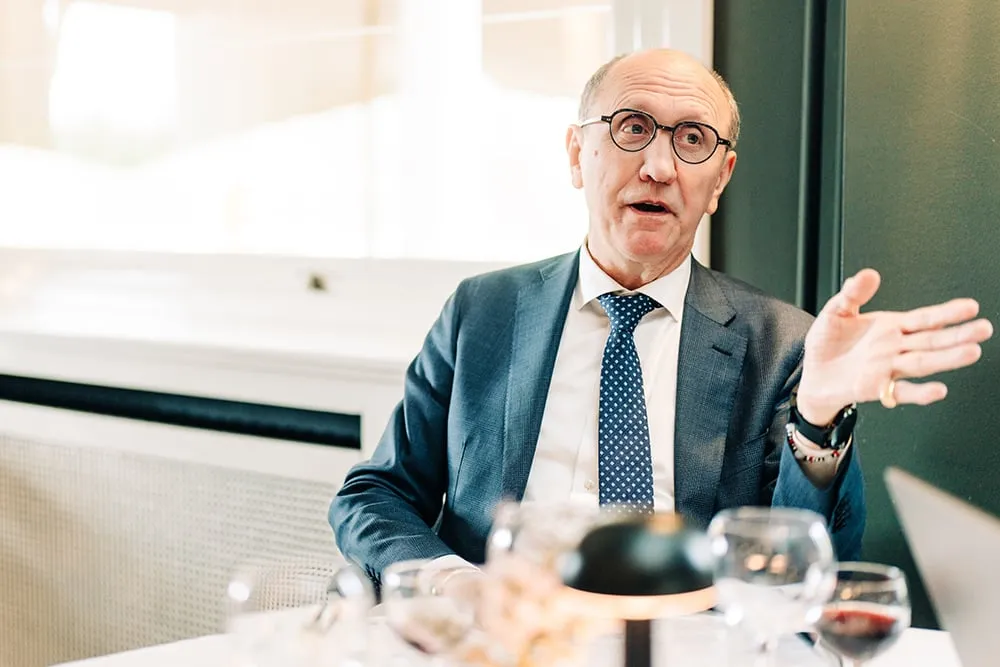
Yves Leterme entered the Chamber of Representatives in 1997. He later became CD&V chairman, Minister-President of Flanders and twice Prime Minister of the federal government. In 2011, he embarked on an international career. Today, he works as an independent director and consultant, building connections between businesses, investors and governments around the world. He is also a director at the think tank Club de Madrid. As a volunteer, he chairs the European platform EPOCH, which aims to improve the situation of homeless people.
Between 1991 and 2017, Johan Vande Lanotte served several times as a minister and deputy prime minister, and was also chairman of sp.a. As a professor at UGent, he specialised in constitutional law and human rights. Today, he works at the law firm of Walter Van Steenbrugge and Christine Mussche, focusing mainly on companies and SMEs, advising and mediating for them. He is also involved with basketball team Filou Oostende, where he is helping to draw up a plan for the future.
Question about this story? Ask your question
Keep following this
Get an email when a new story is published. No account needed.
- SubjectGeneral







