




Why sustainability reporting platform Kube is a major step forward for SMEs
Text Bavo BoutsenImage CIBO, Ziegler, BelOrta

Developed at the initiative of Febelfin and the Isabel Group, Kube is a sustainability reporting platform for SMEs. Partner Karomia contributed its ESG expertise and advanced AI technology. The platform enables businesses to prepare a sustainability report simply and in a standardised way. We spoke to three businesses that have already tested Kube.
“I wrote the Colruyt Group’s first sustainability report in 2018. The group was already very focused on this topic at the time,” says Roel Castelein, now Head of Sustainability at logistics and transport company Ziegler, which tested Kube during its pilot phase. “I learnt from that process that reporting of this kind is extremely useful for clarifying certain objectives and definitions, and that it is intrinsically linked to financial reporting. In essence, it is a way of checking whether investments are future-proof.”
According to Castelein, the European Union, the driving force behind sustainability reporting, also approaches the issue from the perspective of its links with the financial world. “Under the rules, banks are responsible for checking the reports. That is precisely why it makes sense for the banking federation Febelfin to launch an initiative like Kube. Reporting is a demanding task, after all. An online platform of this kind makes the process more efficient for both parties.”
The administrative burden associated with sustainability reporting has caused concern in recent years. In response to this criticism, reporting requirements were scaled back and made clearer in early 2025 under the so-called Omnibus package. Kube builds on the same philosophy, with the aim of making the process less time-consuming for SMEs. It uses a standardised questionnaire. And thanks to an AI system that can process the company information provided, Kube automatically fills in as much as possible.

Significant time savings
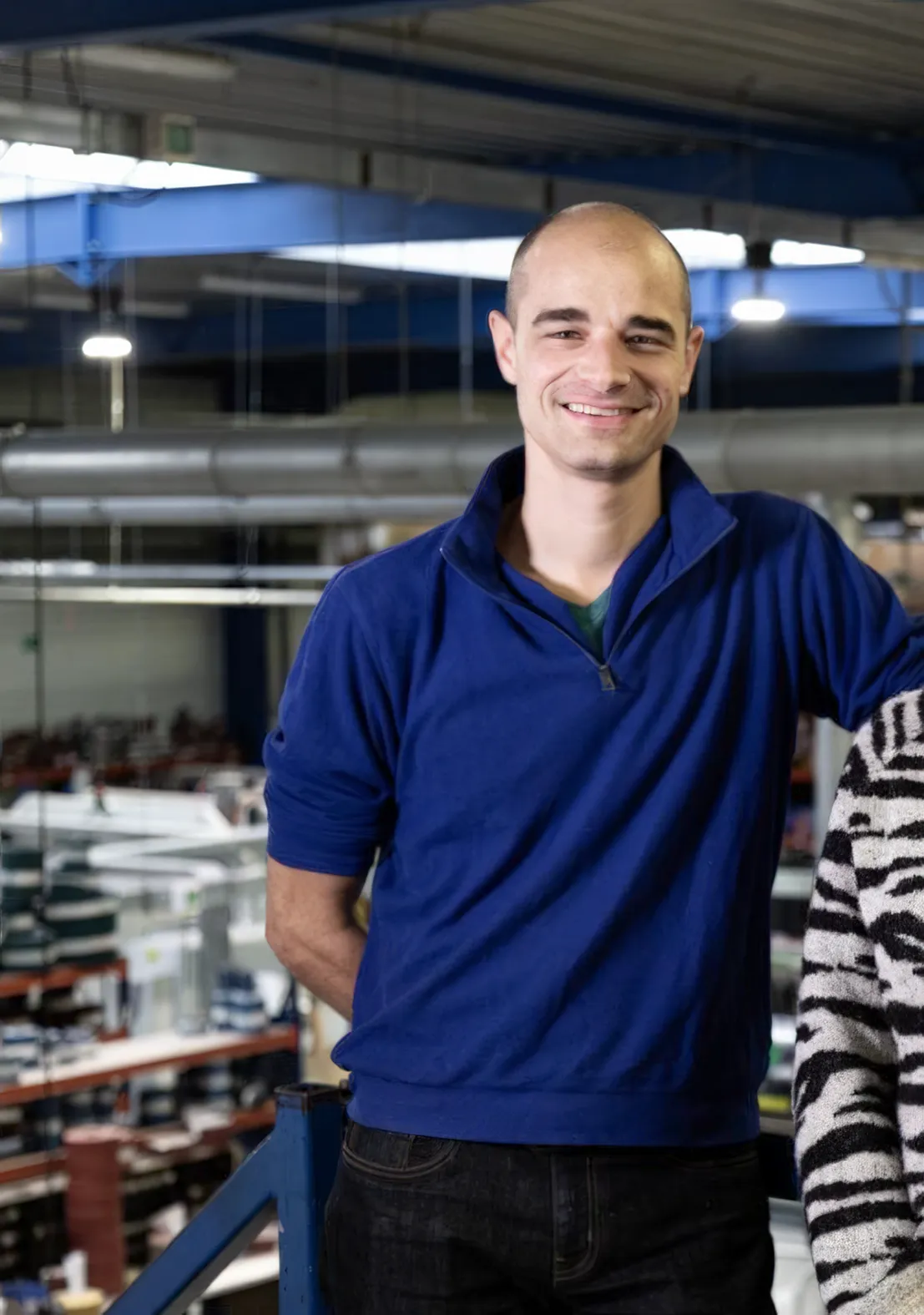
According to early users, this functionality is a major benefit. “The tool can read data from different documents and also searches the internet for relevant information about our efforts. That saves a great deal of time. It’s infinitely more efficient than working with Excel templates, as we did until now,” explains Heiko Lipkens of abrasives specialist CIBO. “It also ensures that all the information is immediately in the right place, and you don’t have to fill in fields that aren’t relevant to your business. For smaller SMEs like us, which can’t afford to employ someone full-time to work on sustainability, it’s a great help.”
BelOrta, Belgium’s largest cooperative fruit and vegetable auction, has been reporting since 2021 and goes into considerable detail. “So although we were a fairly straightforward test case, I was still impressed by the level of information generated by the Kube system. It was also able to successfully identify complex information, such as waste fractions and CO2 emissions generated by certain activities,” says Wim Hubrechts, sustainability coordinator.
Standardisation
Roel Castelein and Wim Hubrechts see the standardisation of sustainability reporting offered by Kube as a major asset. “It also makes it much easier for a company to communicate its efforts to customers. Sharing this information has become much easier, too.”
That matters in the current climate, with sustainability efforts being scaled back. Sustainable investments are not always immediately measurable, but Kube does map them. “It would also be a good idea to extend the same standardisation further. I’m thinking, for example, of the many certification organisations working in the field of sustainability,” adds Roel Castelein.
“We’ve been standardising financial reporting for decades. An entire industry of consultants and auditors has grown up around it. I don’t think we should simply copy that model for sustainability reporting. Given the advances China and the United States are making in technology, we really need to step up the pace now,” Castelein concludes.
Question about this story? Ask your question
Keep following this
Get an email when a new story is published. No account needed.
- SubjectGeneral







