




Why more and more voices are calling for a halt to developing tomorrow’s AI
Text Bavo BoutsenImage Het Beweegt, Bavo Boutsen 55-57
The AI revolution affects us all. While the automation tsunami brings a host of new opportunities, critical voices are growing louder too. Their concerns are no longer limited to job losses, but emphasise that we risk losing control of this technology as humans. Pope Leo XIV even devoted his first encyclical to the potential dangers of AI.
In recent years, AI has reshaped the way we live and work. AI applications are now being integrated into business processes in almost every sector, influencing how work is done. One clear consequence is the fall in the number of vacancies for entry-level candidates. The efficiency gains associated with using AI are reducing demand for new hires in many cases. This is illustrated, for example, by a recent Stanford University study with the telling title “Canaries in the Coalmine”, based on data from US payroll providers.
The fact that young workers are feeling the impact of AI in particular is linked to the kind of knowledge and skills they bring. They rely mainly on the more formal expertise they acquired in the classroom. Those who have been working longer also have a wealth of experience and context-specific knowledge that is much harder to automate. We can see this, among other things, in hiring figures from the so-called Big Four in consultancy, which traditionally recruit large numbers of graduates. After reporting a record number of new hires in 2021, the Big Four have significantly cut back on entry-level recruitment in recent years.
The most exciting era ever
Of course, this profound technological disruption also offers immense opportunities for entrepreneurs. Unprecedented technological breakthroughs are creating an environment in which innovative startups can rethink entire sectors with just a handful of people. As a result, many business events and communities today seem to be riding a wave of optimism, with plans for the future sounding more ambitious than ever.
This divide is also apparent in the development of the technology itself. While unprecedented sums are being spent on further developing AI models, more and more voices are calling for this work to be halted, at least temporarily. The central fear is that we risk losing control of this technology completely. “In the race to develop AI, no one is thinking about what the finish line looks like,” Dutch technology expert Marietje Schaake recently put it aptly.
Nate Soares and Eleizer Yudkowsky, two American AI researchers at the Machine Intelligence Research Institute in Silicon Valley, have published a book with the unequivocal title “If Anyone Builds It, Everyone Dies”. They argue bluntly that if we continue on our current development path, the arrival of so-called artificial superintelligence (ASI), the next stage of this technology, will be fatal for humanity. “Just as humanity reshaped nature for industry, we believe a superintelligence would transform our living environment in search of the resources it needs to achieve its goals,” says Soares, who previously worked at Google.
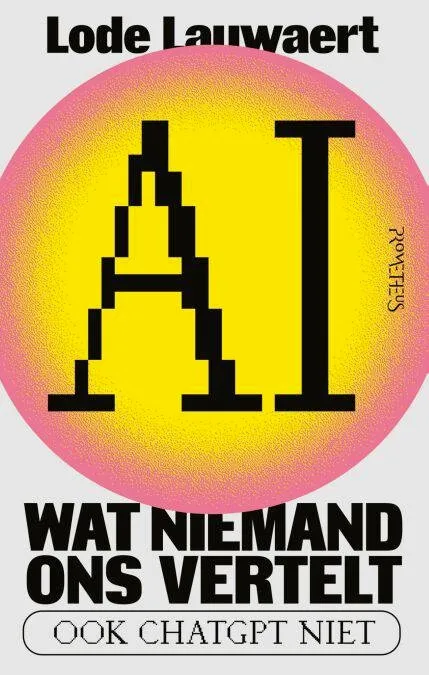
In Belgium, technology philosopher Lode Lauwaert (KU Leuven), author of the book “AI, What Nobody Tells Us: Not Even ChatGPT”, is an advocate of a moratorium on the development of ASI: “Because the risks are simply too great today, we must dare to take that step, despite the enormous benefits involved,” he says. Lauwaert also argues that dismissing a moratorium as a naïve idea is unjustified. “A moratorium is nothing new as a concept. Think, for example, of how we deal with nuclear weapons. A moratorium on their development was introduced because of a collective awareness of the potentially very serious consequences associated with their use. This shows that raising awareness of the possible consequences can indeed play a major role,” he explains.
Is technology evolutionary?
Philosopher Maarten Boudry disagrees. In his view, there is a flaw in the reasoning of those calling for a halt to further AI development. They apply the Darwinian principles of natural selection to technological development and therefore assume that aggressive and selfish behaviour will eventually prevail. “Because the only goal-directed beings we knew until recently were products of natural selection, it is tempting to assume that digital beings will share a similar goal architecture. But that assumption does not hold,” says Boudry.
“In reality, these kinds of development processes are driven precisely by criteria built in by humans. That is why they will always remain conditional and time-bound,” Boudry continues. He too stresses that it is essential for AI development to remain sufficiently ‘domesticated’ by humans. Supporters of a development halt argue that this attitude underestimates AI’s current capacity to develop self-preservation. A debate that is sure to continue.
Question about this story? Ask your question
Keep following this
Get an email when a new story is published. No account needed.
- SubjectGeneral







