




Which web 3.0 trends should you keep an eye on?
Text Björn CrulImage Agoria
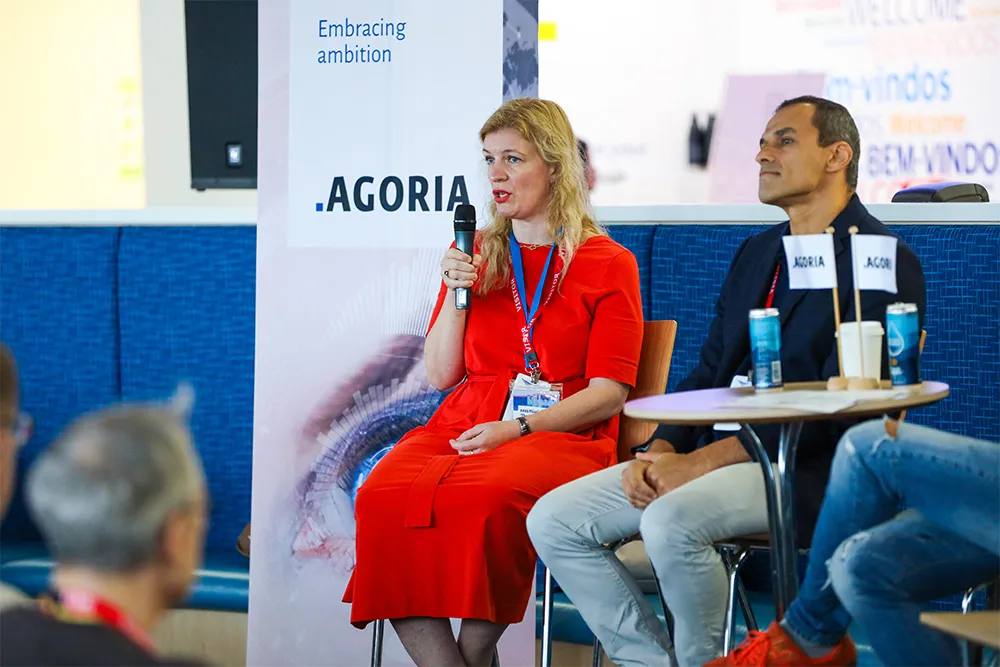
At the end of 2023, a group of 60 Belgian entrepreneurs travelled to the United States to explore the latest developments in web 3.0 and find inspiration for their own businesses. Agoria showed the Belgians around Atlanta and Miami. Business Vlaanderen was there too. We round up some technological trends that could play a role in your digital transformation.
The first steps towards what we now know as “the internet” were taken in the US in the late 1960s, driven by the US Department of Defense. Computers at research institutions working on military projects were linked via the ARPA Network. Following the rise of the PC in the 1980s, Tim Berners-Lee began developing the concept of the World Wide Web (www) in 1989. It remains the global standard for internet traffic today.
This open-source software made information quickly and easily available to any computer connected to the internet. Gradually, the internet evolved into an interactive communications medium, web 2.0, with social media playing a major role. Today, web 3.0 is developing rapidly, enabling websites and apps to process information intelligently and communicate independently. This is made possible by technologies such as the Internet of Things, AI and machine learning.
Spatial computing
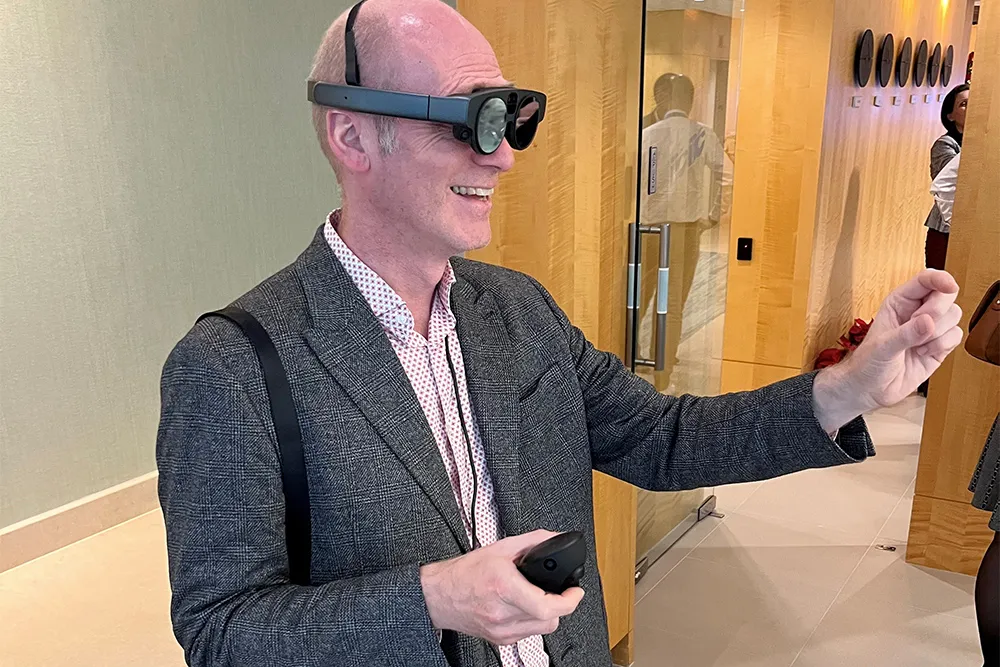
Spatial computing is the next stage in the development of what we already know as virtual or augmented reality. New, lighter headsets and more powerful software make it possible to integrate the digital world much more closely with what you see in reality. In Miami, Magic Leap presented its latest headset, equipped with augmented reality software. The device has already been approved by the US government for use in hospitals.
Daniel Diez: “We visually blend digital information with the real world. For example, you can walk around a digital object that behaves as if it were physically in the room. Comfort and ease of use were our priorities in developing it. You can call up additional information using hand gestures. Intelligent content adds more context to the image. You can also give instructions or operate devices. Think, for example, of training for firefighters that simulates life-threatening situations.”
Industrial metaverse
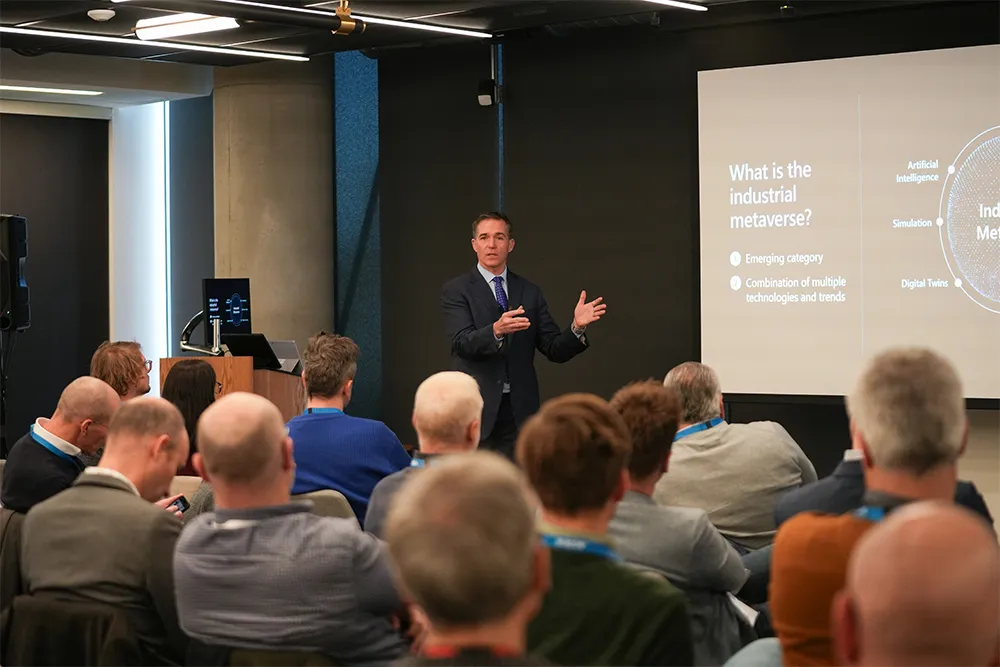
The metaverse has already generated plenty of discussion. It is mainly associated with a virtual world where you can game and where, in future, we will hold meetings or attend events without having to travel. During the trip to Atlanta, Microsoft presented its concept for an industrial metaverse. Will Murphy, director and sales lead AI: “We have a concept ready that brings together AI, machine learning, digital twins, edge computing and mixed reality. It opens up opportunities for much better collaboration between people and machines.”
The idea is to manage an entire production environment using data. “We look at the past, learn from it and make predictions about the future. The real-world situation and AI exchange information continuously. This allows a manufacturing company to optimise production and respond more effectively to unexpected developments such as a breakdown or a last-minute order. Mixed reality applications will support operators and improve safety,” says Murphy.
Blockchain & tokens
Blockchain is one of the technologies long regarded as groundbreaking. It is the foundation of cryptocurrencies, but its applications go far beyond that. This decentralised database system validates and archives transactions. Blockchain expert Els Meyvaert: “By creating a digital copy of physical objects in the form of a token (a so-called NFT), blockchain can be applied across many industries. The system offers complete transparency, with every transaction traceable. That is very useful when you have to work with many stakeholders and do not trust everyone.”
We also learnt about its potential in the context of Industry 4.0 during a session at the VISA Innovation Center in Miami. “We can also automate processes on a blockchain database and create smart contracts: this lets you speed up the execution of certain agreements without the involvement of an intermediary. You can also use it to automate workflows in a production environment, provided certain parameters are met,” Meyvaert concludes.
Question about this story? Ask your question
Keep following this
Get an email when a new story is published. No account needed.
- SubjectGeneral







