




“When politics ends, we’ll start our own business”
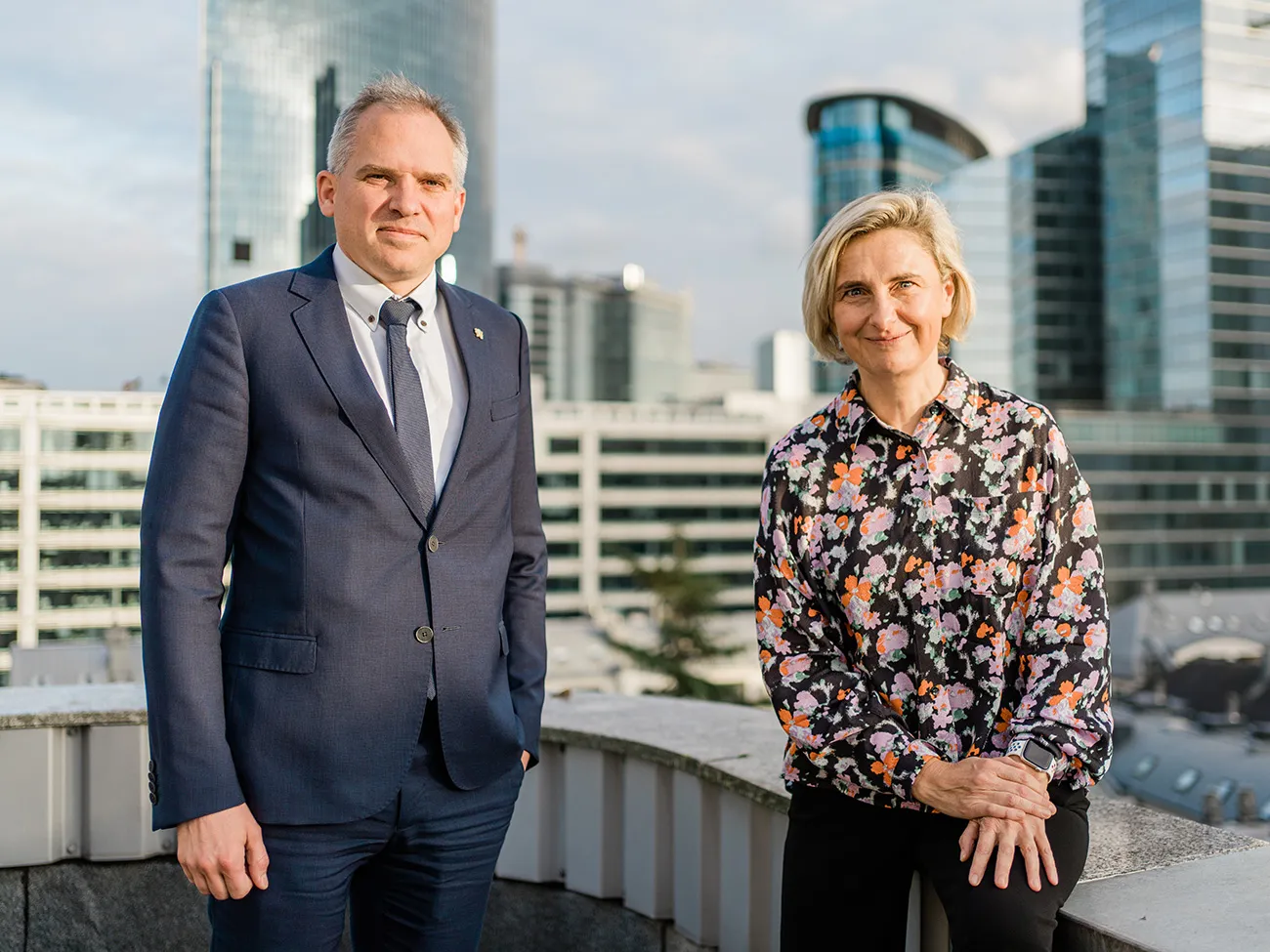
They say politics is a dog’s life. Long days, great responsibility, and always someone who is unhappy … When the coronavirus crisis broke out, our policymakers had to go to extraordinary lengths to keep the economy running and protect society. There are easier times. But politics is a calling, and “when the going gets tough, the tough get going”. We look back on a turbulent period with Flemish ministers Hilde Crevits (CD&V, Torhout) and Matthias Diependaele (N-VA, Zottegem). A conversation between two ministers from West and East Flanders, both proud of their roots.
A double interview with Flemish ministers Hilde Crevits & Matthias Diependaele
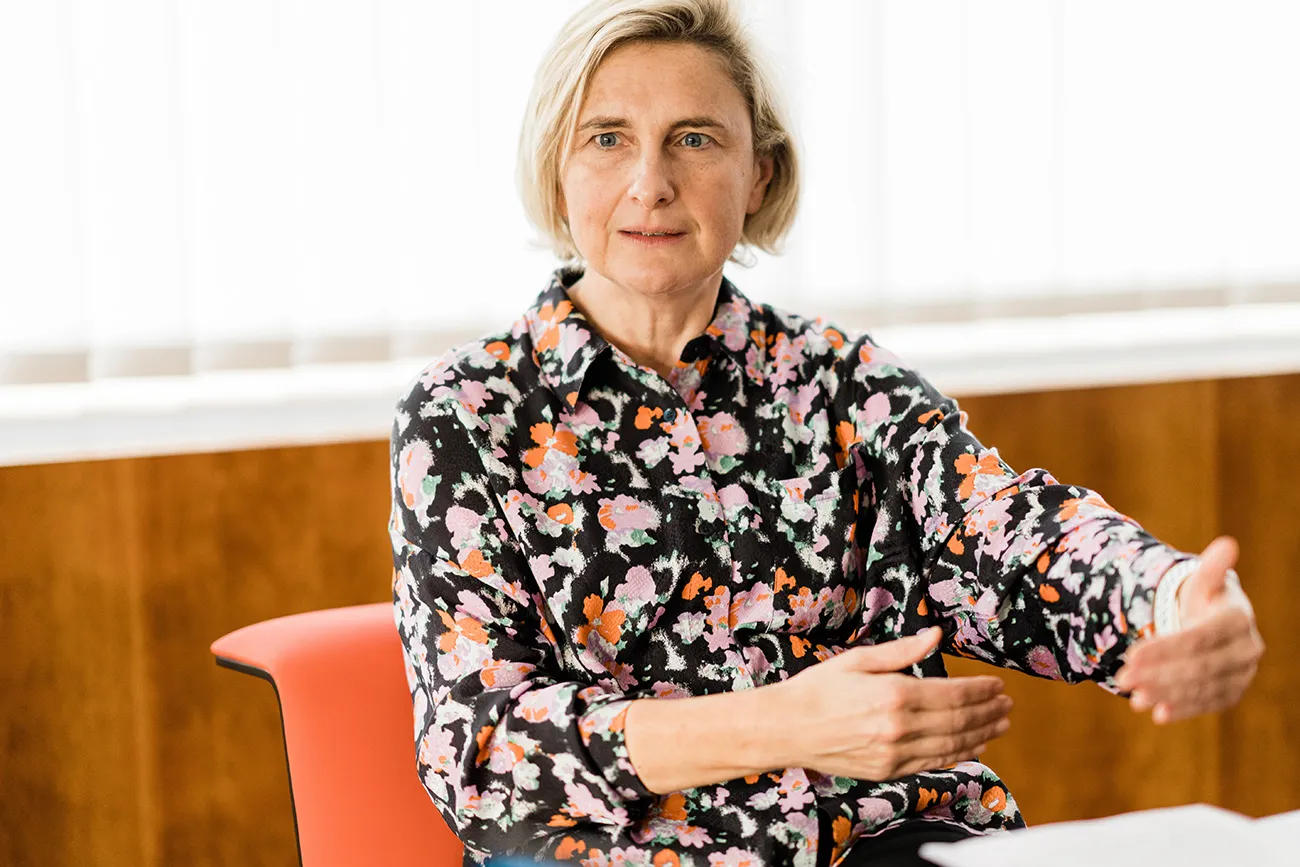
The coronavirus pandemic does not seem to have caused major damage to our businesses. The economy is performing well. Are you pleased with how things are going?
Hilde Crevits: Yes, seeing how well businesses are doing now, we can be pleased. I am grateful to the government for being able to free up funds quickly to support the economy. The first protective measure was developed in barely 48 hours, based on the nuisance allowance for public works. At the beginning, we really spent money every week because we felt it was necessary. Of course, not everything was perfect, because we had never experienced anything like this before. But I am very pleased with the initial evaluations of the measures, which show that businesses were supported. Bankruptcies have a major impact and cost much more in the long run.
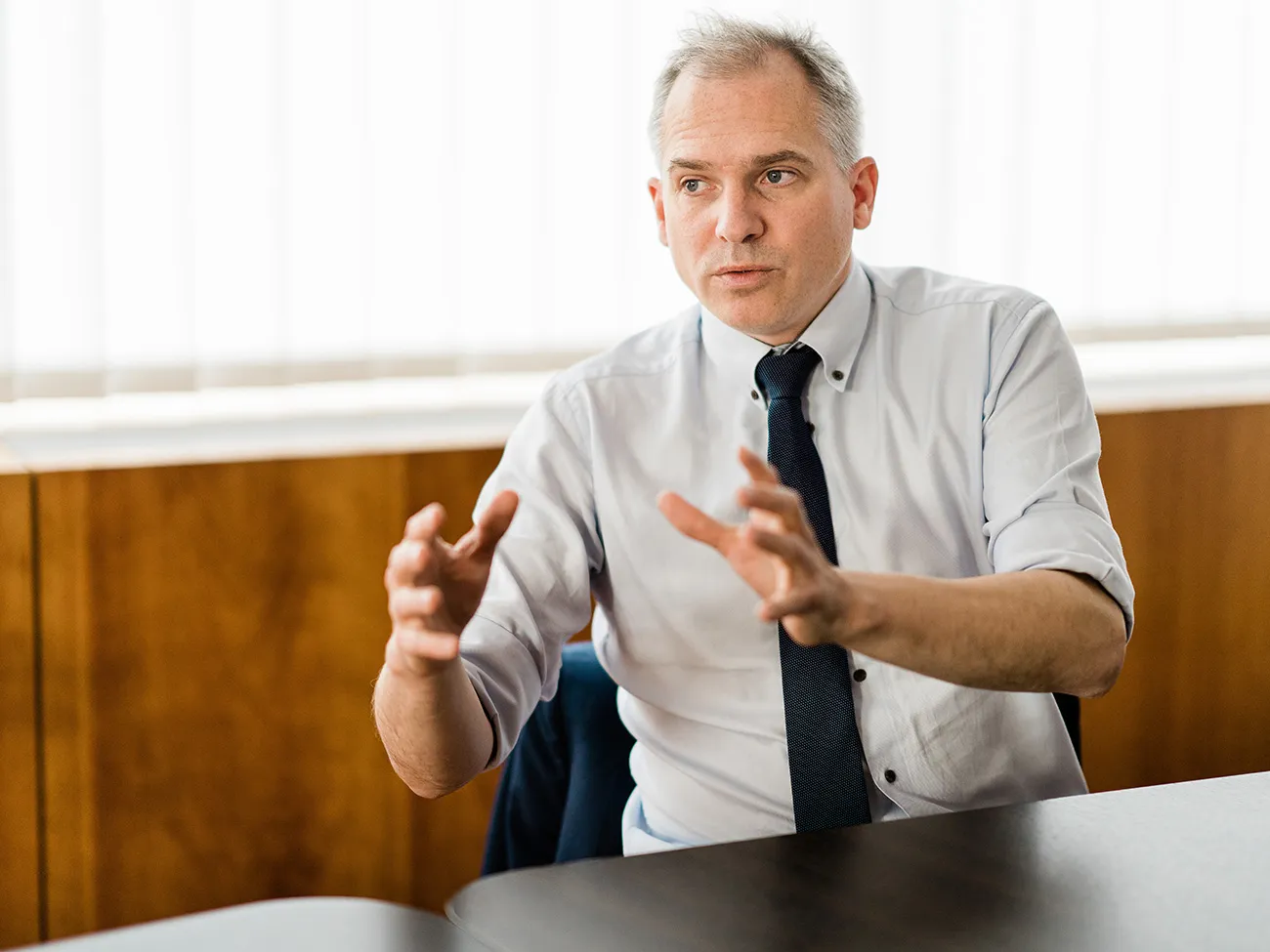
Matthias Diependaele: Hilde is right: we worked extremely well together. We wanted to send a clear message to Flemish entrepreneurs: we are here for you if you need us. During the crisis, we also showed that years of sound financial policy had left us room to deploy public funds. The challenge now is to get our budget back on the right growth path. The economic contraction has, of course, also meant that we have missed out on a range of revenues. You cannot make that up in one or two years.
The positive effect is clear to see. Job losses have been limited. On the other hand, cases of abuse of support schemes have also come to light. How are you dealing with them?
Hilde Crevits: We are strict but fair. Minister-President Jan Jambon has already said it: people who exploit a crisis like this to claim money unlawfully must not get away with it. All cases are checked, a system of sanctions has been put in place, and in cases of serious fraud, you can be barred from other support measures for up to 5 years. But I do want to emphasise that, based on what we know now, this involves a relatively small group. Some people have also repaid the money because their business did not ultimately have to close or was less affected.
The Flemish government has generally decided to exercise greater oversight of how subsidies are used. Is it difficult to separate the wheat from the chaff?
Matthias Diependaele: We need to view subsidy policy in Flanders in its historical context. It developed organically because, after the first state reforms, we had powers but little or no fiscal autonomy. If you want to steer policy in that situation, subsidies are an important lever. Over time, different departments have developed their own approaches. In Education, this is done through the programme decree; in Culture, it is set out in decrees, to give just two examples. Our intention now is to bring greater consistency to this. We also want to focus more on results: are the funds achieving their intended purpose?
Hilde Crevits: The same applies to economic support measures. In the past, our approach was very business-plan-driven: would the project result in a viable outcome? But our aim now is to focus our support measures more closely and achieve the objectives behind them. Take the recovery funding: when we spend it, we want to make a major leap forward in climate action and sustainability. Or, when we provide innovation support to the tourism sector, could we not do more to ensure that this innovation also leads to a smaller ecological footprint?
Matthias Diependaele: Ultimately, we need to ensure that the subsidies we provide help maintain our prosperity. We need to be willing to think long term. Decisions made today can have an impact over the next 20 to 30 years. Think of the vision and choices made by the Flemish governments in the 1980s to promote technological innovation and biotechnology. As a result, imec and VIB are now among the world’s leading institutions. So we should set our sights high.
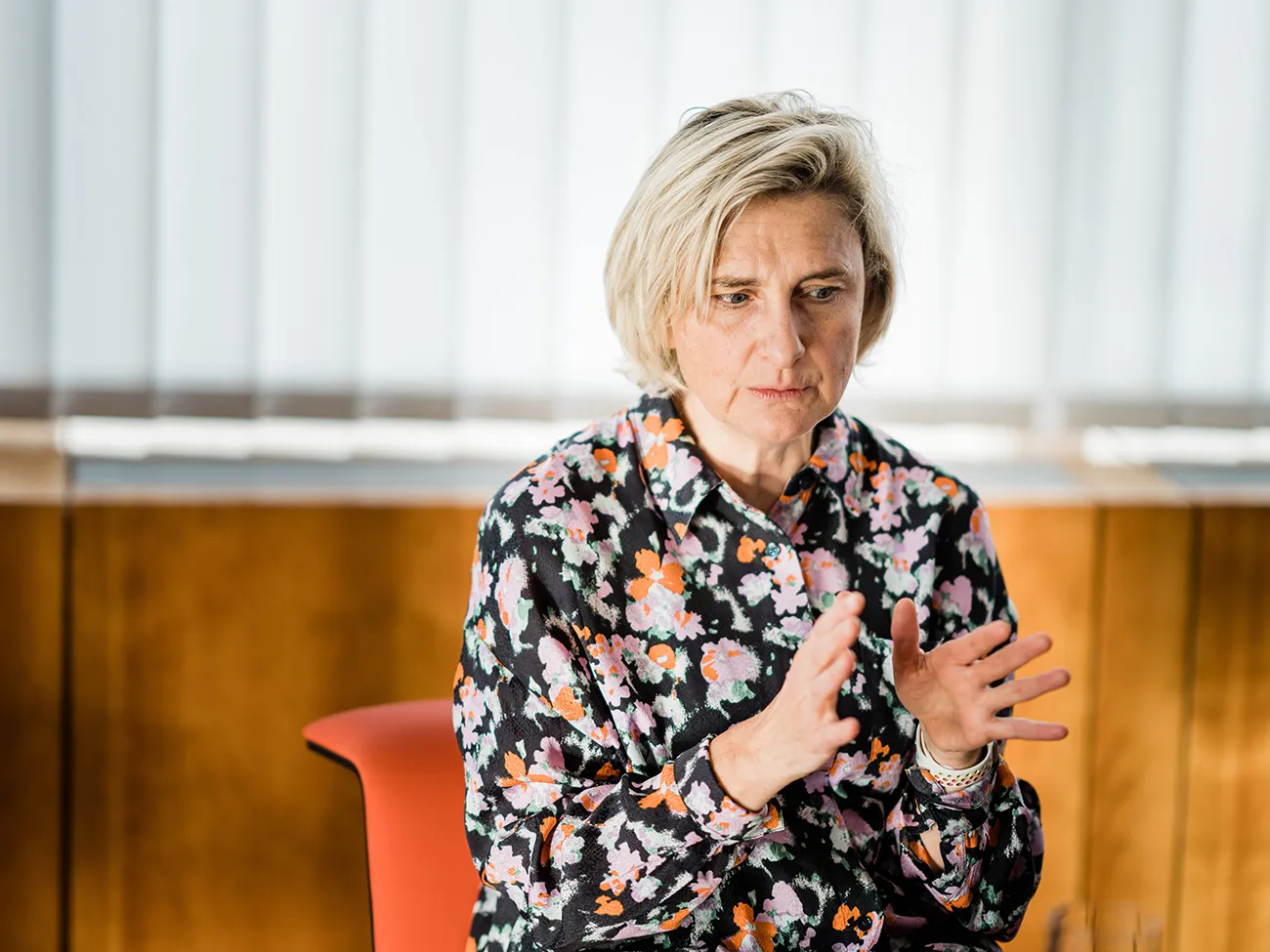
The budget will need to be managed with discipline as a result of coronavirus. How can that be reconciled with the need to invest?
Matthias Diependaele: At the start of this term of office, we set out a sound budgetary path. We made choices to address waiting lists in disability care, for example, and to catch up on social housing. To make those investments possible, we made savings in a number of areas. But there is no getting around it: the economy performed below par for more than a year, and that weighs on the budget, especially now that inflation is picking up too. We will continue to keep a close eye on our spending. Otherwise, you have to raise taxes.
Meanwhile, the war for talent is once again a pressing issue. Businesses across all sectors are crying out for staff. What can the Flemish government do to help find solutions?
Hilde Crevits: There are several groups of people with great potential in the labour market. Our systems are too rigid for people who have been ill for a long time. We need to look at how benefits can be combined more effectively with pay for part-time work. People who want to work should be able to work. The number of long-term jobseekers is also still too high. The longer you stay at home, the harder it becomes to return to work. We need to provide them with more support. The same applies to young people who leave secondary education without a qualification. We can see at the Oosterweel site that young people like this can get to work. We want to roll out that system in the regional cities. Finally, I am thinking of women with a migrant background who are currently housewives. Childcare is often the problem there. We see potential in a project that would allow them to take their children to a crèche while training, for example, as childcare workers. We need to get every talent into work, and that does not have to mean full-time employment.
Speaking of talent, you are both law graduates. If you were not politicians today, what would your dream job be?
Matthias Diependaele: I started my career as a bricklayer’s labourer at my father’s construction company. That is where my future would have lain if I had not gone into politics. The business world, running a company, really appeals to me.
Hilde Crevits: I had fantastic colleagues in the legal profession. But I didn’t feel that I was working on a project for society. That is why I went into politics. If it were to end, I think I would study philosophy, which has been a dream of mine for a long time. I would also read more, because I love books. And coffee. My son is a barista, and I would like to learn that too. Perhaps one day I will open a bookshop with a coffee bar.
Matthias Diependaele: Hmm, in that respect, a lingerie shop combined with a wine bar could also offer some prospects, I think. (laughs)
Let’s talk about West and East Flanders. Like many people from West Flanders, Hilde studied in Ghent. Do you have a lifelong connection with the city?
Hilde Crevits: Absolutely. You know what they say: a person from Ghent is someone from West Flanders with a degree. (laughs) I come alive when I’m in Ghent. I think it is a fantastic city and can easily spend time walking around on my own, without company. You know, I’m glad my parents let me study in Ghent. I came from a Catholic family in Torhout, and my choice certainly got people talking. But I found Kortrijk less appealing as a student city. I wanted to experience student life, and Ghent seemed the better choice in that respect.
Matthias Diependaele: I went to secondary school in Ghent. My father had student rooms there, so I could have studied at university there too. But at 18, I wanted to get out from under my parents’ authority. That is why I chose to go further away and study law in Leuven.
Matthias, do you have a connection with West Flanders?
Matthias Diependaele: Like every Flemish person, I enjoy going to the coast. My favourite places are the thermal baths in Oostende and the pier at Blankenberge. Recently, I really enjoyed a cycle ride from Brugge to Damme. That was a discovery. I have noticed that a lot has been invested in low-impact recreation in West Flanders.
Why should Matthias make the trip to Torhout?
Hilde Crevits: Oh, there are so many reasons. To start with, the heritage, which will interest you as a minister too. We have quite a few castles, including Kasteel van Wijnendale, an estate with a historic moated castle where Maria of Burgundy died in 1482 after falling from her horse. It also played a role during the Second World War. We also have a wonderful cycle route to the coast, along the old railway line to Oostende. And Land of Love is a new music festival that we hope will revive the rich tradition of Rock Torhout.
And why should Hilde make a detour via Zottegem?
Matthias Diependaele: For the green beauty and tranquillity of the Flemish Ardennes. When I take my children to school in the morning, I still enjoy the scenery every day. Zottegem is the gateway to the Flemish Ardennes and lies on the boundary of the Dender region: on one side, rainwater flows towards the Dender, and on the other, towards the Scheldt. You can walk or cycle here and truly unwind. When are you coming, Hilde?
Question about this story? Ask your question
Keep following this
Get an email when a new story is published. No account needed.
- SubjectGeneral







