




“We want to give forward-looking businesses every opportunity at the Innovation Campus”
Text Björn CrulImage Stad Geel, Thomas More Hogeschool
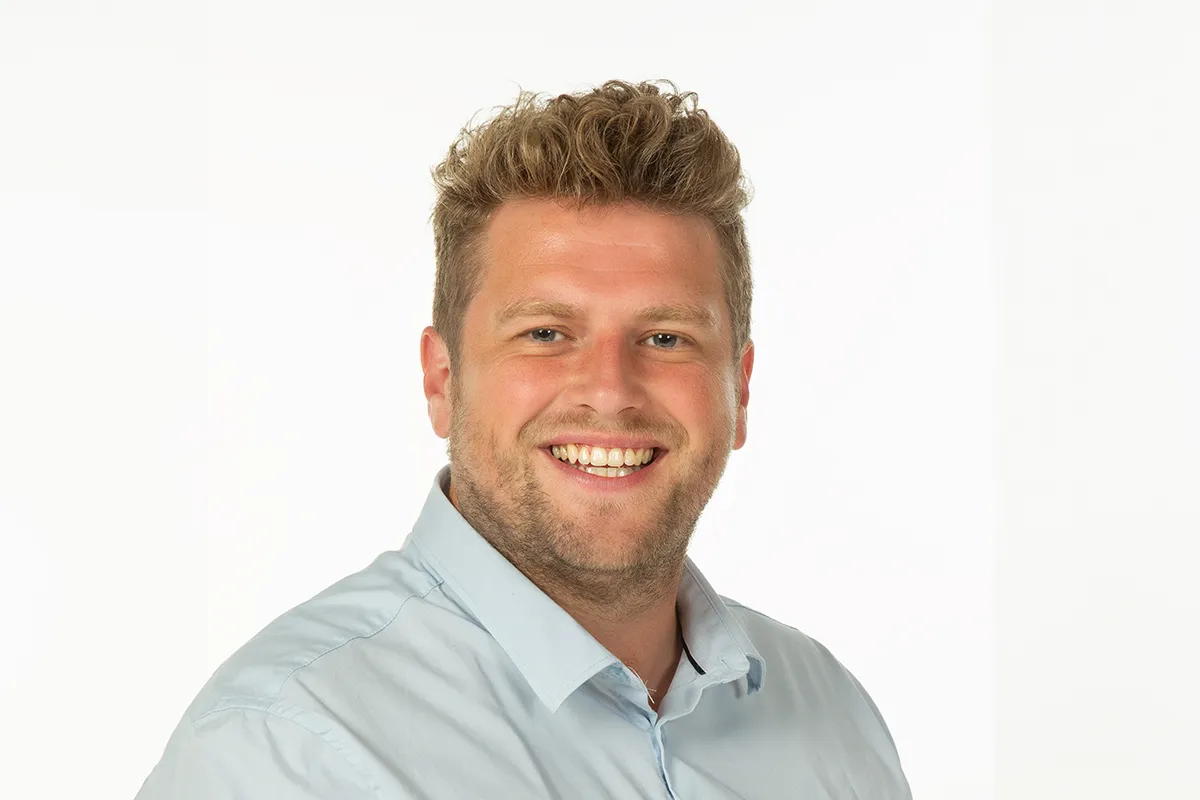
Mayor Marlon Pareijn speaks
Geel is one of the Kempen’s economic growth centres. Thanks to its central location and excellent accessibility, the city has become an attractive base for many businesses over the past few decades. The presence of higher education and skilled talent also boosts the city’s potential. Mayor Marlon Pareijn (cd&v) has high hopes for the expansion of the Innovation Campus, which will further intensify links between education and knowledge institutions.
What economic strengths can Geel draw on?
Marlon Pareijn: First and foremost, our strategic location between Antwerp, Eindhoven and Hasselt. Both the E314 and the Albert Canal connect us multimodally to the Port of Antwerp. Geel therefore offers businesses an excellent base, with access to the Benelux and, via Liège, Germany. It is no surprise, then, that there are many logistics and distribution companies here.
We also have business space available, both at the Geel-West and Geel-Oost business parks and in the smaller Liessel business zone, which is under development, and Hezeschrans, where work is due to start this year. We also want to move forward with the Ossenbruul spatial implementation plan, to provide additional space there too. The plan has been on hold for some time, but we now want to bring it to fruition.
Looking at the current economic fabric, which sectors are particularly strong here?
Marlon Pareijn: We have several strong sector clusters linked to the chemical and technology industries. Thanks to our links with the chemical cluster at the port, major sites belonging to Janssen Pharmaceutica and Sanofi can be found here, among others. Software company CIPAL Schaubroek, meanwhile, has developed an IT hub in Geel with broad expertise in digital services.
We also have a strong tradition in agriculture and food, so the agro-industry is well represented too. Thomas More University of Applied Sciences offers specialised courses in this field. The proximity of the university of applied sciences and the university also gives businesses easy access to research facilities and highly qualified staff.
What does the new administration want to focus on in its economic policy over the coming years?
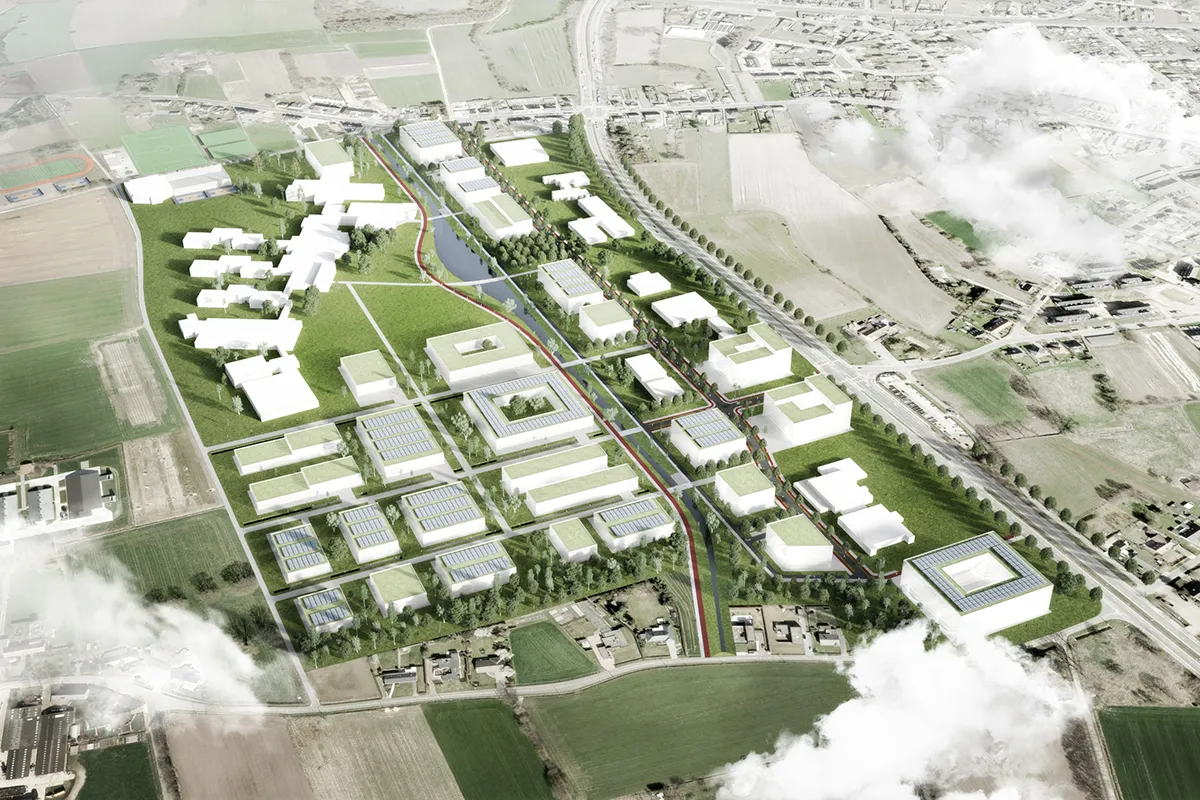
Marlon Pareijn: We want to prepare fully for the future. In a few years, development will begin on a new 18-hectare zone adjoining the Innovation Campus of Thomas More and KU Leuven. We are specifically targeting innovative companies that work with our knowledge institutions. The focus is on three themes: bio-based products, challenging technologies for challenging environments, and the future of ‘food & feed’.
We have already drawn up a master plan and spatial implementation plan for the expansion of the Innovation Campus. Talks are under way with several interested parties. A steering group comprising the city, HIKempen Stichting, Thomas More Kempen, KUL, IOK and Cipal nv will decide on the allocation. The emphasis will naturally be on synergies between research and innovation, and on transferring knowledge from the institutions into economic activity. We also see scope for spin-offs from the knowledge institutions at the Innovation Campus.
What support does the city administration offer entrepreneurs and start-ups?
Marlon Pareijn: With support from Vlaio and our partners youth centre De Vonk, Thomas More KUL and KUL, we are investing in an ecosystem. Since 2016, enterprising students and start-ups have been able to turn to StartUp 2440. They can draw on expertise to help them progress more quickly. They can also rent office space at the Innovation Campus at an affordable rate. The project has already spawned some excellent businesses. Bamaza, for example, has given the old Bloemfabriek a new lease of life as an event venue, while No Lobster has developed a sunscreen shower. We see a great many creative ideas emerging from the project. Our Business Support service facilitates this and connects them with the ecosystem.
The war for talent remains an issue for many businesses. What can the city do to help address this problem?
Marlon Pareijn: We try to communicate proactively about job fairs and initiatives that connect talent with businesses. One example is Jobdag Zuiderkempen on 29 April, where we bring together organisations with vacancies alongside several local authorities, VDAB and a network of partners. We also encourage links between students and businesses through internships and other schemes. As an administration, we stay in close contact with the local economy, for example by holding management meetings at businesses and listening to them. And it goes without saying that our links with higher education are very close.
Which economically significant issues do you look to higher levels of government to support?
Marlon Pareijn: Like most local authorities, we have a number of concerns about mobility on regional roads. We have already sent a delegation to the new Flemish Minister for Mobility to call for a number of structural improvements to our ring road, Antwerpseweg and Herentalseweg. Some junctions have been awaiting a safer solution for more than 20 years. We also want to take a considered approach to expanding the Innovation Campus, with plenty of attention to green space, water and buffer zones. It should be a low-traffic zone, with grouped parking facilities in a multi-storey car park. But if we are to do all that, we will also need support from the Flemish Government. It could give the project a decisive push in the right direction.
Question about this story? Ask your question
Keep following this
Get an email when a new story is published. No account needed.
- ThemeBusiness growth and entrepreneurship in Flanders
- SubjectGeneral







