




“We are playing in the Champions’ League of car traffic”
Text Björn CrulImage ICO, Port of Antwerp-Bruges
Chinese car brands give automotive logistics in Zeebrugge a new boost
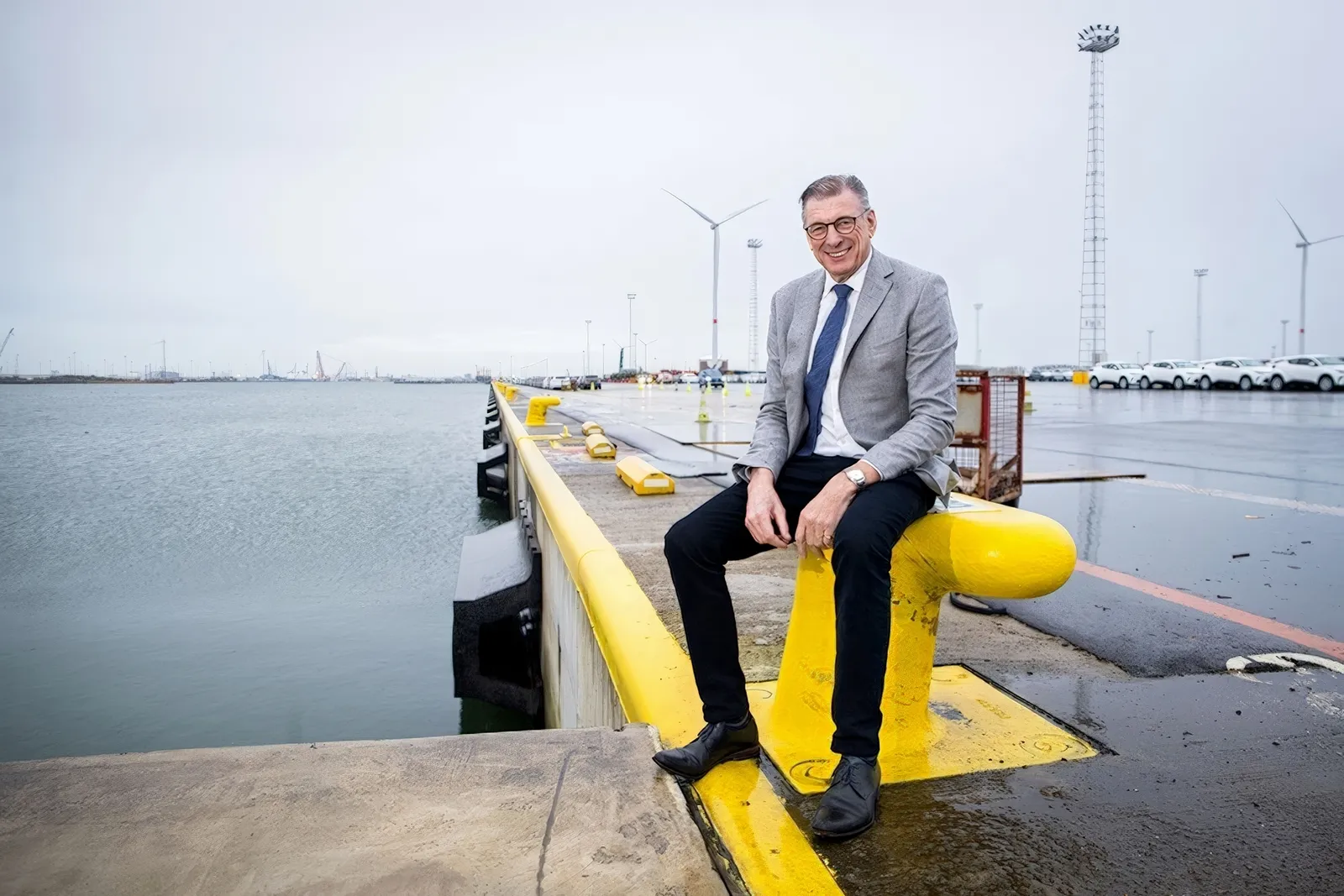
International automotive logistics is in full swing. Chinese brands are gaining ground, car carriers are getting bigger and manufacturers are centralising their stocks in the port. For Zeebrugge, one of the world’s leading car ports, this is creating new opportunities, but also a serious shortage of space. “Volumes keep rising. If we want to benefit from this, we have to keep investing,” says Marc Adriansens, chairman of International Car Operators (ICO).
Chinese cars are conquering the world. This is clear from the latest export figures compiled by ECG, the European association of logistics companies in the automotive sector. In the first six months of this year, China exported 5 million vehicles. In the whole of 2025, the figure was ‘only’ 7 million, while in 2021 it was 2 million cars. It therefore looks as though Chinese manufacturers will have quintupled their exports in five years.
Europe is a major destination for this growing flow. Marc Adriansens: “With 220,000 cars imported in the first half of this year, Belgium was even the leading European destination for Chinese manufacturers. European import duties of 8 to 35% on their electric cars have had little impact on rising imports. Initially, they responded by sending more hybrid models to Europe, as these are not subject to an additional duty. But today we are seeing that electric models make up the bulk of imports.”
In the first six months of 2026, the number of cars handled at Port of Antwerp-Bruges rose by 7% to 1.8 million, an increase that can be attributed to the Chinese. This is thanks to the success of brands such as BYD and MG. “They are high-quality cars at an affordable price, even with the import duty included. Consumers are open to them, and most dealers now offer Chinese brands too,” says Adriansens.
He has been active in the sector for more than 40 years and sees a clear parallel with the past: “The way the Japanese and South Koreans conquered the European market back then, first through exports and then through local production, is now being copied by the Chinese. The only difference is that it is happening much faster and on a much larger scale.”
Automotive logistics is changing too
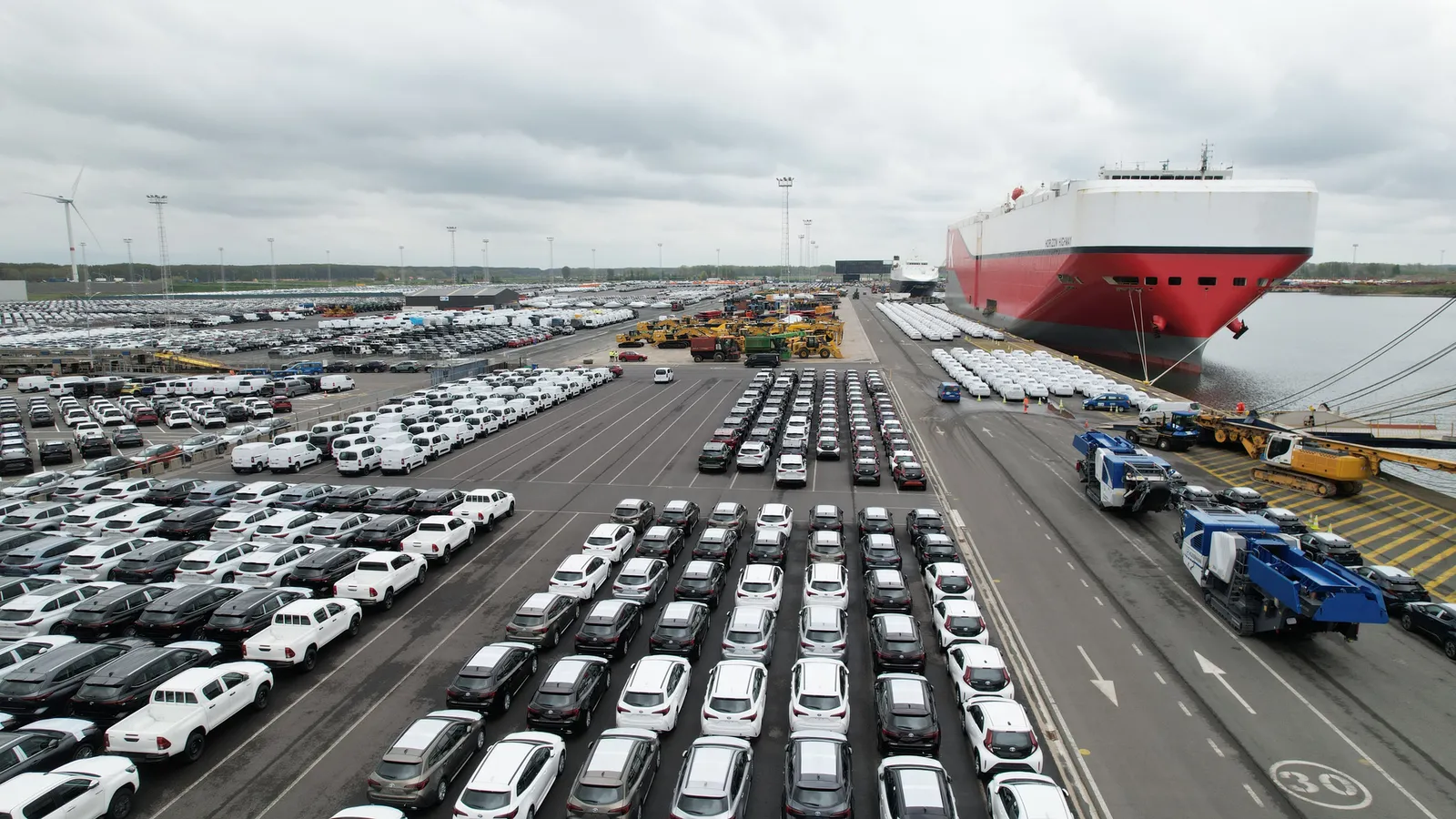
The logistics chain is evolving too: car carriers are getting bigger and now carry up to 10,000 vehicles. “Thanks to our scale, experience and location, Zeebrugge is playing in the Champions’ League of car traffic. We have excellent short-sea, road and rail connections to get cars to their final destinations quickly enough,” says Marc Adriansens. “Geopolitics is also working in our favour at the moment: the conflict in Iran and concerns about security around the Red Sea mean that ships from the Far East are once again sailing around Africa. That makes us one of the first European destinations on their route.”
The sharp rise in global car traffic also has a downside. Parking areas in ports are filling up. Alongside ICO, the largest operator, Wallenius-Wilhemsen, Cobelfret and DP World are also active in Zeebrugge. Toyota has its own sites there, but this is a historical exception. “We have to use sites outside our terminals, such as Ostend airport or the container docks in Antwerp. That is why ICO is currently building a new automated parking tower with 15 floors, with space for 10,000 cars.”
The port as a hub for e-commerce
Another factor is that manufacturers are reorganising their distribution. “We are seeing a clear trend towards so-called pooling compounds,” Adriansens explains. “Manufacturers want to manage their cars at a single central location and organise distribution from there. This is more flexible and cheaper than keeping stocks spread across dealers. A central hub makes it possible to respond more quickly and organise e-commerce. In the future, someone could order a car online and have it delivered straight to their home from the port. As operators, we will also need to be able to arrange number plates and insurance.”
This ties in closely with the business model of car operators in the port. Their profits do not come from parked cars, which stay on average for 18 days, but from additional services. “We inspect the cars, programme them for European roads, carry out minor repairs, fit accessories and so on. At ICO, this work is handled by a team of more than 300 logistics staff. As electrification and the importance of software grow, IT skills are becoming increasingly important for them. And, of course, we also have our 650 dockers, who load and unload all the cars.”
Import duties benefit the Belgian government
The economic importance of car traffic also extends beyond direct employment. Marc Adriansens: “Last year alone, around 1 billion euros in import duties on Chinese cars was collected through ICO. Most of this revenue goes to Europe, but the Belgian government is allowed to retain 25% as compensation for the work of customs. The amount will be even higher this year. The more successful we are, the better it is for the state.”
For Adriansens, this is an additional reason to keep investing in port infrastructure. “The new port lock is essential for access to Zeebrugge. We urgently need to get shovels in the ground. But it is at least as important to keep the 40-year-old Vandamme lock operational and reliable while we wait. We simply cannot afford to have access to the outer port interrupted for an extended period. That is why we need to pursue both tracks at the same time: accelerate work on the second lock and invest sufficiently in maintaining the existing Vandamme lock and ensuring its operational reliability. This is essential to guarantee continuity and further growth at the port of Zeebrugge,” Adriansens concludes.
Question about this story? Ask your question
Keep following this
Get an email when a new story is published. No account needed.
- SubjectGeneral







