




VIB sees opportunity as Donald Trump cuts funding for researchers
Text Björn CrulImage VIB
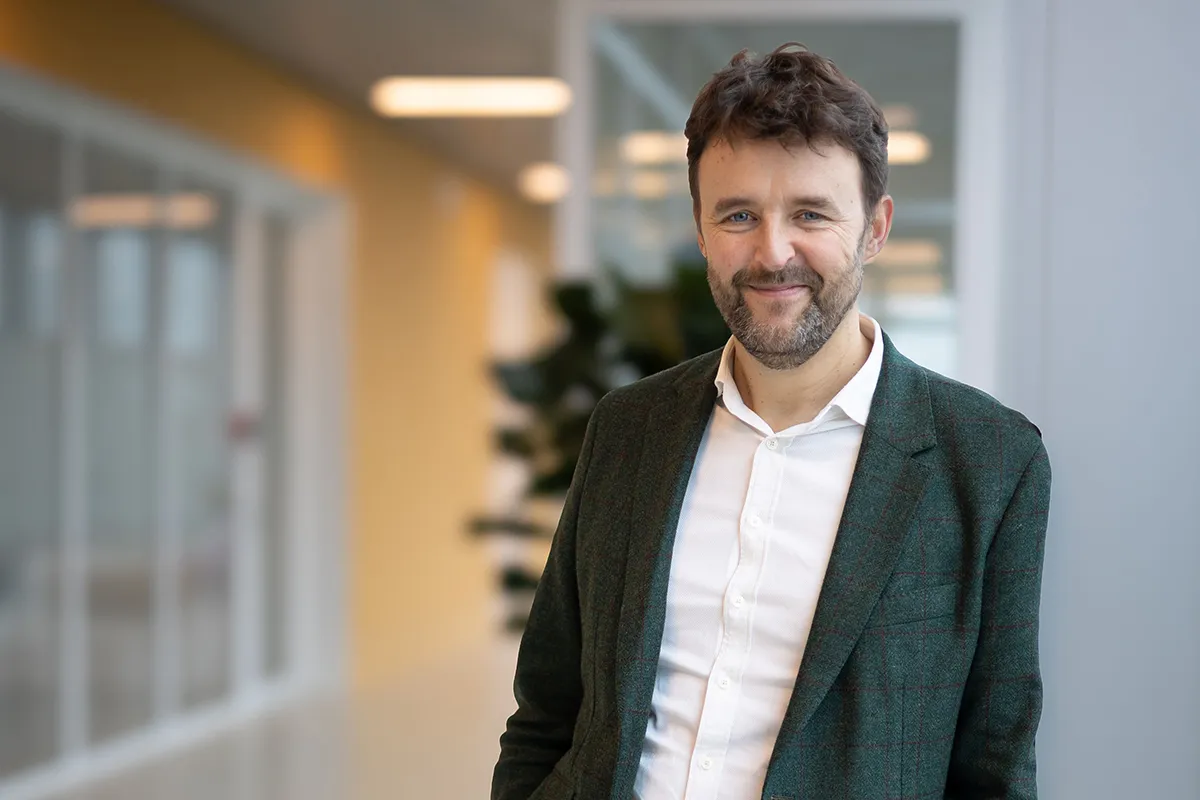
“We must do everything we can to attract top US talent”
The Flemish Institute for Biotechnology turns 30 in 2025. VIB brings together the strategic basic life sciences research of Flanders’ five universities and has also supported the commercialisation of its findings since its inception. As a result, Flanders has become a leading region in biotech. “That makes us very attractive to international talent,” says managing director Jérôme Van Biervliet. “With Donald Trump questioning the funding of US universities, there is an opportunity for a targeted brain gain.”
Ablynx, argenx, Biotalys, Crop Design, Plant Genetic Systems… these are just a few examples of Flemish biotech companies that have made their mark internationally. And they have at least one thing in common: they all emerged from the biotech ecosystem built up in Ghent, with VIB’s support. Jérôme Van Biervliet says: “In 1995, the Flemish Government decided to establish VIB as a strategic research centre for the life sciences. Ghent was chosen as its base. That decision, together with targeted investment over 30 years, has delivered phenomenal results. Flanders is among the world’s leading biotech regions, in pharmaceuticals, agriculture and food.”
The figures speak for themselves. VIB, which recently moved into a new headquarters off the E40 in Ghent, still works on behalf of the Flemish Government and must undertake a comprehensive evaluation of its results every five years. “Our mission is to make a difference, both through world-class research and by translating it into economic activity. Within our field, 42% of leading researchers are involved in a VIB project. With our support, universities can rank highly in biotech. Around 40% of all IP (intellectual property that provides the basis for commercialising research findings) generated by life sciences research at Flemish universities is thanks to VIB. Our task, then, is to ensure those figures remain high.”

argenx as a role model
Listed company argenx is a role model, having successfully launched its first medicine, Vyvgart, on the lucrative US market. “This is incredibly important. We have seen some impressive internationalisation successes in the past with Biocartis, Galapagos and Ablynx, which was acquired by Sanofi. But argenx is the most remarkable story so far. We can learn a lot from it,” says Van Biervliet. “For example, CEO Tim Van Hauwermeiren sought funding in the US very early in the company’s development. That enabled them to build a reputation there from the outset.”
“Vyvgart, the blockbuster product, was not their first project either, but the third or fourth idea they developed. They still maintain a strong connection with academia and value partners who are willing to help them think through the problems they encounter,” says VIB’s managing director.
“Another success factor is their highly process-driven approach and strong execution. Tim is impressive in this respect: he knows how to do things smartly, leanly and efficiently. And last but not least, from the outset argenx set out to build a company that would bring internationally unique medicines to market for complex diseases. It is not the easiest path, but the way is now open to sustainable success.”
Keeping the momentum going
Three decades on, the biotech ecosystem is thriving and growing. “It is even accelerating: many scale-ups and spin-offs are on the cusp of global breakthroughs. To name just a few: Augustine Therapeutics has just raised 78 million euros for its research into the neurodegenerative disease CMT. Confo Therapeutics, which focuses on rare hormonal and metabolic disorders, has secured a major collaboration with Eli Lilly. Orionis Bioscience, which is developing medicines to tackle cancers that are currently untreatable, has struck a deal with US biotech pioneer Genentech (part of Roche). And the Bill Gates foundation has invested in Aphea.Bio, which is working on biological alternatives to agricultural fertilisers.”
These successes have not come out of nowhere: most of these biotech companies have been working on their projects for more than 10 years. VIB’s challenge is to keep the entrepreneurial momentum going. Jérôme Van Biervliet says: “We want to see many more ‘argenx’es’ in the future. That is why we set up the biotope incubator, which explicitly targets international startups. We support them with a start-up programme, premises and mentoring. There is also a fund attached, in which private shareholders finance an initial funding round. The incubator was launched in 2023, and we have supported 17 startups so far. We are now seeing the first promising stories emerge, with ideas that have been maturing for some time proving viable.”
Brain gain from the US
But it all still starts with world-class scientific research. Flemish universities have built a global reputation in this field, and continued investment is essential. “What is happening in the US right now also presents a major opportunity. We are receiving many messages from top talent who have been laid off or want to leave the US, as President Trump cuts university funding. We must do everything we can to bring this diverse, international talent here. It is a unique opportunity for a brain gain. We are discussing this at European level, as well as with the Flemish Government. We should regard these scientists as elite athletes from the Champions’ League. We must welcome them with open arms and develop a targeted policy, including a more flexible approach to language requirements.”
Jérôme Van Biervliet is therefore optimistic about the future of Flanders’ biotech sector: “Promising treatments for diseases that are still incurable are in the pipeline. Biotech will also be needed to ensure a more sustainable food supply. At the same time, we are seeing many digital technologies mature, making it easy to combine them with biotech research. AI is of course everywhere, but I am also thinking of protein design, for example. That is why VIB is strengthening its ties with the IT tech sector: we see considerable added value in collaboration, especially in the early stages of research.”
Question about this story? Ask your question
Keep following this
Get an email when a new story is published. No account needed.
- SubjectGeneral







