




Temse Mayor Hugo Maes speaks
“The circular economy could create 1,000 new jobs by 2030”
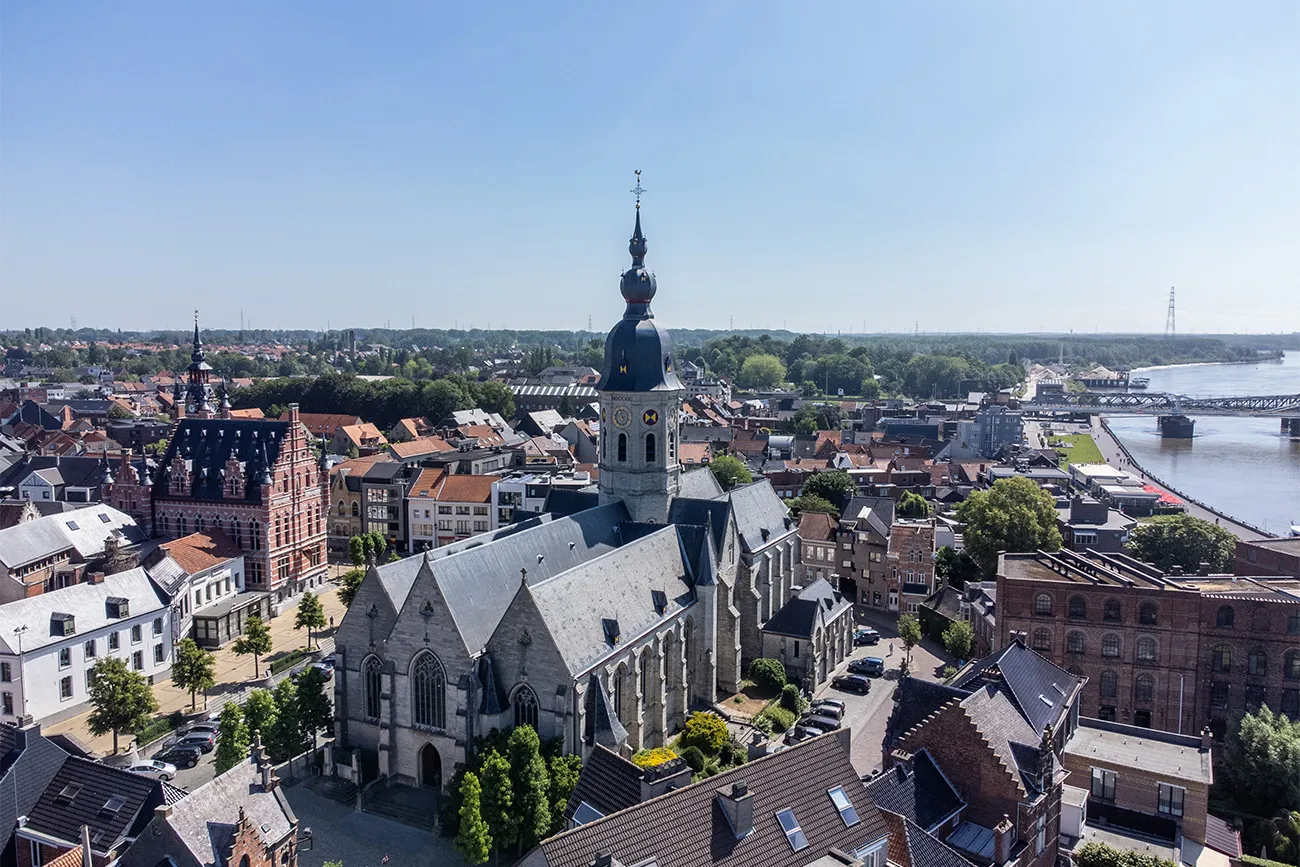
Temse owes its growth and economic development to its location on the Scheldt. In the 19th century, the region was home to a thriving textile industry. Later, Temse became synonymous with the Boelwerf shipyard, which made an international name for itself after the Second World War by building medium-sized vessels and employed up to 3,500 people. Shipbuilding disappeared from Temse for good in the mid-1990s. A diverse economic landscape developed in its place. Mayor Hugo Maes (CD&V) is pleased with the range of businesses and sees many opportunities in the further development of the circular economy.
Mayor, what characterises Temse’s economy in 2023?
Hugo Maes: For decades, employment and prosperity in our municipality were shaped by a handful of large textile companies and the Boelwerf shipyard. That era has come to an end, and fortunately we have evolved into a landscape featuring a wide variety of businesses, spread across the TTS industrial zones, which are home to more than 200 businesses and 5,000 employees, and De Zaat, where 60 businesses employ around 1,000 people. There is also a local retail sector, based mainly in Temse town centre.
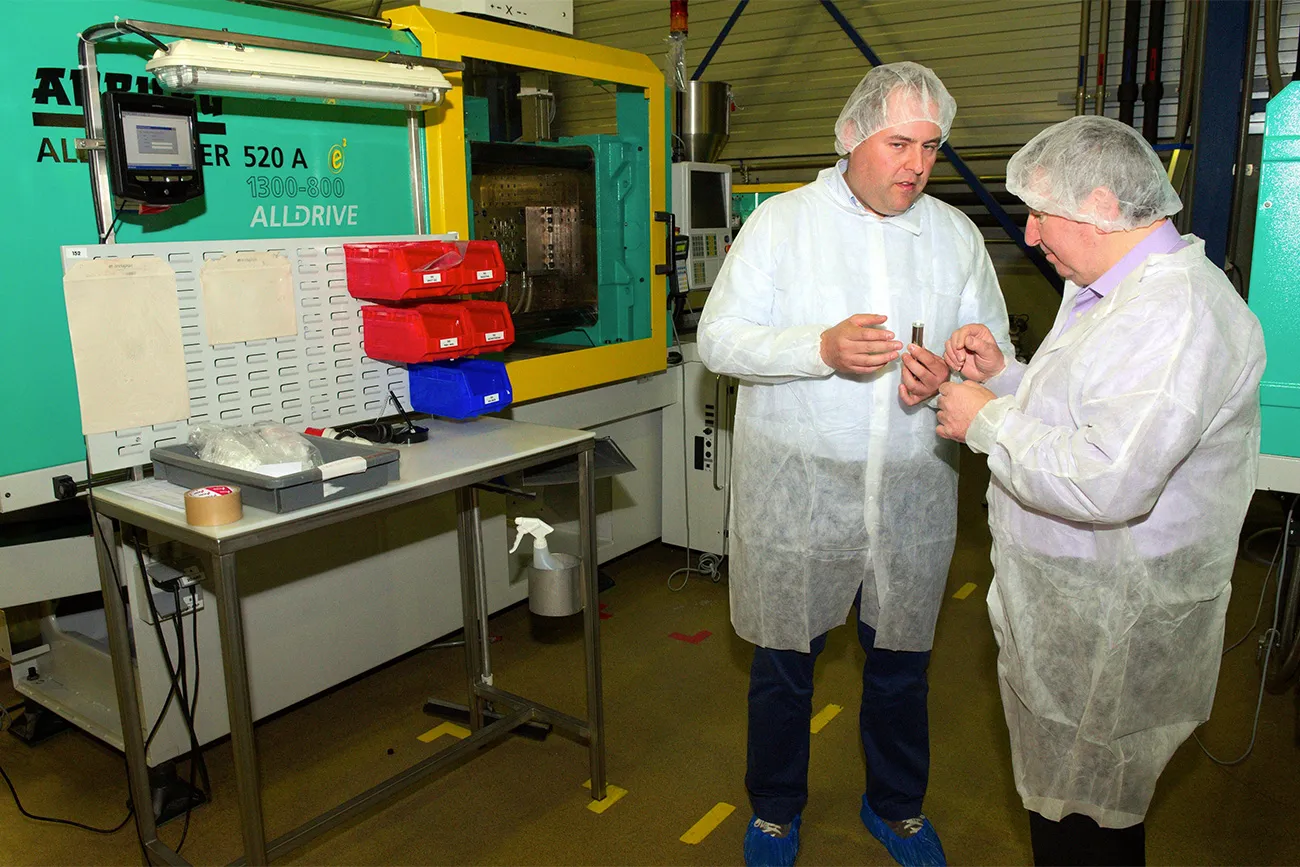
Many of these businesses have an international reputation: medical technology company BD, Bilfinger Industrietechniek, construction group Cordeel, De Meyer Masters in Mechanics, Hubert De Backer, Kurve Lichttechniek Waasland, Mastervoice and others. Retail accounts for the largest share of employment (22%), followed by construction (14%) and local industry (13%).
What makes Temse attractive to businesses?
Hugo Maes: We are a medium-sized municipality with more than 30,000 residents, strategically located on the Scheldt, close to a major port and near the Dutch border. Temse has a growing, young population. That means we, as a municipality, have to invest heavily in areas such as childcare, public services and leisure facilities. Above all, however, businesses can find plenty of talent in the labour market here.
What does the local authority see in the municipality’s future?
Hugo Maes: We have a holistic vision for a ‘healthy and regenerative Temse’, with action across four areas: the natural municipality (we look to nature for solutions), the connected municipality (we plan with proximity in mind, strengthen our local economy and aim to generate as much green energy locally as possible), the flexible municipality (we build a future based on the specific characteristics of our municipality) and the circular municipality (we avoid waste and use fewer raw materials by choosing to reuse materials).
That sounds very ambitious. What does it mean for local economic policy?
Hugo Maes: We want to be a frontrunner in the circular economy. A strategic plan has been drawn up for this under the name ‘TemseCirculair2030’. We expect it to create 1,000 circular jobs and generate economic growth of 1%. There is also potential for social employment, for example in sheltered workshops. The sectors where we see the greatest opportunities are agri-food, construction, organic waste streams and consumer goods. We are already developing pilot projects with the City of Sint-Niklaas, Voka and our local business associations.
How can the municipal council set its own economic course? What levers does it have at its disposal?
Hugo Maes: Our starting point is that we want to create a favourable business climate. As in many other municipalities, the focus is on supporting local retail and hospitality, local mobility solutions and so on. But where possible, we also make use of our role as a platform. For example, we represent the interests of our businesses to higher levels of government, which is important for the larger companies in our municipality. We also try to connect the expertise available locally and foster cross-fertilisation. We know that entrepreneurs like learning from one another.
As a medium-sized municipality, we are also close to our entrepreneurs. We hold quarterly business meetings attended by representatives of the municipality’s main business associations: TTS, Ondernemend Temse, Voka and UNIZO. We also involve experts and partners such as Interwaas. These meetings are producing good results.
What does Temse offer start-up entrepreneurs and start-ups?
Hugo Maes: We have a strong Local Economy department to help young entrepreneurs get started and answer their questions about doing business in Temse. We also place a strong emphasis on community-building activities and initiatives, such as our local gift voucher, farmers’ markets and more.
Finding new employees remains the biggest challenge for many businesses. How can the municipality help its companies with this?
Hugo Maes: Every two years, we organise a jobs fair in partnership with VDAB and Ondernemend Temse. It gives businesses in Temse the chance to find suitable candidates to fill their vacancies. Jobseekers, meanwhile, can have their CV prepared or reviewed at the VDAB stand. The jobs fair was a great success, so we have decided to make it an annual event from this year onwards.
Another challenge is the need for space, both for expansion and for new activities. Do you still have land available for new businesses?
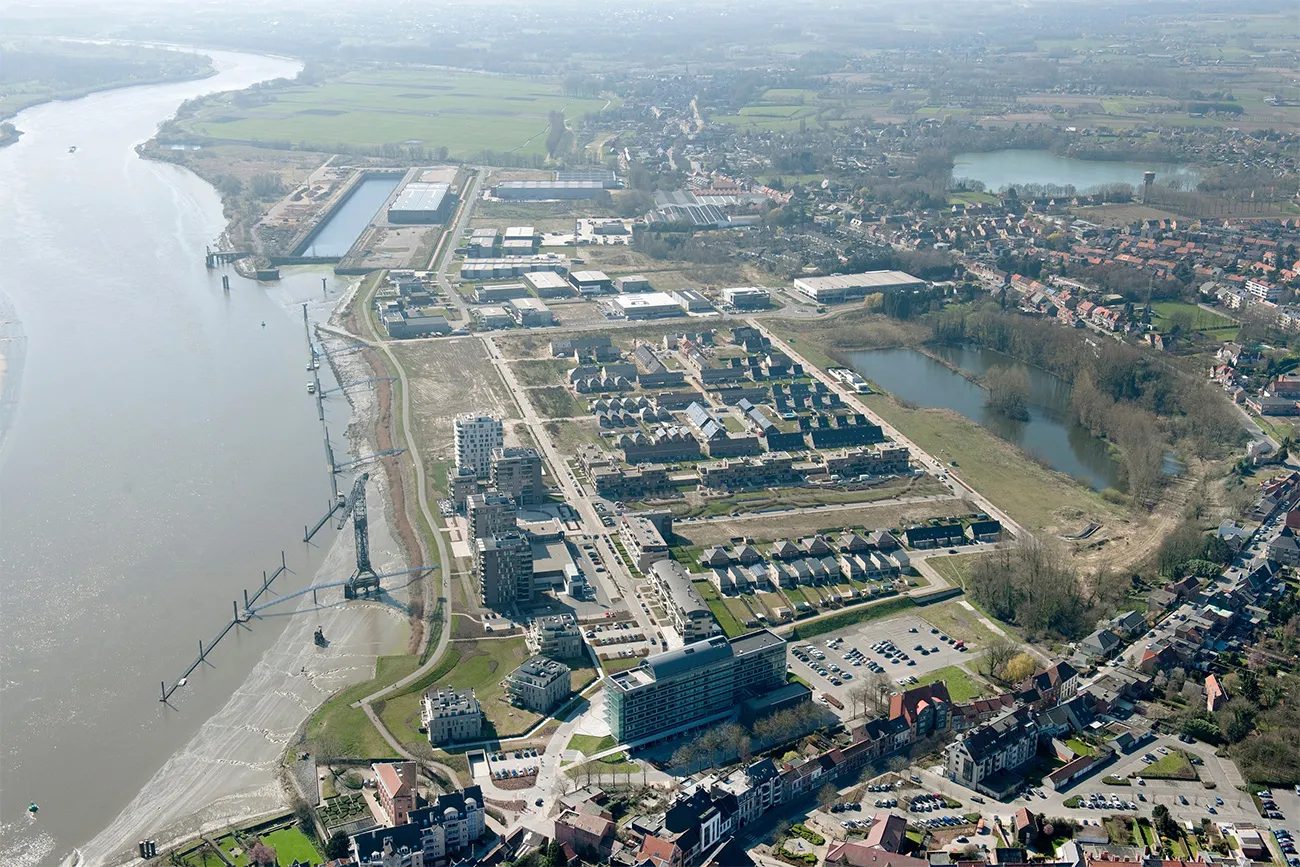
Hugo Maes: Like many other municipalities in the Waasland region, Temse no longer has any new industrial land available. We therefore have to work within the existing zones. Together with Interwaas, the Province of East Flanders, POM Oost-Vlaanderen and the City of Sint-Niklaas, we are working on the redevelopment of the regional TTS (Temse-Tielrode-Sint-Niklaas) business park. More than 200 businesses are based there today: small and large logistics companies, wholesalers and retailers, concessionaires, training centres and manufacturing businesses. We want to create space there mainly for large-scale businesses in production and processing, logistics and distribution, with a strong focus on accessibility, liveability and sustainability.
Which projects important to businesses do you still want to deliver during this term of office?
Hugo Maes: Plans include the redevelopment of the town centre and the revitalisation of the Schoolstraat-Pastoor Boelstraat-Kouterstraat corridor as an attractive shopping street. This will enhance Temse’s appeal. The process is also under way to renovate and upgrade the TTS industrial zone, and we hope to take the first steps there soon. In addition, the Agency for Roads and Traffic is preparing to build the Oostelijke Tangent, a new link between the E17 exit junction in Sint-Niklaas and the N70, leading towards the TTS zone. This should improve access and mobility for the businesses there.
Question about this story? Ask your question
Keep following this
Get an email when a new story is published. No account needed.
- SubjectGeneral







