




New digital platform aims to make sustainability reporting easier for SMEs
Text Bavo BoutsenImage Febelfin, Bavo Boutsen
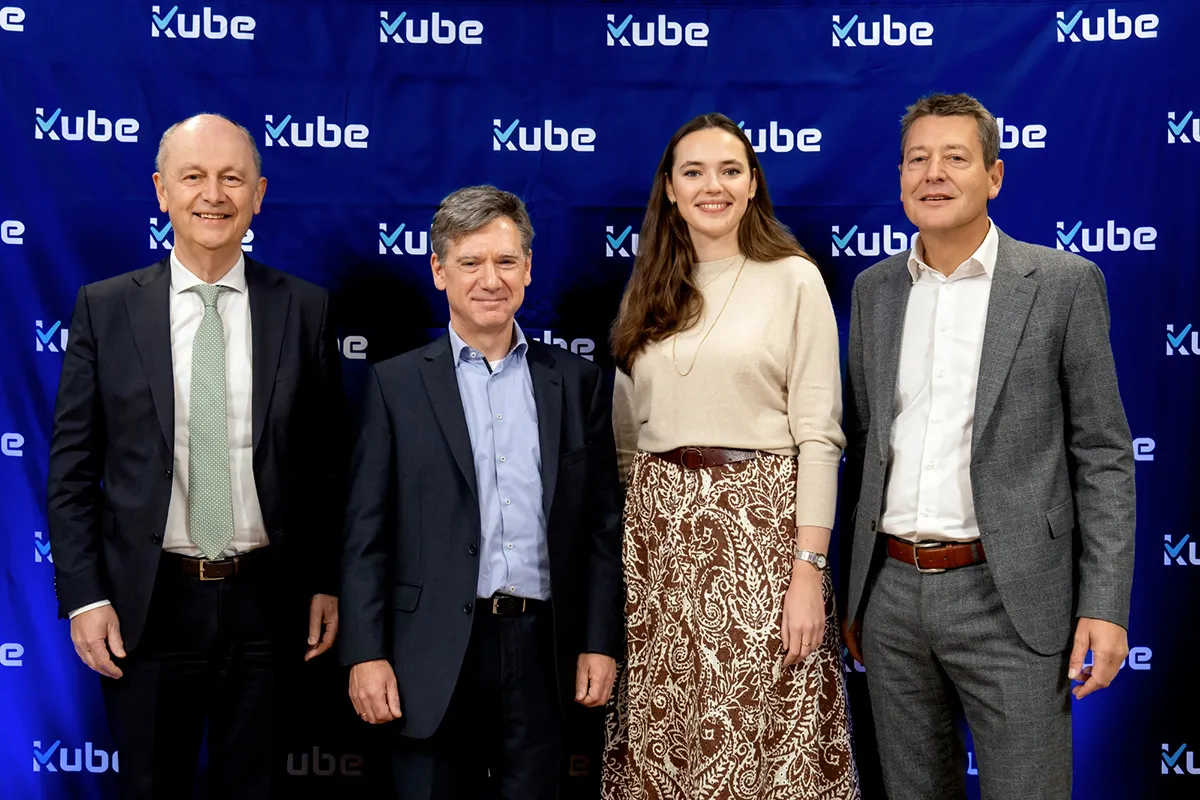
“We want to make ESG reporting a competitive advantage for SMEs”
Sustainability reporting has been one of the cornerstones of European policy on sustainability for several years. But these obligations place considerable additional pressure on businesses. With the launch of Kube, an innovative platform designed to make ESG reporting easier for SMEs, the financial sector hopes to ease that administrative burden.
For a long time, the EU’s CSRD rules, or mandatory sustainability reporting, were a much-debated topic among business owners and policymakers. There were fears that the new rules would miss their goal by creating additional administrative pressure and complexity. In response, the EU developed the so-called Omnibus package, which simplifies the rules for businesses. Among other things, this means that far fewer SMEs will be subject to the requirements.
However, as the reporting obligation remains in place for large companies, which also need data from their suppliers, the rules are still filtering down to SMEs. Belgium’s financial sector anticipated this and commissioned the development of its own digital platform, enabling SMEs to record their sustainability data easily. The platform, called Kube, was officially launched recently.
Based on the ‘only once’ principle
“The financial sector wants to support its customers as much as possible in achieving their sustainability goals. As we believe reporting is an important part of this, we joined forces as a banking federation with Belgium’s four major banks and Isabel, which handled the technical development,” explains Karel Baert, CEO of Febelfin.
Kube aims above all to standardise reporting. Businesses complete a questionnaire based on the European reporting standard. The system can then generate an officially recognised sustainability report. “The AI assistant built into the system can automatically fill in up to 80 per cent of the report. Human verification remains essential, of course,” says Kris De Ryck, CEO of Isabel.
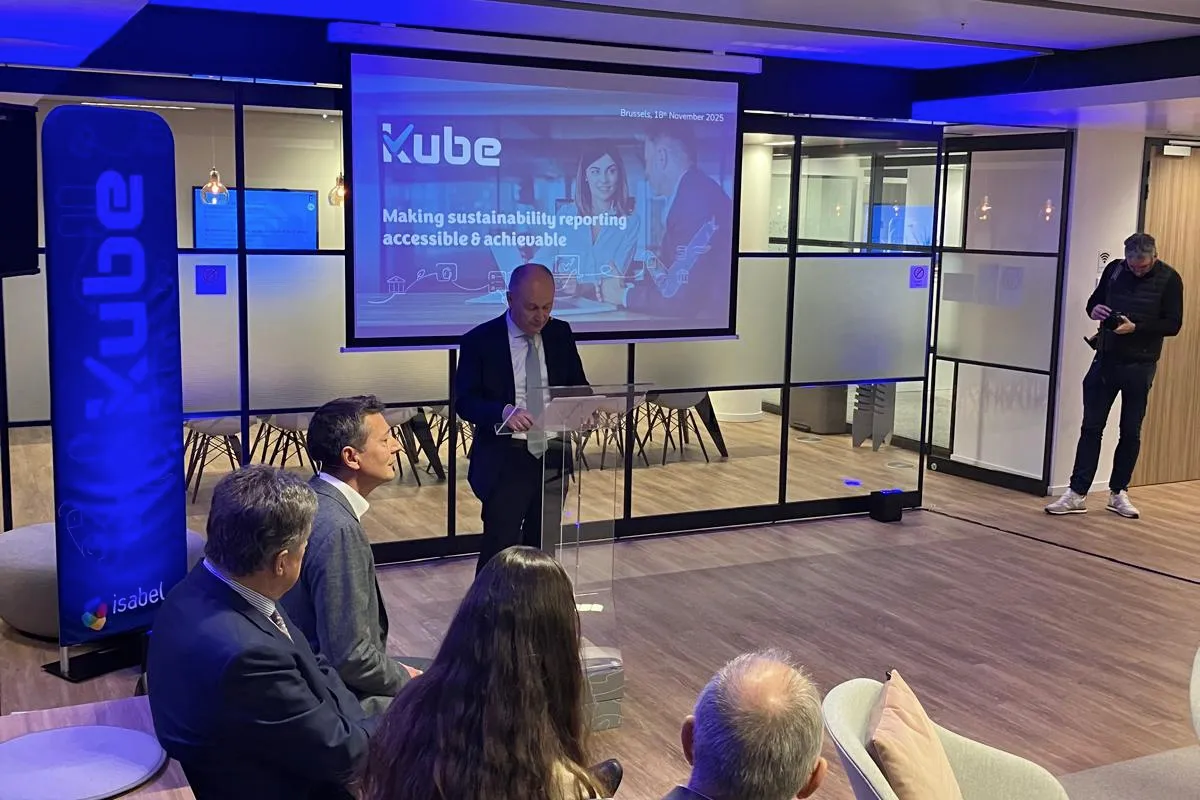
“Kube is based on the ‘only once’ principle. This means that businesses will only have to enter their relevant data into the system once. That is often not the case today,” De Ryck continues. “The system is also interoperable, so businesses can, as it were, plug previous reporting work into our system. The report can then easily be shared with customers, banks, investors or other partners.”
“To ensure the platform meets businesses’ needs as closely as possible, Isabel first had a number of companies test it for several months. We used their feedback to make the platform even more relevant.”
Sustainability as a competitive advantage
Karomia, a Ghent-based software developer specialising in sustainability reporting, is also a partner in the project. “Our collaboration with Isabel and Febelfin shows how technology can bridge the gap between regulation and what is feasible for SMEs. With Kube, we wanted not only to remove the complexity of sustainability reporting, but also to give businesses an intuitive, future-proof platform that helps them build transparency and trust,” says CEO Luc Machiels.
Ultimately, the initiative is intended to lead to greater ESG maturity, allowing businesses to focus fully on achieving the sustainable transition. By making it easy to map their sustainability efforts, they can communicate about them more proactively, which in turn gives them a competitive advantage, the reasoning goes. Kube’s basic version is free. The AI-supported version will eventually be paid for, although a launch offer means it will also be available free of charge until the end of 2026.
There is also considerable enthusiasm from the political sphere. “As all our surveys of SMEs show, red tape is the biggest brake on growth and development. That is why administrative simplification is a top priority for the government. The launch of this innovative platform, which makes reporting accessible to all SMEs, fits perfectly with that,” says Eléonore Simonet, federal Minister for the Self-Employed, SMEs and the Middle Classes. “That is precisely why we are offering the AI-supported version of the system free of charge to all SMEs until the end of 2026.”
Question about this story? Ask your question
Keep following this
Get an email when a new story is published. No account needed.
- SubjectGeneral







