




New car tax rules: what future for the plug-in hybrid?
Text Dieter QuartierImage Mercedes, Renault

While plug-in hybrid company cars ordered before 1 July 2023 were particularly tax-efficient, their deductible percentage is now falling year on year. In other words, they are becoming increasingly expensive from a tax perspective. But does that mean they are breathing their last?
The end of the combustion engine under the bonnet of the company car is near. Although new company cars will only have to be emissions-free from 2026 to qualify for tax deductions, the tax authorities are already tightening the screws on businesses and the self-employed that do not switch to electric for their new orders.
Plug-in hybrids (PHEVs) are also in the firing line, just as they are beginning to offer an attractive electric range. A range of 100 kilometres is no longer unusual for brands such as Mercedes-Benz and BMW, which are touting the technology as the ideal transition solution for a broad audience. If you order a PHEV now, however, you will see the maximum deductible percentage fall from the current 100% to 75% in 2025, 50% in 2026, 25% in 2027 and zero from 2028.
An average of 50% to 62.5%
Although this means plug-in hybrids are gradually becoming more expensive for businesses, their overall cost can still be lower than that of a petrol or diesel car. If your PHEV is delivered at the end of this year or early next year, you will benefit from an average deductible percentage of 62.5% if you keep it for four years, and 50% if you use it for five years.
By comparison, if you choose a petrol or diesel car that is, for example, 60% tax-deductible today, that percentage will also apply in 2024 and 2025, before falling to 50%, 25% and zero in 2026, 2027 and 2028. Over four years, this gives an average deduction of 48.75%, falling to 39% over five years. In short, the average deductible percentage for a plug-in hybrid ordered in 2023 and delivered this year or in 2024 will remain higher than for a diesel or petrol model.
The downside is that a plug-in hybrid remains considerably more expensive to buy and only makes sense if you can charge it frequently using (affordable) electricity. Fuel costs are only 50% deductible for PHEVs. The electricity they consume follows the car’s deductible percentage.
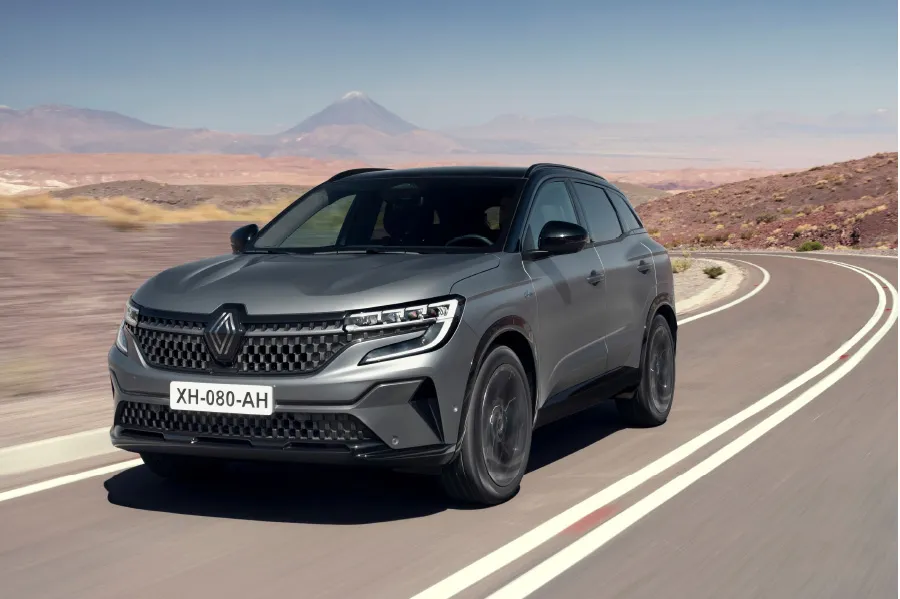
CO2 contribution tips the balance
An employer that makes a car available to an employee must pay a so-called solidarity or CO2 contribution if the car is also used privately. The contribution is determined by the type of fuel and the number of grams of CO2 emitted per kilometre.
At present, the amounts are relatively modest, at around €30 to €60 a month depending on the emissions figure. But anyone ordering a diesel or petrol car now will have to budget for a multiple of that amount. In 2023 and 2024, the amounts are multiplied by 2.25; in 2025, the multiplier rises to 2.75. In 2026, it will be 4, and from 2027 onwards, 5.5 times the current amount, which will also be indexed annually.
Plug-in hybrids avoid these multipliers, provided they meet the rules for qualifying for the minimum contribution. This stands at €31.34 per month this year. As a rule of thumb, you are in the clear as long as CO2 emissions are limited to 50 g/km.
What about self-charging hybrids?
Those who are not keen on a plug-in hybrid but still want to make an environmentally conscious choice could consider a self-charging hybrid. It comes at a modest price premium and emits around 25% less CO2 than a comparable petrol car. This means the tax burden is slightly lighter, while you can drive on electric power some of the time without having to worry about access to charging facilities. It is no wonder this type of powertrain is gaining ground among businesses.
Question about this story? Ask your question
Keep following this
Get an email when a new story is published. No account needed.
- ThemeFinancial and legal decisions
- SubjectGeneral







