




Network organisation Leuven MindGate celebrates 10 years in 2026
Text Björn CrulImage Leuven Mindgate
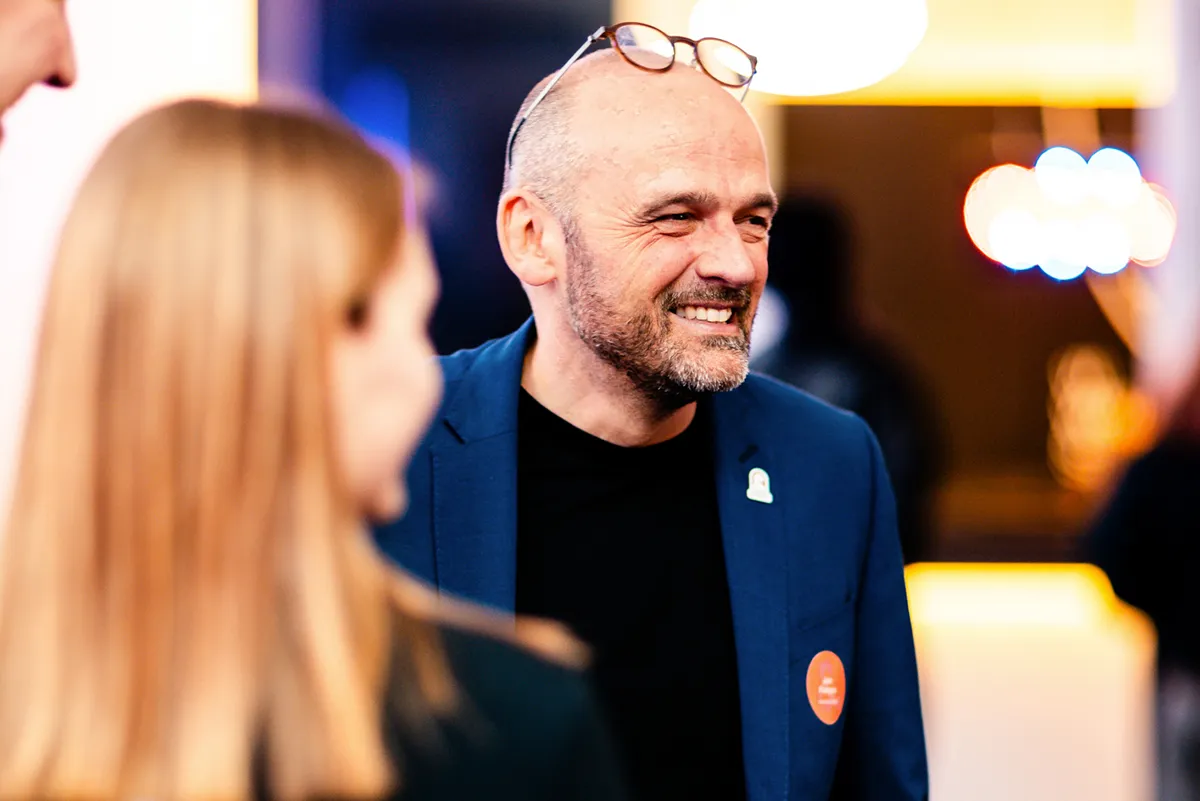
“We need to sharpen our profile in specific tech niches”
When it comes to research and development, Leuven is one of Europe’s leading regions. With KU Leuven, UZ Leuven, imec and a host of high-tech companies, the region is a hotbed of innovation. Leuven MindGate was set up to stimulate the further development of this knowledge economy. The non-profit organisation is a hub for the ecosystem, bringing innovators together and promoting Leuven internationally. Almost 10 years after its founding, its mission remains as relevant as ever. “We need to attract enough talent, including from abroad, to maintain our leading position,” says managing director Jan Paesen.
The imec tower, a landmark in the Leuven region, is the clearest proof of how academic research has translated into economic dynamism. Since 1984, the independent research centre has built a leading position worldwide in micro- and nanotechnology. “And it continues to be a hugely inspiring example,” says Jan Paesen of Leuven MindGate. “Especially now that Europe has realised it needs much greater strategic autonomy to safeguard its economy. We need to take the fundamental research that imec translates into practical applications further, towards pilot lines. Hopefully, in time, that will also lead to more production in Europe. This will allow us to build complete value chains on the basis of scientific innovation.”
Leuven has the right foundations for this. “There is an extraordinary amount of know-how and talent here. Just look at what the engineers at the Groep T campus achieved with their solar-powered car, to give just one example. The university has one of the most effective technology transfer offices, commercialising developed intellectual property through partnerships with the private sector or through spin-offs. This amounts to more than 3,000 contracts and around a dozen start-ups each year,” says Paesen.
An ecosystem with close connections
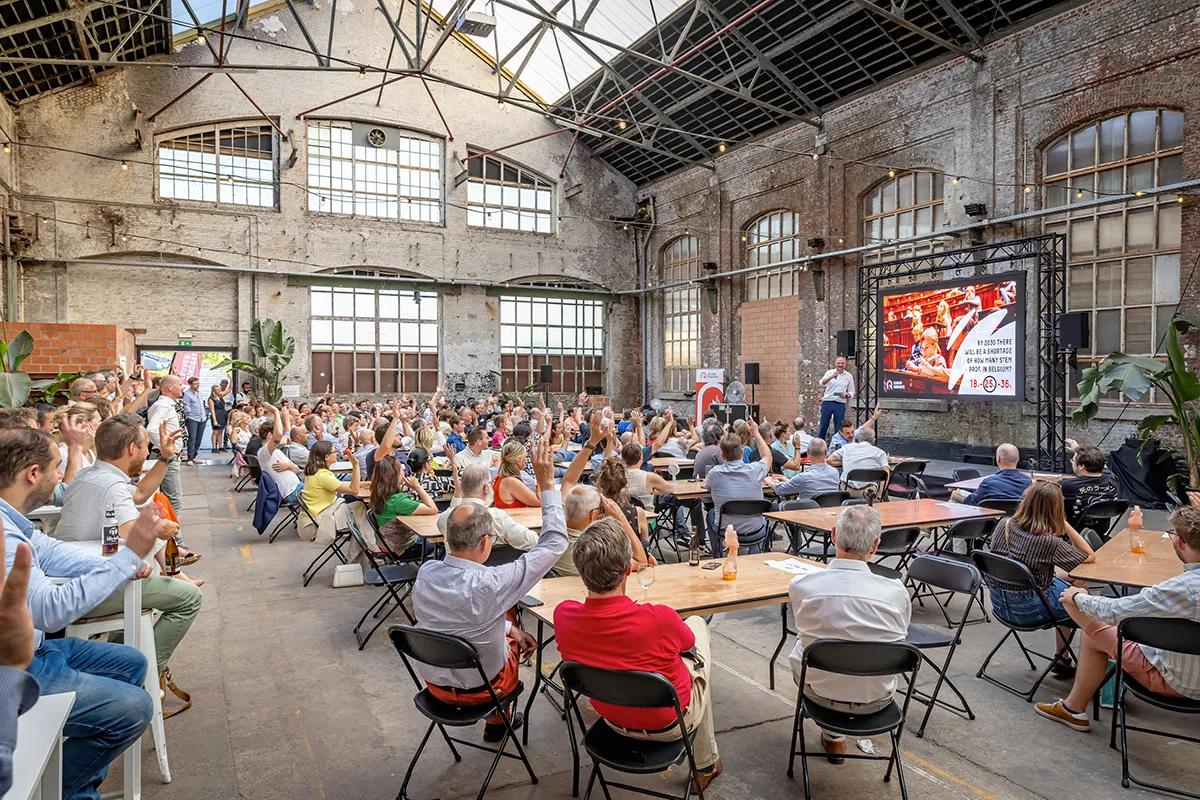
Leuven MindGate plays a crucial role at this intersection. The organisation was founded in 2016 under the auspices of the City of Leuven, KU Leuven, UZ Leuven, imec and a number of private partners. “As a collaboration platform, we help drive the ecosystem. We have 425 member organisations. We organise events for them, foster exchange between researchers and companies, match start-ups with established businesses and develop projects to strengthen the region’s knowledge economy. One of our greatest achievements over the past 10 years is that we have helped create very close connections between everyone involved. We can quickly put people in touch to create new opportunities.”
To realise its ambitions, Leuven’s research and business communities both need talent. And that is where the problem lies. Jan Paesen says: “The number of baby boomers leaving the workforce is now greater than the number of new people coming in. AI will partly solve that problem, but the need for brains will still be high. So we need to attract international talent to Flanders. Our university, for example, has 15,700 international students. If you want them to stay here after their studies, you need to provide affordable housing and a framework that allows their families to join them and helps them feel at home here, among other things. The government can facilitate this, for example by making language regulations more flexible.”
Talent pooling to fill vacancies faster
Leuven MindGate has also recently launched a talent-pooling project. “The aim is to recruit available talent more quickly by sharing candidates between different organisations. To give a concrete example, IT company easi recently hired 150 new employees. During the recruitment process, the company screened 500 applicants. So, in a manner of speaking, there are 350 ‘silver medallists’: people who just missed out. We want to gather these valuable candidates in a pool that other HR teams can then draw on,” says the managing director. His organisation will provide support for the project.
Another challenge facing the region is a shortage of affordable business premises and housing. “We are looking for solutions at regional level, towards Tienen, Diest and Aarschot. These cities are close by and well connected, but we also see opportunities to establish, for example, a food tech research centre in Tienen, where Tiense Suiker and Citribel are already based.”
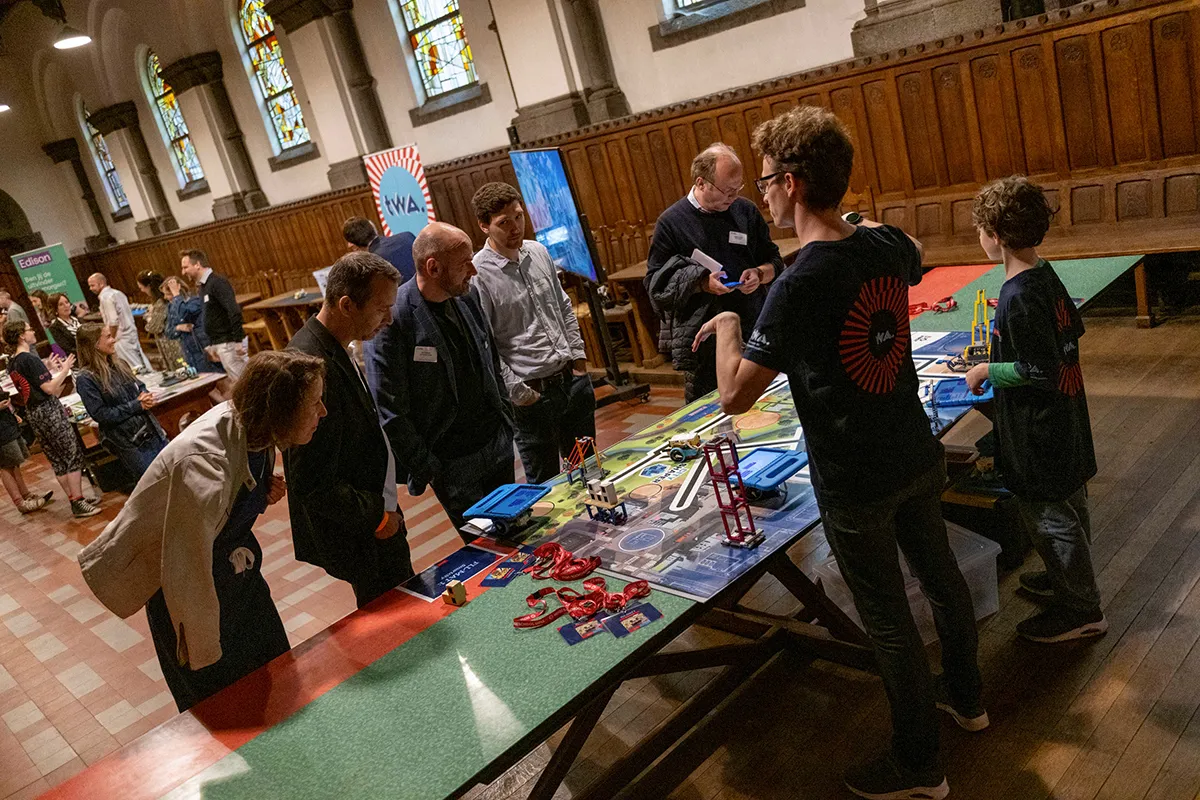
To raise Leuven’s profile more widely, Paesen’s six-person team works with Flanders Investment and Trade (including to attract foreign delegations) and Vlaio. Leuven MindGate also wants Leuven to join the series of city festivals organised as part of the government initiative Flanders Technology & Innovation 2026. “We want to promote STEM to a broad audience and bring technology to the attention of entrepreneurs. We need to get young people interested in science, technology, engineering and mathematics as early as possible. The need for talent will remain high for years to come.”
Eindhoven as a role model
As a role model for the further development of the knowledge economy, Leuven MindGate looks, among other places, to Eindhoven, where Brainport has a strong reputation and the former Philips site has been transformed into High Tech Campus. “Eindhoven has specialised in areas such as nanotech and photonics and has a clear master plan for regional economic development. We can learn from that: we need to focus even more on specific niches so that we can successfully develop them into value chains. There is potential in areas including hardware engineering, mechatronics, health & lifesciences, biotech and data,” concludes Jan Paesen. “We are already in talks with the Eindhoven region so that we can strengthen each other.”
Question about this story? Ask your question
Keep following this
Get an email when a new story is published. No account needed.
- ThemeReaching and connecting with customers
- SubjectGeneral







