




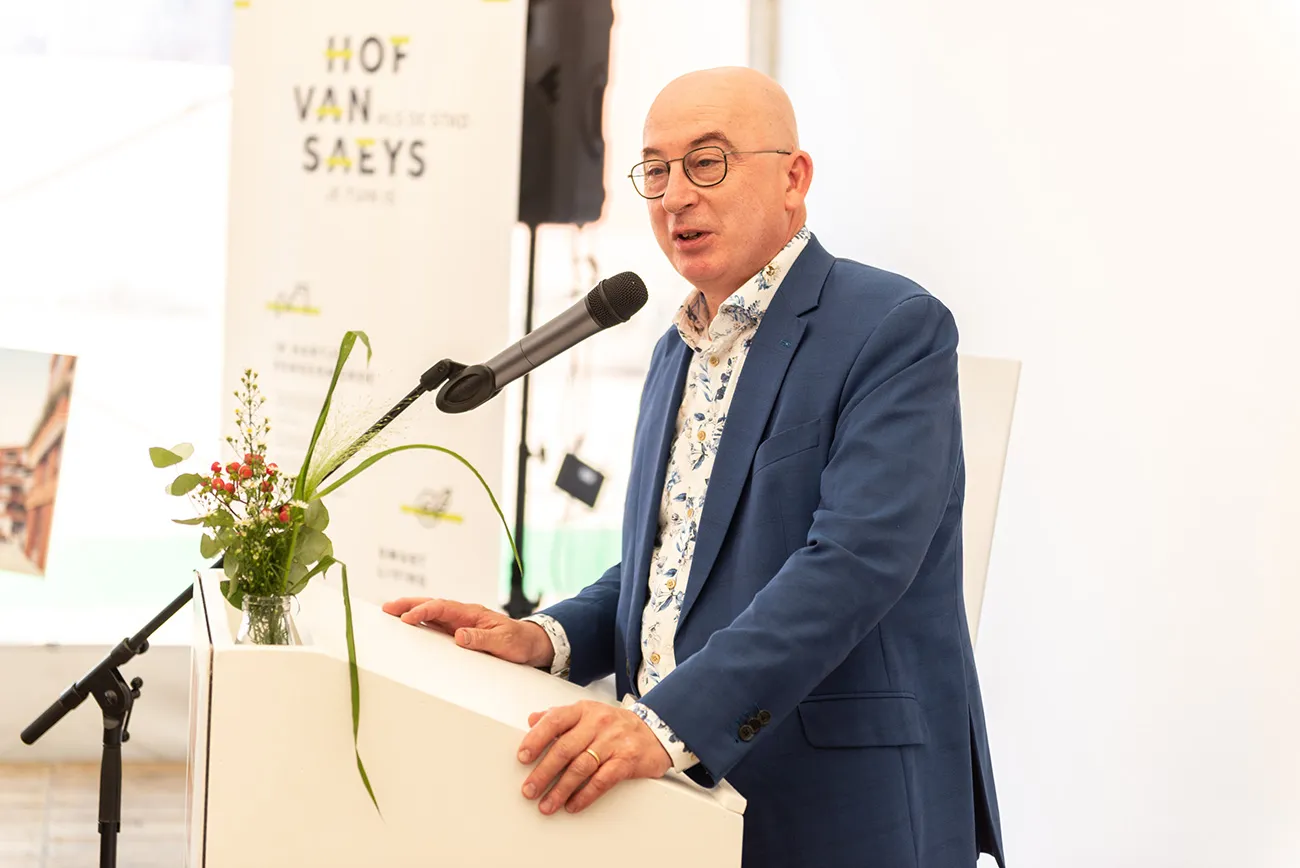
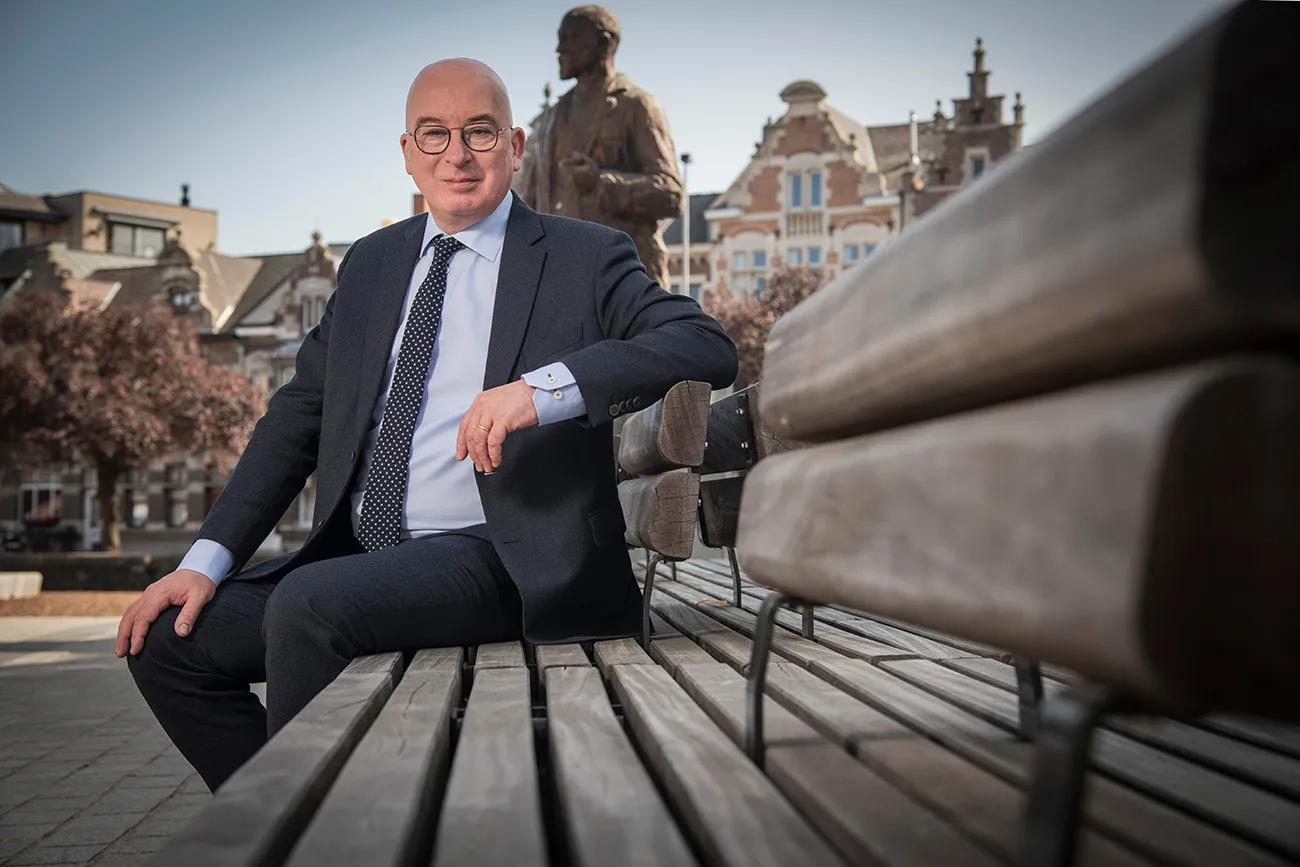
Mayor Piet Buyse speaks
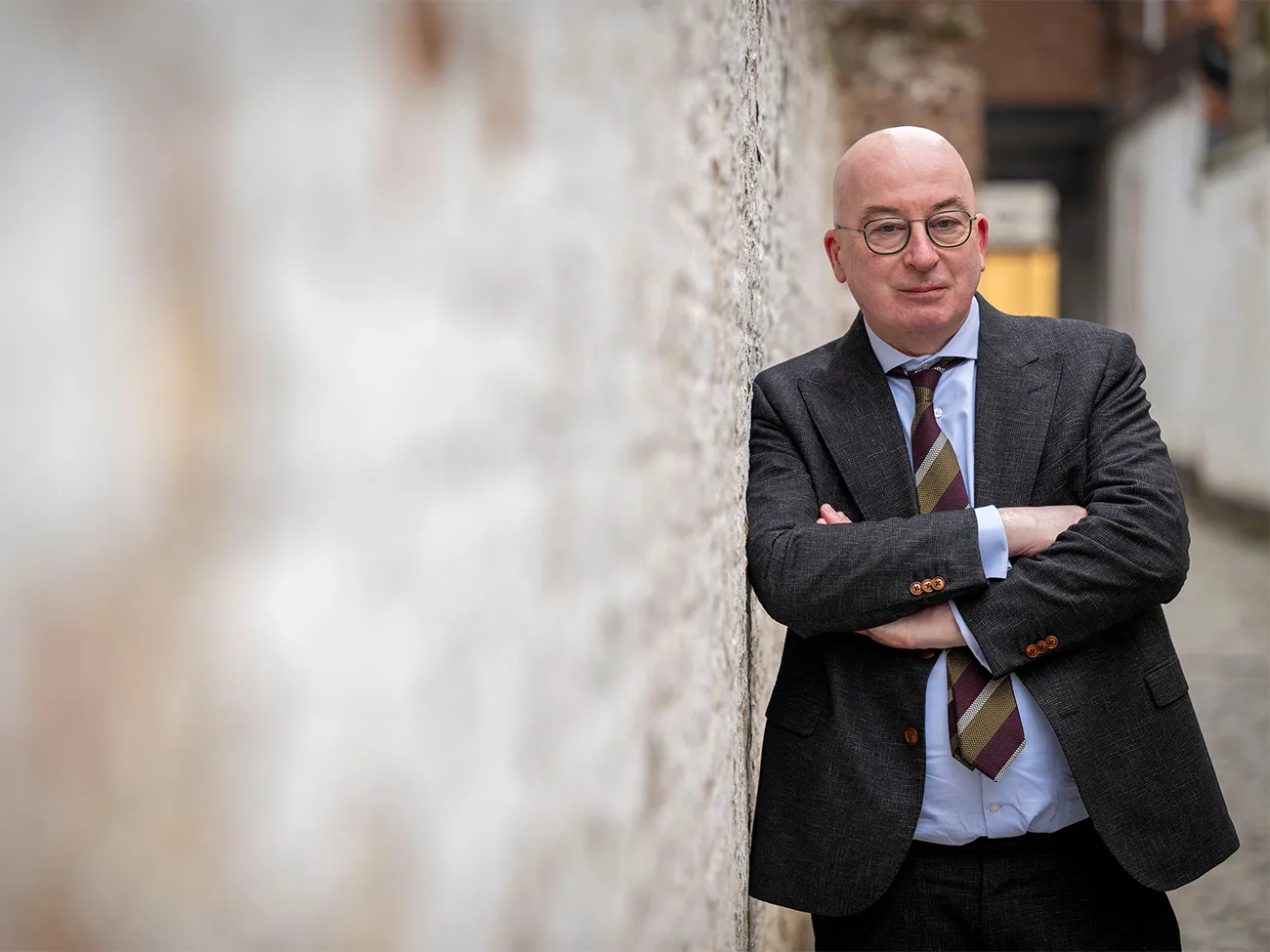
Mention Dendermonde and people will probably think first of the Ros Beiaard or the confluence of the Dender and Scheldt. Yet this East Flanders city, with a population of 46,000, is also home to a wealth of businesses. Its central location in the Ghent-Antwerp-Brussels triangle, affordable housing and green surroundings are all advantages that Mayor Piet Buyse (CD&V) is keen to promote. He has led the city since 2007 and sees plenty of potential: “We are the ideal city for hybrid ways of working, where living, working and quality of life are equally important.”
“We continue to invest in quality space for businesses”
Mr Mayor, what advantages does Dendermonde offer to people looking to set up a business?
Piet Buyse: We see ourselves as an ideal hub for companies and organisations operating within the Flemish Diamond. We are right at its heart: Antwerp, Ghent and Brussels are just 35 kilometres away, and it takes less than half an hour by train to reach the centres of Brussels, Mechelen or Ghent. Our central location, as well as our position on the Scheldt and Dender, is certainly an advantage. Companies also need to invest more than ever in their human capital to attract and retain talent. We are the ideal city for that, thanks to our accessibility, local services and high quality of life. Most people are looking for a peaceful, green and affordable place to live, with plenty of social contact, where they feel safe.
What characterises Dendermonde’s business landscape?
Piet Buyse: We have a very diverse range of businesses across a wide variety of sectors. Many have a long history, such as Premium Sound Solutions, the loudspeaker manufacturer that was once part of the Philips group; Tarkett, which has given Desso’s carpet factory a new lease of life; and Smart Packaging Solutions, part of packaging manufacturer VPK Group.
Because our business community is so diverse, ranging from craft businesses to large industrial manufacturers, we have a stable environment with fewer employment risks. Education, healthcare and the judicial system are also major employers in our city, both directly and indirectly, through the many service providers they support.
Does the city also offer facilities for start-ups?
Piet Buyse: On the one hand, we have the necessary infrastructure: a well-run business centre where a start-up can get off the ground easily. Once it is ready for the next stage, there is a sufficient supply of affordable premises in the city. On the other hand, we have invested in a team led by our town-centre manager and local economy coordinator, to help businesses with their applications and administrative matters at the city.
The aldermen and I are also available to welcome companies and their guests in our unique facilities, our historic buildings. I remain convinced that these are an asset when hosting business contacts or corporate events. And, of course, this is not just for start-ups.
How do you keep in touch with what is happening in the business community?
Piet Buyse: We hold regular consultations through the Local Economy Advisory Council. And, of course, we maintain the traditional contacts with Unizo and Voka. But I learn the most from company visits. Even after all these years, I am still regularly amazed by the entrepreneurial spirit in my own city. A visit gives us a feel for what is happening, both in the boardroom and on the shop floor. During these meetings, we listen to companies’ concerns and can also explain more clearly what the city is working on. I really missed these personal contacts during the coronavirus pandemic.
How can the city pursue its own economic policy?
Piet Buyse: We need to be modest: our powers are limited. Our main aim is to facilitate things through the city’s network and help businesses move forward. We consult frequently and bring stakeholders together. For example, we organised a session with Unizo on “the city as a customer”.
When it comes to business premises, we work with the intermunicipal company DDS, which develops and manages business parks. There is still work to be done in this area. We have one regional business park, Hoogveld, but it is full. Fortunately, a new expansion is planned, following lengthy proceedings at the Council of State.
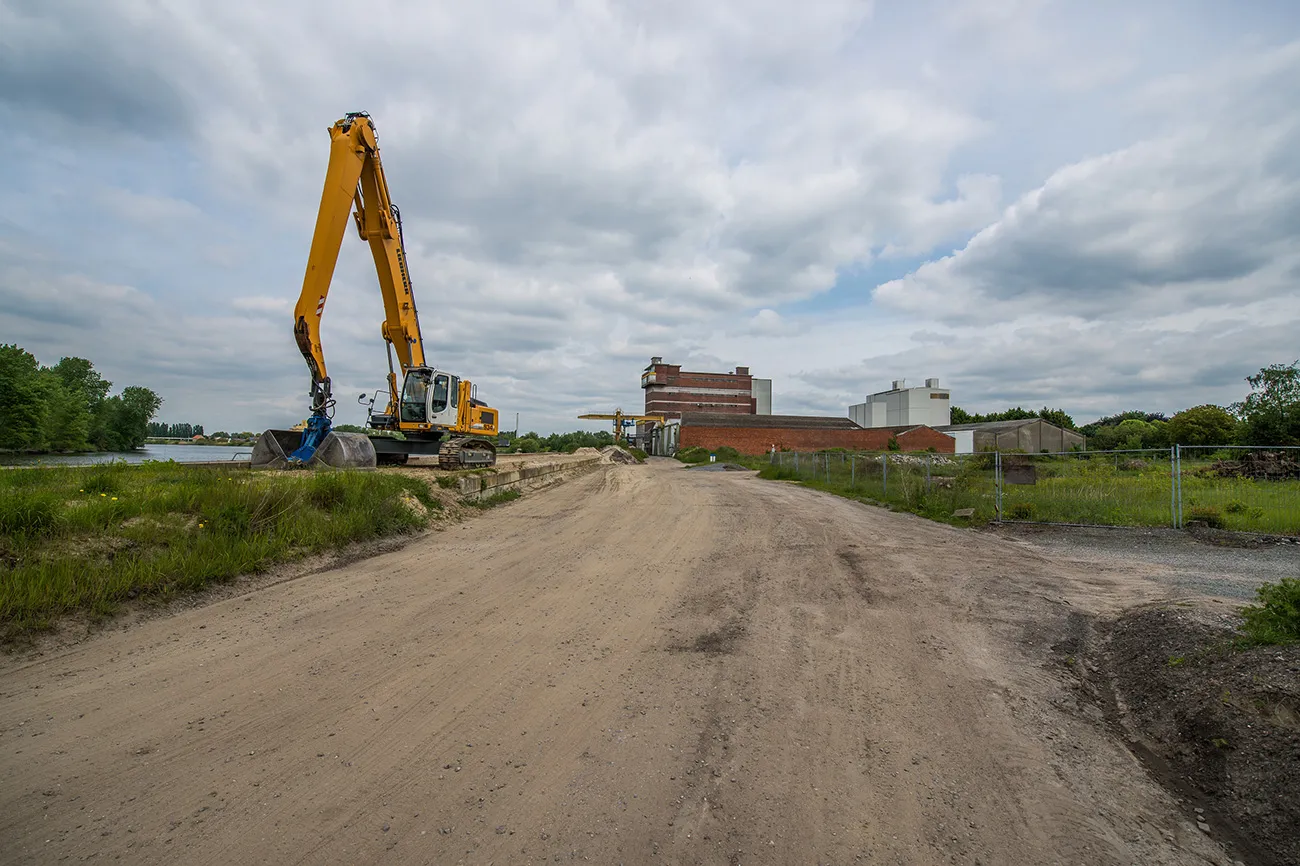
The Den Briel redevelopment project is also under way in Baasrode. There is space by the Scheldt, where we want to develop a waterbound business park together with POM Oost-Vlaanderen and De Vlaamse Waterweg. This could become a major asset for the future, provided it is well connected to the main road network. We are currently at the planning stage, so construction is still some way off.
Which projects with economic significance do you want to deliver in the short term?
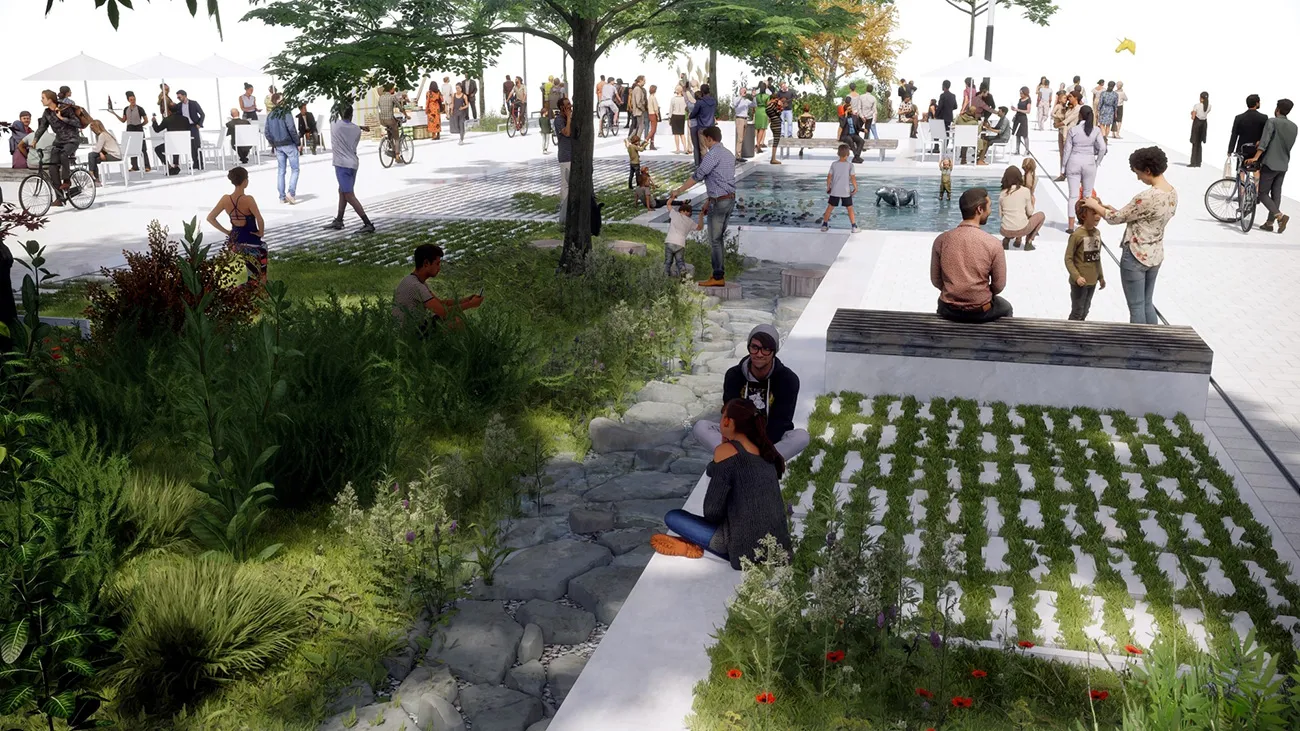
Piet Buyse: The expansion of the Hoogveld industrial estate is one example. In the city centre, Oude Vest is being upgraded. It was once part of our city walls, but is now an oversized street that we plan to make more attractive. Work will start in 2023, and we will address mobility. The street will get a complete makeover, with an underground car park, more greenery and water features. With support from the Flemish Government, we are enhancing the character of the area. Developer Uplace has already started building there. This is an important step in the wider regeneration of our shopping district, which will continue over the coming years.
Which issues do you hope to see resolved to make the city even more business-friendly?
Piet Buyse: For years, we have been looking forward to the N41 being extended towards Aalst, to improve the connection with the city and relieve smaller village centres of heavy traffic. We are also awaiting approval from Flanders to create a regulatory sandbox at the Hoogveld industrial estate, where companies can exchange energy. Ideas are already being developed, but for now our creative entrepreneurs are unable to put them into practice.
Question about this story? Ask your question
Keep following this
Get an email when a new story is published. No account needed.
- SubjectGeneral







