




Koen Geens reflects on his career
Text Christina Van GeelImage archief cd&v
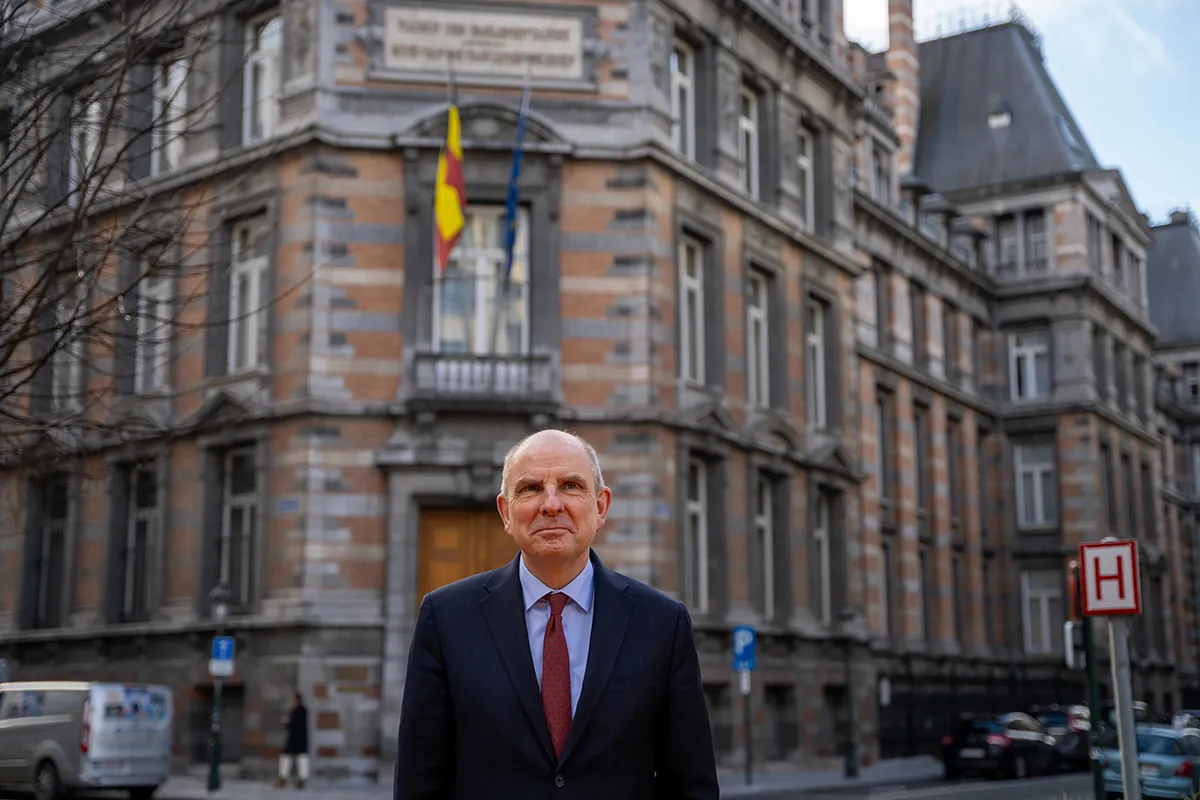
“I try to be a cheerful, good-humoured person”
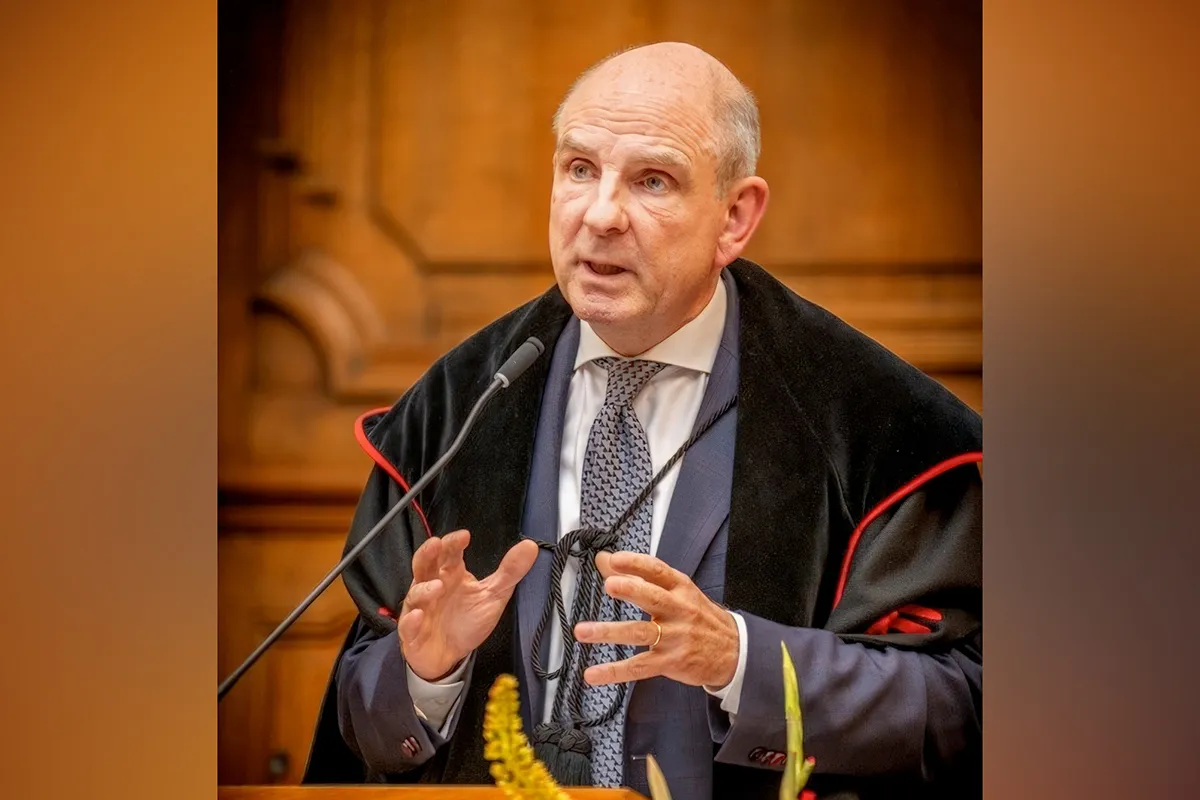
Koen Geens’s active political career came to an end in June 2024. He stood as a candidate for the European Parliament but failed to win a seat. The former lawyer and minister says his main aim was to show his love for Europe, and for his party cd&v. Loyalty is a value he holds dear. Yet Koen Geens has by no means had his final say, or been written off. ‘Ich möchte noch etwas träumen’ was not for nothing the title of his valedictory lecture at KU Leuven. We take stock with him of a life lived with unwavering commitment.
How are you?
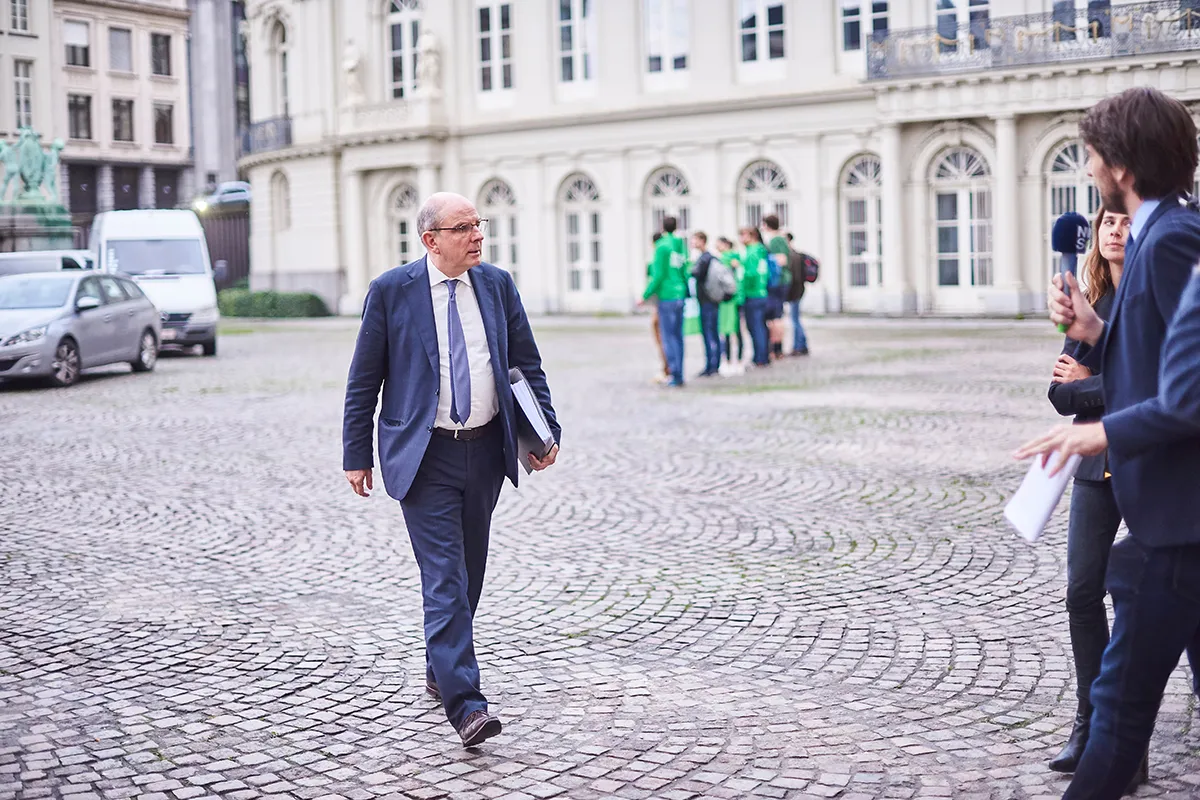
Koen Geens: Very well, thank you. I’m still the same person, even though my life has changed considerably. I still speak, read and write about the things that interest me. But I’m no longer active in politics, and that feels good. It’s a bit of a relief. At a certain point, you have to ask yourself whether it might be better to make way for younger people, particularly in a smaller party. In any case, I’m not in favour of political careers that go on too long. I don’t need power to be happy. Though I am proud of my political record. Life is an ongoing process of learning to let go. It isn’t easy, but it is necessary. Every ending also promises a new beginning: new opportunities, dreams and ambitions for new people.
Isn’t it difficult to be on the sidelines at this particular moment?
Koen Geens: You know that things are going very badly with the climate, and that the geopolitical situation today is extremely worrying. But that doesn’t mean you should become pessimistic. You can make a difference where you are in the world by trying to do good and be happy. For myself and those around me, I try to be a cheerful, good-humoured person. History is a succession of dramatic events. When I became a minister, there was the debt crisis, followed shortly afterwards by the terrorist crisis and, a little later, the Covid crisis. Each time, people told me the world was on fire. That things had never been so bad. Fortunately, we have short memories. That’s not to say we can shirk our responsibilities. The world constantly calls for our commitment, our efforts and our care, with every new war or crisis.
What was your childhood dream?
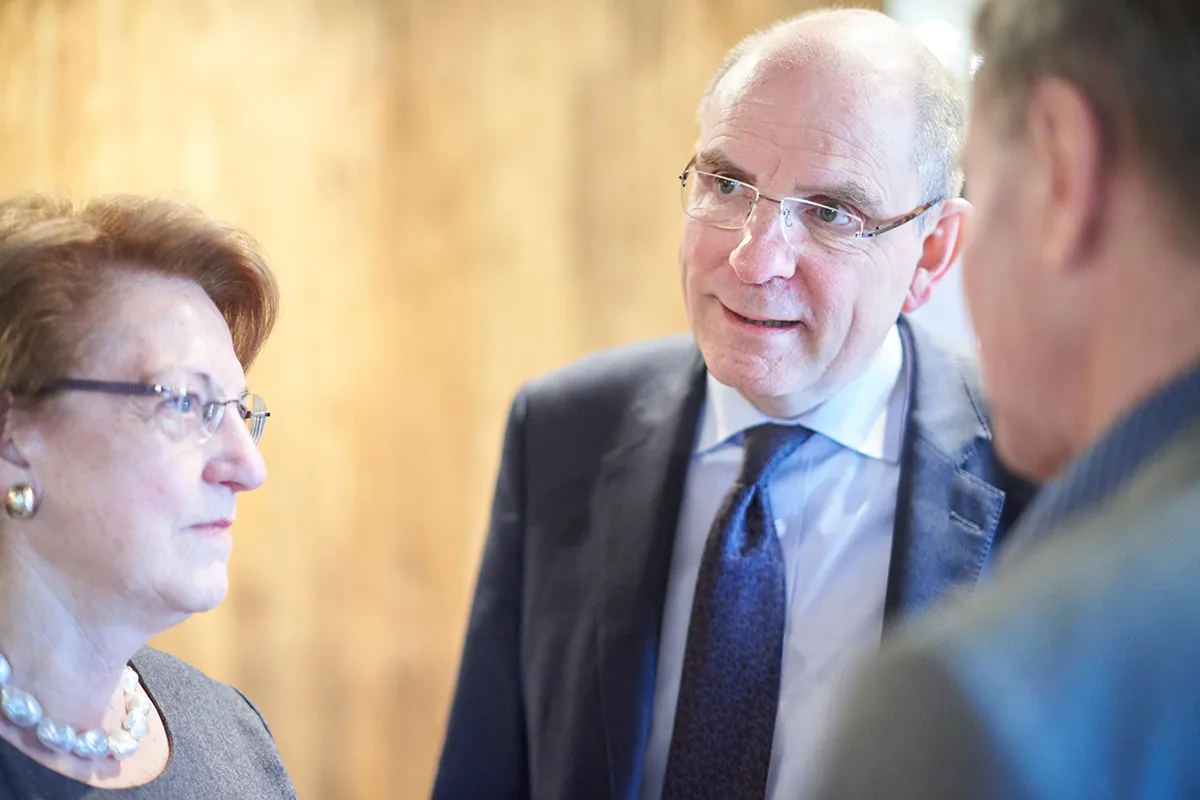
Koen Geens: I wanted to be a teacher or a traffic police officer on a motorbike, mainly because I wanted to ride a Harley Davidson. At home, I was always playing teacher, wearing a lab coat behind a lectern. I also took part in all sorts of elocution and public-speaking competitions, as they were called back then. Even as a child, I was good at explaining things. My dream of becoming a traffic police officer on a motorbike faded over the years: I was far too clumsy to ride a heavy motorbike. But I’m still a teacher. I enjoy passing on knowledge, telling stories, speaking and writing. I inherited my love of language from my parents, who were both Germanists.
What else did you learn from your parents?
Koen Geens: My mother was a very energetic woman who strongly rebelled against injustice. She was resilient, but also melancholy. I’m like that too, actually. There is courage in melancholy. Seeing the good, despite being unhappy about certain things, takes a degree of courage. My mother would have liked five or ten children. She had just one son. My father died shortly after I was born, when he was still very young. He was only 27. His death was a terrible blow to my mother, and she never really got over her loss. She never remarried either. Starting a new life was, of course, much harder then than it is now. In her old age, I saw her happy again, in the company of other widows. Then she could be the happiest girl in the class again. But mind you, my mother was a very lively and enthusiastic woman, even though she was never able to fill the void left by my father.
What did growing up without a father mean for you?
Koen Geens: It wasn’t the norm back then. But I had many fathers, and I always looked for them. My grandfather, later my father-in-law, and many teachers and professors were all father figures to me. You have to work out how to be a father for yourself later in life, because you haven’t had an example to follow. That isn’t easy. You do wonder whether you’re doing it right.
As a father, I was often absent, because of all the things I tried to do in my life and thought were urgent and important. I regret that. I try to make up for it, though perhaps it’s a little late for that. I did always try to give my children confidence in themselves and in life. If you start out in life with distrust, fear and uncertainty, things become difficult. You have to try to give your children that sense of security: that they are worth something, that it is better to trust than to distrust, and above all that they should have fundamental confidence in themselves. I think it’s very important to recognise them for who they are, what they can and cannot do. You can be strict, but they can’t help what they can’t do. And you should give them as much affirmation as possible for what they can do.
What are your greatest strength and greatest weakness?
Koen Geens: A person is a collection of 1,001 flaws and qualities. Together, they make each person unique. Like everyone else, I’m full of contradictions. I undoubtedly have more flaws than talents, though. Life is all about working on those flaws. That’s much harder than developing your talents, because a talent is usually something you’re good at and enjoy doing. So it isn’t that difficult to give it your attention. But tackling your flaws… I’m not very good at that. Sometimes you can display a flaw so painfully that you feel ashamed. Although showing that weakness can also be a strength, because you reveal yourself in all your inadequacy. In the end, most of us are vulnerable and fallible people.
Which qualities do you value in others?
Koen Geens: Loyalty and courage are very important to me. I’m loyal to a set of ideas. I have great respect for courageous people who dare to speak and act when others look away. They are important values in politics too. You can change your mind, but you have to say so. And you have to explain why. It’s also important to support people who do the right thing and don’t deserve to be treated badly, whether they belong to your own party or another one.
There are, of course, loyal and courageous politicians. People in politics are no different from people outside it. It’s simply a different game, one that doesn’t necessarily reward values such as courage and loyalty, or at least not straight away. In the long run, politicians who refuse to bow to pressure are appreciated for it.
Are you an optimist, a pessimist or a realist?
Koen Geens: An optimist and a realist. I get up in a good mood. I’m naturally a happy person. That’s just how I’m made. The optimist in me keeps striving for what is good. But mentally, I’m a realist. I really had to learn that. I used to think that if I wanted to make things better, they would turn out well. That isn’t entirely true. There have always been wars and crises. People have always had a hard time getting along. Bad marriages existed even when divorce was still uncommon. Rape took place even before people started talking about it. We are making progress, but slowly. That’s the realist speaking.
What does our world need?
Koen Geens: More peace and calm. So many words are being sent out into the world these days. One person says this, another says that. What people hear today, they have forgotten by tomorrow. It’s all so much, and so fleeting. And that makes us restless. It’s very difficult to think deeply and calmly about something and form an opinion when we are constantly bombarded with one argument after another. Does every television programme need to talk about Trump five times? Of course, I stand up for free reporting, and we shouldn’t hide the news away. But the question is whether this invasiveness contributes anything to solving the problem. Unfortunately, the intensity and sheer volume of news coverage don’t necessarily lead to governments forming more quickly or to better peace agreements. Some peace and calm, on the other hand, can help restore a healthier balance, in our minds and in the world.
What do you still dream of?
Koen Geens: For the world, I dream of a participatory, high-quality reform of our democratic system at every level, one that prevents us from sliding further into technocracy. The destabilising divide between the speed of technical ‘progress’ on the one hand and, on the other, the fact that humanity has barely evolved in a few thousand years, worries me greatly. It feels as though politics and people have handed society and its future out of their hands.
For myself, I dream of contentment and happiness in my family and personal life, and of continuing to acquire knowledge and discover beauty, and to share the joy of that with as many people as possible.
Question about this story? Ask your question
Keep following this
Get an email when a new story is published. No account needed.
- SubjectGeneral







