




Ivan De Witte takes stock
Text Christina Van GeelImage KAA Gent, Randstad
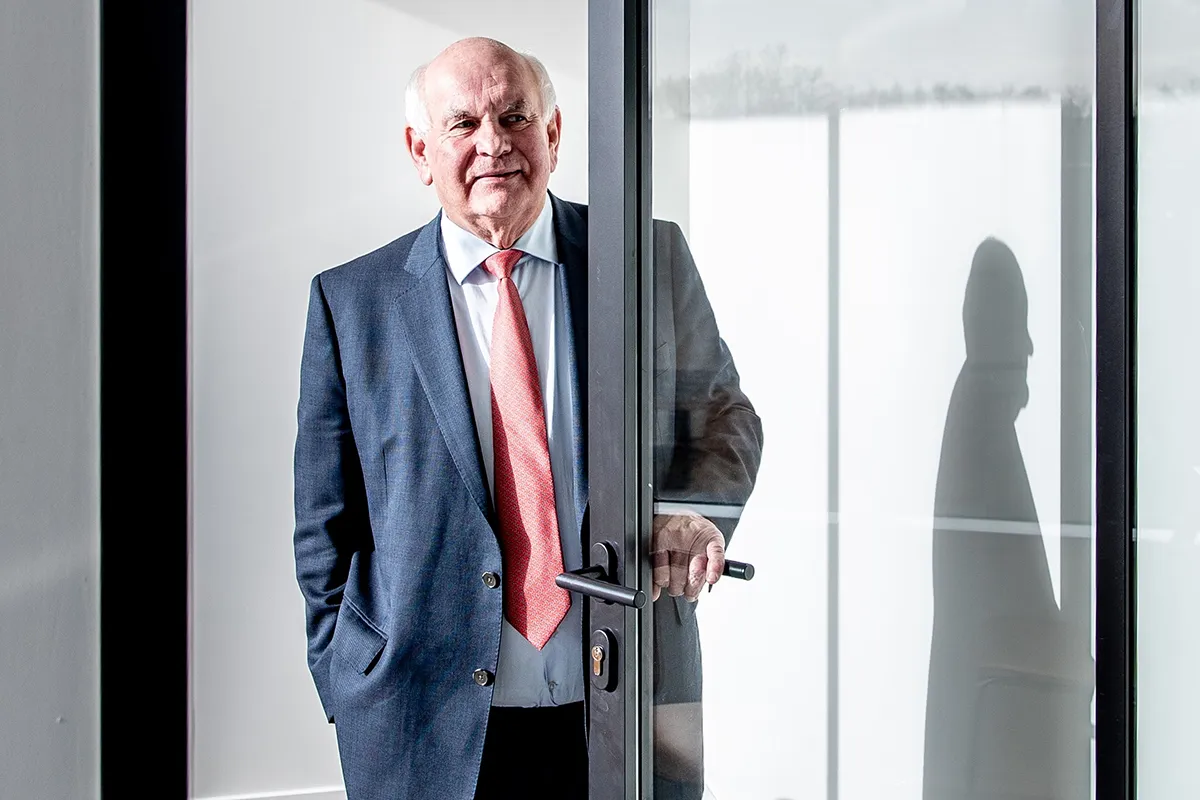
“The greatest gift of all is giving people opportunities”
“You have to give time time” is entrepreneur Ivan De Witte’s guiding principle. Combined with his perseverance and visionary qualities, it enabled him to reinvent the HR sector, revive a football club and build a new, multi-purpose stadium from the ground up. He is therefore a man of many talents. He is the founder and chairman of Hudson, the HR pioneer and market leader he established in 1982 under the name De Witte & Morel. He is a family man who, in 2012, faced the greatest loss a parent can suffer. And he is a football fan through and through, who stepped down last year as chairman of KAA Gent after 25 years. We take stock with Ivan De Witte.
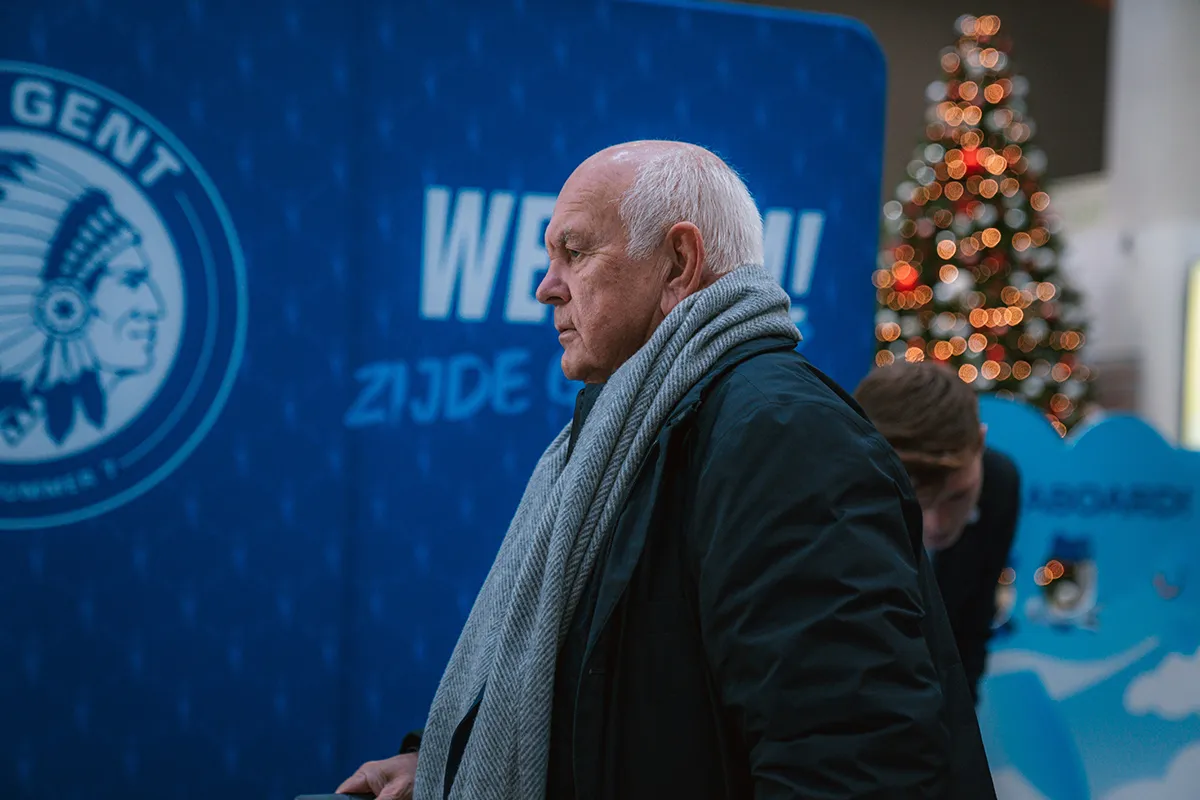
What is your earliest memory?
I went to nursery school in the small village of Moortsele. If you did well in class, you were rewarded with a medal. I remember that very clearly. It says something about how I approach life. Performing well, seeing something through and achieving results are essential to me. Building KAA Gent’s new stadium was no easy ride. Two people never gave up: the then mayor of Ghent, Daniël Termont, and me. At first, there was no funding to build the stadium, there were problems with permits, and so on. But that only spurred us on to keep going. Once the building was standing, I did think it was an achievement worthy of a medal (laughs). Anyone who says recognition is not important is not telling the truth. When others recognise your value, you perform even better. That applies to football, business and family life. Appreciation brings out the best in people. Yes, that moment in nursery school was something of a blueprint for my entire career. I have great determination. I never give up.
Who taught you your most important life lesson?
I have learned valuable lessons from various people at different stages of my life: at Sint-Lievenscollege in Ghent, at university, at Sidmar, in the US and in top-flight football. But the most important lesson came from my mother, from whom I inherited my work ethic and pride. My parents had a butcher’s shop, and that is where I learned to work. I believe many of our convictions and ideas take shape during our childhood.
“Don’t do things you’ll regret,” my mother also used to say. That calls for a certain degree of thoughtfulness. I can think about things for a long time and in great depth. I take my time. But everyone does things they regret. That is also typical of being an entrepreneur: it involves taking risks. And not everything you embark on succeeds. But, on the whole, the balance is positive, and there is little I have done that I regret or that has failed. “Let’s give it one more try,” I always say (laughs).
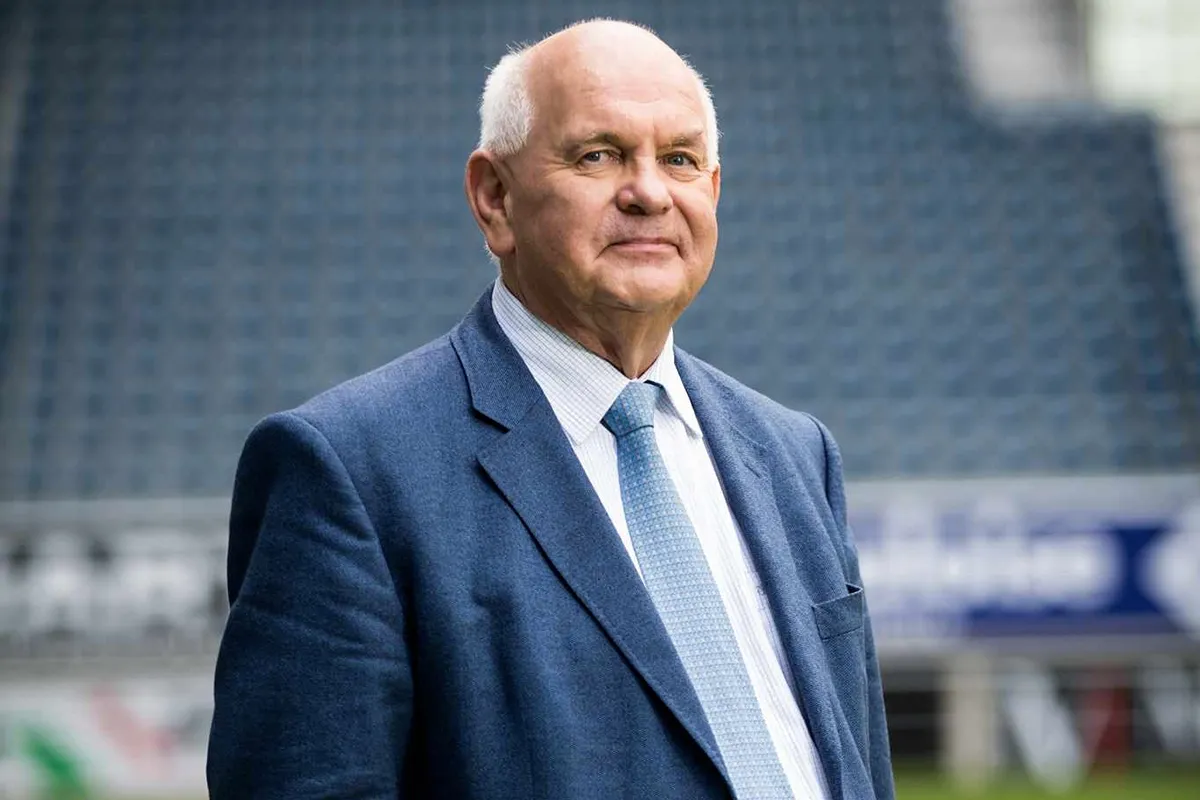
To be specific, is there anything you do regret?
I think I sometimes spoilt my children too much. They didn’t see enough of me, and when I did see them, I wanted to make up for that. I tried to compensate for the time I couldn’t give them by giving them freedom and material things. My wife was much stricter about that. Thankfully. By now, they have learned that you don’t get everything in life for nothing. But that is something I would not do again.
“Il n’y a pas mille solutions,” as they say in French. If you are building a company with three hundred people and also have a hobby that has got out of hand, like football, you have to make up for it somewhere. A day has only twenty-four hours. And I was working almost all the time, day and night. In the end, you buy time at home. But there is no point regretting something from the past. I worked in the United States often, where they say, “So be it”. It is what it is.
What is your personal motto?
An important maxim for me is: “You don’t need hope to undertake something, nor success to persevere.” Fine words from Willem Van Oranje. When Hudson België became part of the American group, people said, “You won’t manage it, don’t do it.” But within a year, I was in the boardroom in New York. It was largely a matter of perseverance. You have to set yourself apart by working hard and persevering. There was also a desire to prove myself: I wanted to show the doubters that I could do it.
Perseverance also calls for patience. Once I have set myself a goal, I don’t let go easily. My patience is not endless, but I can wait a long time. I am convinced that some things only get resolved after a while. You have to give time time. Take the recent government formation. It took six months. There would never have been a government without those six months. Time was needed for people to get used to the situation. They needed the chance to grow closer, and ideas needed time to mature. You cannot do that in a month. A host of external factors come into play, and you cannot force them when the time is not right.
That said, giving time time does not mean you should sit back and wait passively. Time gives things the chance to fall into place. In the meantime, you can manoeuvre and gently nudge things in the right direction. These days, everything has to happen immediately, and people force things. That is the key to failure.
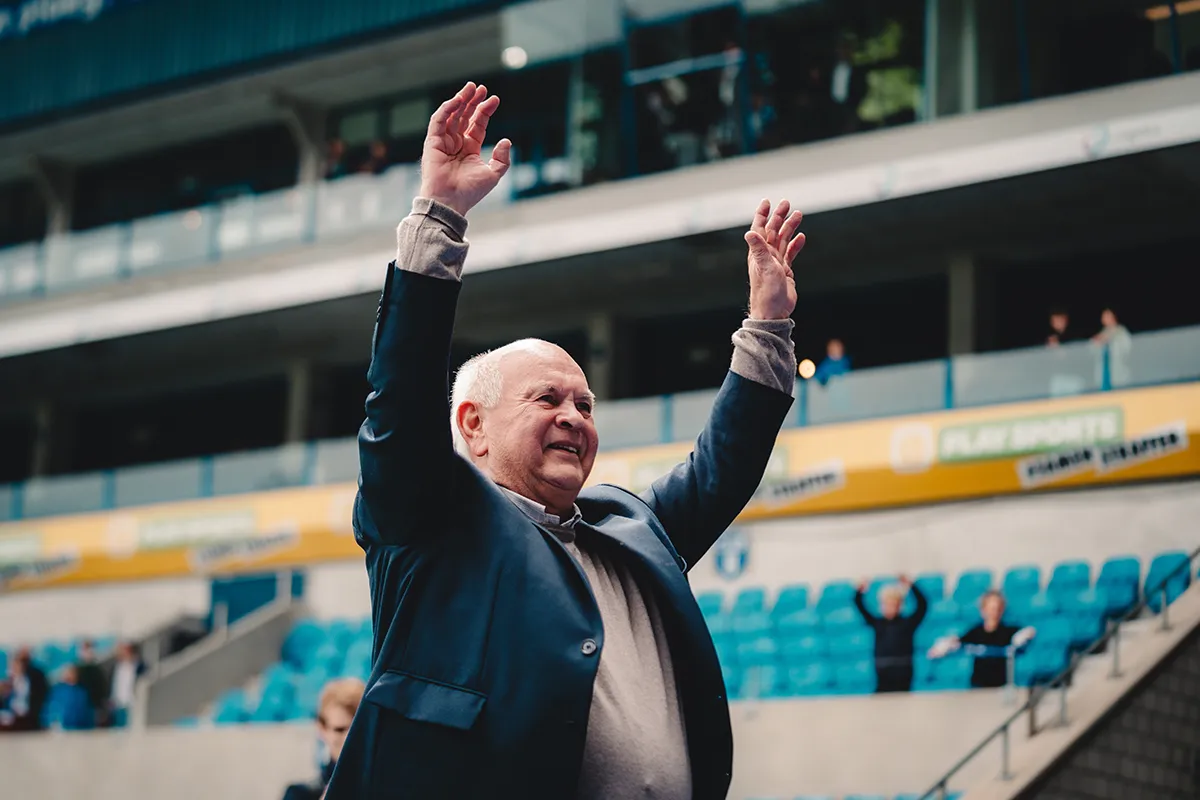
What is the greatest gift you can give someone?
The greatest gift of all is giving people opportunities and helping them make the most of them. That applies to your children, your employees and people in football, and so on. It is wonderful to see how driven those sixteen-year-old players are to seize their opportunities. Helping them develop is a wonderful gift. Having people believe in you does a great deal for your self-confidence, and stays with you for life.
I have experienced that myself. My first year at KU Leuven was not an overwhelming success. “Perhaps it would be better to do your military service first and learn some discipline,” my father said. After that, I studied business psychology in Ghent and graduated with great distinction. My mother kept giving me opportunities all that time, even when things went wrong.
What is your greatest talent?
Would I be repeating myself if I said perseverance? (Laughs) People have called me a visionary, and there is some truth in that. Christine Raynaud, a woman I very much enjoyed working with in Paris, once said: “Il est un magicien.” I tend to form a vision fairly quickly of where we want to end up, even in choppy waters. People sometimes call that the ‘lighthouse effect’. Even when the storm is raging, I steadily head for the goal. You cannot turn a club on the brink of bankruptcy into champions without vision and perseverance.
Another talent is bringing people together and building bridges between them. You can know exactly where you want to go, but if you cannot get others on board, there is no point. At a large company like Hudson, with three hundred employees, it is essential that people feel connected to the company’s culture and shared values. Bringing people together is not just about one-to-one relationships, but about the whole community. And that is essential for a strong organisation. That sense of connection also brings loyalty.
My wife and I are also good at bringing people together within our family. We have been married for fifty years, and that must mean something. We have our misunderstandings and disagreements. But if you have been married for fifty years, you clearly share values and loyalty. And perseverance!
What does happiness mean to you?
When we organise something together with the children and the atmosphere is good, I can be truly happy. It makes me happy when everyone around me gets on well and there is a sense of togetherness. I am a real family man. In 2012, we lost our youngest son, Pieter. He was a huge KAA Gent fan. I could talk to him about football for hours. When we won the league against Standard in 2015, I included him in that moment too. While everyone was celebrating on the pitch, I sat alone in a box for half an hour, sharing that moment of happiness with my son. I still talk to him, when I am alone in the car, for example, or when I visit his final resting place. He is always with me. In my book ‘De Wegen van De Witte’, my daughter Annelies says that losing Pieter changed me, made me gentler and more vulnerable. She is right. Losing a child changes you fundamentally.
What does the world need?
Our society needs leaders with the right values, who put the public interest first. People like Jean-Luc Dehaene. He had an exceptional ability to solve problems: no-nonsense, with plenty of common sense and the patience of a saint. He achieved what others often thought impossible. And he always had the public interest in mind. I have some hope for Bart De Wever. He could be a statesman who rises above party interests. We shall see…
Our world leaders today are all strongly beholden to their own supporters. Or they serve only their own interests and those of a small group of privileged people. Another leader I greatly admire is Charles De Gaulle. He was not interested in himself; he wanted to leave a legacy, to achieve things that would outlast him and go beyond him. And he was prepared to take great risks to do so. Our world needs people like that, people who dare to make things happen, who move things forward. In a positive way, of course, not like a battering ram, but in the public interest.
Question about this story? Ask your question
Keep following this
Get an email when a new story is published. No account needed.
- SubjectGeneral







