




Fons Leroy takes stock
Text Christina Van GeelImage archief
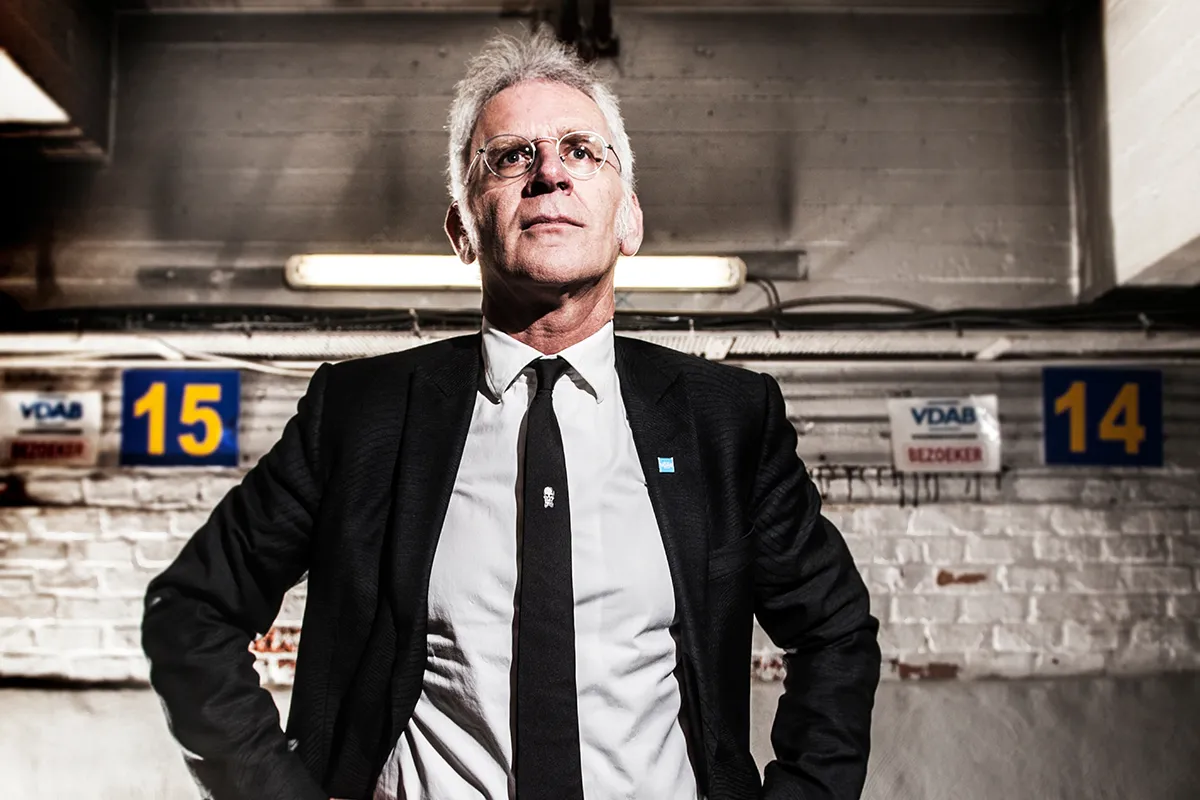
“The advantage of getting older is that you take much more account of the future”
Fons Leroy built a career that was as impressive as it was meaningful. A law graduate, he spent 15 years working in the offices of Flemish socialist ministers, helping shape employment policy. As chief executive of the VDAB, he then had the chance to put it into practice. For ten years, he championed a people-centred approach to work and careers. And even after retiring, he remains an engaged voice in the debate on work, wellbeing and purpose. In De Balans, he looks back candidly on what work and life have taught him.
What was your childhood dream?
As a child, I dreamed of travelling. I grew up reading the Suske en Wiske and Nero comic strips. My grandmother subscribed to Het Nieuwsblad, and every day she cut the Suske en Wiske strip out of the newspaper. When the story was complete, she tied all the strips together, so every three months I had a new comic book. My grandfather did the same with the Nero strips in Het Volk. Nero went to Papua New Guinea, while Suske en Wiske went to Japan and Texas. That fascinated me. I wanted to see the world.
And what became of that dream?
I have travelled a great deal, both for pleasure and for work. Other cultures often confront us with our own shortcomings. In Gambia, I met a young man who showed us around the country. The simplicity of life there, the openness of the people, the way they shared the little they had: it is a very different way of relating to one another. You often see that people with little are quicker to give and share than those who live in abundance.
Despite the cultural differences, what struck me most was how similar people are. Wherever they live, people have the same dreams and expectations: having a roof over their heads and seeing their children happy. During my studies, I spent a year living in Canada. I learned that it is not easy to enter a different culture, and that you seek refuge in the people and things you know. But I also learned that you will always find people willing to help.
All young people should do an internship abroad. Encountering other cultures teaches us to build bridges and make connections. Experiencing what it is like to be ‘the odd one out’ is an ideal remedy for racism and discrimination. Travel leaves a heavy ecological footprint, that is true. But it also leaves a substantial social footprint. And we sometimes give too little thought to that added value.
What did you learn from your parents?
My father worked at the mine in Zolder. Despite working a six-day week, he retrained as a teacher. He taught me to seize opportunities and keep learning. Both my parents were strongly committed to social causes. I have always been quite rebellious. As a young person, I took part in many demonstrations. For example, against the construction of the A24 in Limburg, which would have destroyed a great deal of nature. If something outraged me, I took to the streets.
I believe every person, organisation or business should have a moral ambition as well as, for example, an economic one. Today, that is sorely lacking on a large scale. Power lust and greed rule the world. If we want to create viable prospects for future generations in the long term, we need to start from our moral ambition and ask ourselves: how can we organise ourselves, work and do business in a way that moves society forward?
Where do you find happiness?
I find happiness in everyday things. Before this interview, I went for a long walk by the sea and saw a seal pup. Unexpected moments like that make my day. But I have also always found great happiness in my work. I wish everyone that sense of fulfilment at work.
We all know that we will have to work for longer. But that also needs to be sustainable. Employability alone is not enough. The desire to work, or enjoyability, is another condition that needs to be met. This calls for investment in training opportunities, sustainability strategies, greater autonomy for employees, and mental and physical health, all important factors in finding fulfilment at work.
That last factor in particular hangs over our labour market like a sword of Damocles. At present, we have twice as many people off sick as jobseekers. Many people are unable to work from a young age because of burnout or excessive stress. Employers therefore need to focus not only on their employees’ competencies and skills, but also on their mental and physical health. Businesses that recognise this can become places where people find fulfilment at work.
What character trait do you admire in people?
Above all, I admire curiosity in people. Curiosity underpins many other competencies. If you are curious, you want to gain knowledge, learn, discover and understand. And that is how judgements, stigma and distrust fade away. Curiosity also implies empathy. If you are genuinely interested in what someone thinks, feels or experiences, you implicitly put yourself in their shoes and want to know what is going on inside them. When we are curious about one another, we are less likely to polarise.
Curiosity is directed not only outwards, but also inwards: towards the reasons behind your own beliefs and reactions. Those who dare to be curious about themselves develop greater self-awareness and nuance.
Most of the entrepreneurs I know are curious people. It drives them to ask questions such as “Why does this work like this?”, “Could it be done differently?” and “What if…?” That attitude helps them spot opportunities where others see limitations. In this way, their curiosity fuels innovation. Without curiosity, entrepreneurs would mainly repeat what already exists. And then they would no longer be entrepreneurs, but managers.
Do you have any regrets?
No. Not because I have never made mistakes, but because I have always tried to learn from them. Of course, things happen in life that you wish had never happened. I lost my brother and sister within a very short time. That is more than regrettable. Despite that great loss, I feel above all grateful for who they were. When I remember how we grew up together, and how my brother and sister helped shape me, that outweighs any regret. In the end, we all become who we are through our experiences and, above all, through the people we meet along the way, who guide us and walk alongside us. They become part of us.
What are you proud of?
I am proud of my children and grandchildren. My children grew up with an absent father. During my years as a chief of staff, I worked long hours and they hardly saw me. Later, as head of the VDAB, I was deeply involved in public life and spent two or three evenings a week speaking to businesspeople and organisations. I was emotionally invested in their activities and aspirations, but physically I was often simply not there. When I look at the people my children have become, and see them now raising children of their own, I can only be proud of how well they have done.
I once wrote in a book that the social partners should hold their meetings overlooking a garden where their children and grandchildren are playing. When you picture your children and grandchildren, it is easier to make decisions with the long term in mind. Measures that are positive for the prosperity and wellbeing of future generations. That is the advantage of getting older: you take much more account of the future. I would like to see policymakers develop that reflex.
What gets you out of bed in the morning?
My job was my passion. For years, I happily worked 60 hours a week because I could do meaningful work for society. And that has not changed. I do not like having an empty diary. Giving a presentation or taking part in a debate, solving a problem at an NGO, writing a blog or a book: all of that gives me purpose. I do not do it for myself; I always donate the proceeds from my books to charity. But I want to feel that I am contributing something, that I mean something to society.
Thanks to the professional opportunities I have had, I have gained a great deal of experience in areas including the relationship between the labour market and education, and between the labour market and poverty. Even today, I try to build bridges between those sectors. How can we connect those two worlds so that people facing difficulties have more opportunities while businesses can grow? Questions like these still occupy me.
But alongside our impact on society, there is also the impact we have on one another’s lives. When I meet VDAB employees who say, “That was a lovely conversation with you” … it makes me happy. It is the human connections that stay with you. People who feel I have meant something to them have also meant something to me. It is always a two-way street.
Question about this story? Ask your question
Keep following this
Get an email when a new story is published. No account needed.
- SubjectGeneral







