




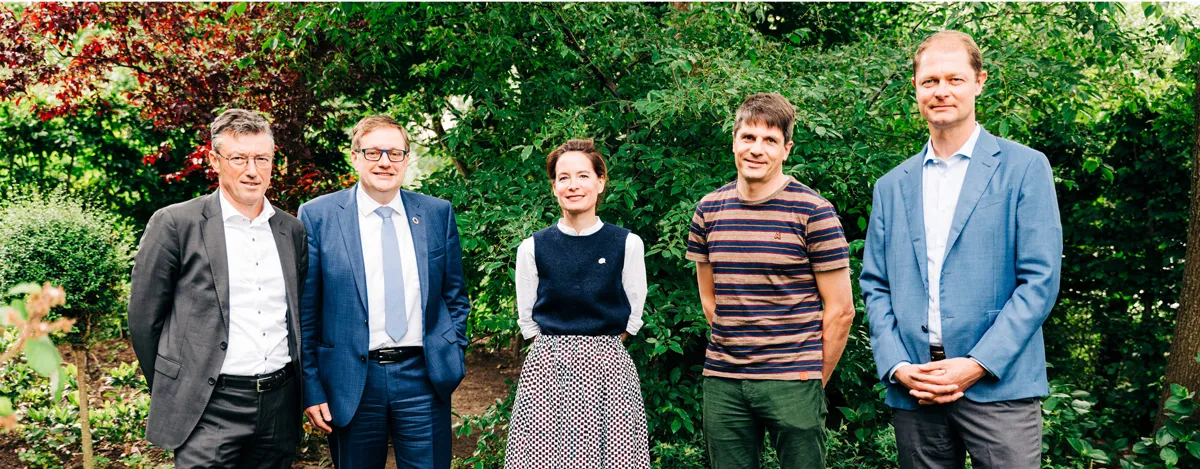
Five experts round the table to discuss sustainable business
“Sustainability is very challenging, but offers businesses many opportunities”
To be sustainable or not to be. That is the question facing businesses today. Sustainability plays an important role in almost every strategy. Because entrepreneurs are taking responsibility for the climate transition, because customers are making greater demands and, not least, because employees expect their employer to act responsibly. Business Vlaanderen brought five experts round the table to discuss this topical issue: “Sustainability will only move further up the agenda. We must keep making progress on every front. But a great deal of innovation is still needed to get there.”
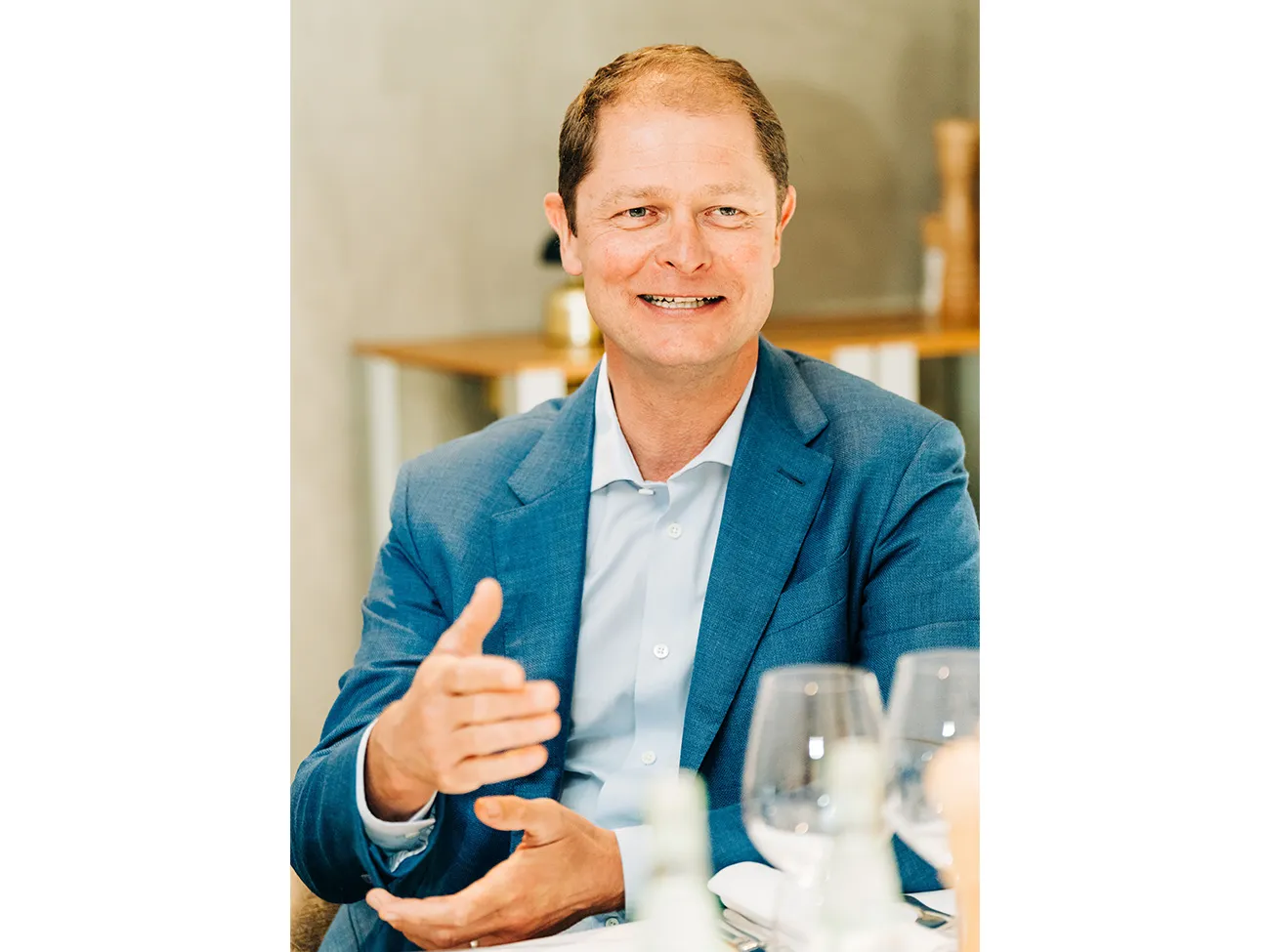
Sustainability is a hot topic in business. The coronavirus pandemic and the current energy crisis are also accelerating progress in this area. But making our economy more sustainable is a long-term undertaking. Wim Coppens, vice-president Flooring Solutions at Beaulieu: “We are setting the bar high: we have started internally, with the aim of making our flooring business CO2-neutral by 2030. However, our chemistry-based activities still face major challenges when it comes to producing plastics more sustainably. Ultimately, we will need a different feedstock for polypropylene, for example by cracking waste through pyrolysis. We want to develop these pathways with our supply chain partners.”
From tree to building
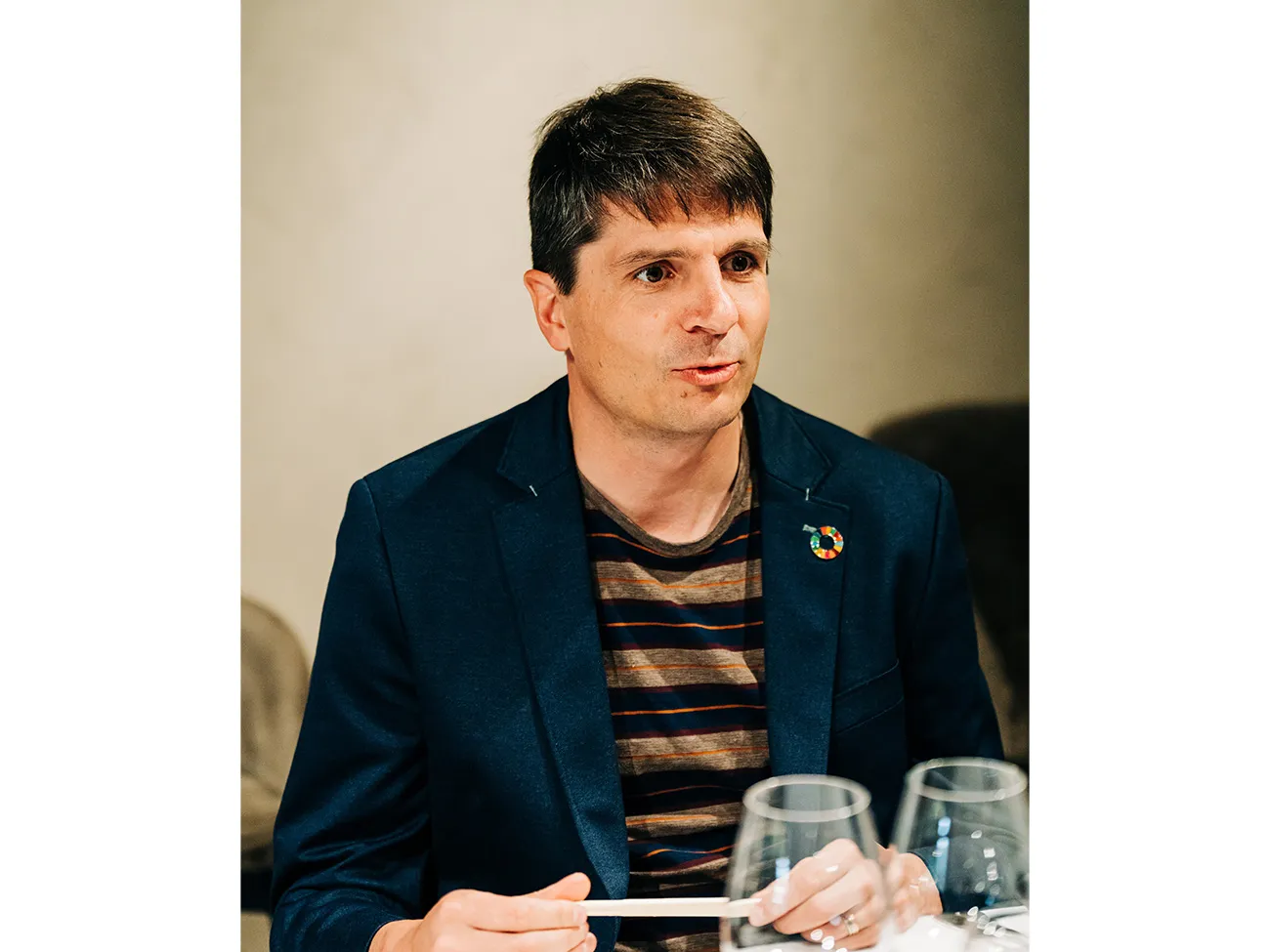
The construction industry, too, is actively seeking more sustainable materials and techniques. The production of steel, concrete and cement is still highly energy- and CO2-intensive. Koenraad Belsack, co-CEO of property developer Upgrade Estate, known for its Upkot student accommodation: “In every interaction with our construction partners, we press for greater sustainability. One of our shell contractors has therefore set up a timber division, allowing us to replace steel and concrete more often. But that raises the question: is the timber sustainable? To ensure that it is, we are now buying our own forests. Sustainability has therefore been a driver for a new business: from tree to building. I am convinced that new business models will emerge in many sectors.”
Beaulieu wants to introduce a circular model in the carpet sector. “Our product’s design must ensure that it can also be easily recycled at the end of its life,” says Wim Coppens. “Here’s an example: we are the market leader in exhibition carpet, which is currently used just once and then becomes waste. With Rewind exhibition carpet, we now have a latex-free concept in which the fibres are joined by thermal bonding. The next step is to scale up this production method and work with the sector to establish effective take-back and recycling streams, so that we can close the loop. This could be a game changer.”
Vision and investment
A more sustainable model in a mature industry calls for vision and investment. Jan Desmet of Flandrien Kaas in Wervik knows all about it. 10 years ago, he decided to swap the family business’s wholesale dairy trade for a cheese-making operation: “We made a firm choice in favour of an artisanal process and a short supply chain, because we see that as a guarantee of our product’s quality. We use milk from farmers within a 50-kilometre radius of the company, buy our raw materials locally, invest a great deal of time in our product and focus on local sales in Belgium.”
“Sustainable business does indeed start with ambition and a vision for the future,” agrees Peter Wollaert, director of CIFAL Flanders, part of the UN organisation UNITAR, which offers training on the Sustainable Development Goals. “On the basis of these SDGs, for example, the European Union aims to be climate-neutral by 2050, introduce human rights due diligence for businesses and make sustainability reporting mandatory. We guide businesses through a multi-year process to make that happen. The challenge is to focus first on achieving the greatest possible positive impact on people and the environment, while also working on good governance and involving suppliers and customers.”
Strict targets pose a challenge for the food industry: livestock farming is responsible for 6 per cent of greenhouse gas emissions. “The sector is aware of this. One solution is improved feed for cows, which could reduce methane emissions by up to 30%. This is still in the testing phase, but we already know that it is impossible to bring these emissions down to 0. You cannot make a cow CO2-neutral,” says Jan Desmet. “But we, along with all livestock farmers, are investing heavily in energy measures. For example, we reuse waste heat from condensers and are also planning to invest in solar panels.”
A giant ice block beneath the car park
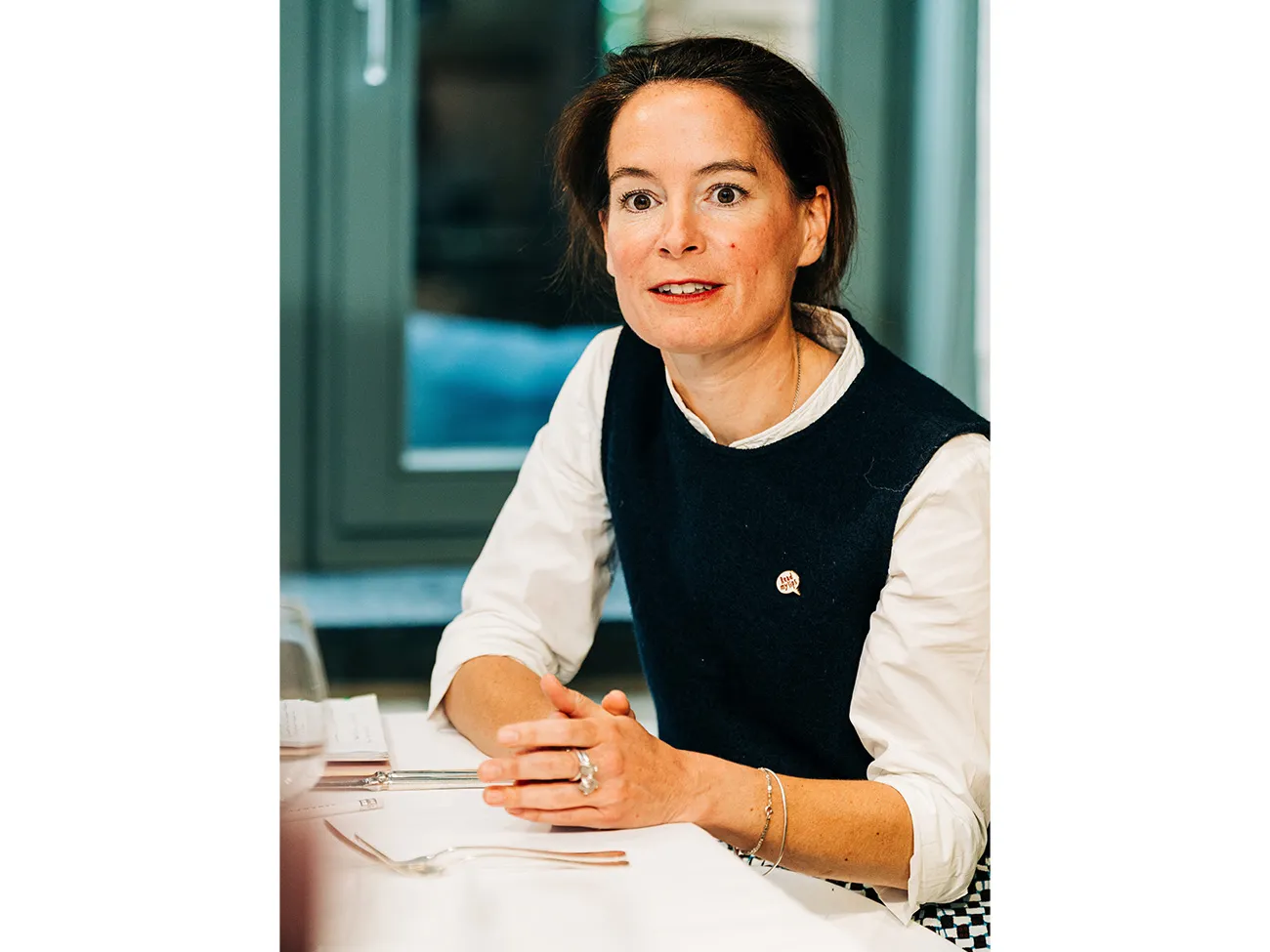
Businesses looking to develop or test new energy-efficient or smart technologies can turn to Snowball in Harelbeke. “We are a living lab for SMEs, knowledge institutions, lobby groups and others. We test new technologies at demonstration scale, but in real-world conditions,” explains Alexandra Vanhuyse. “We closely monitor energy consumption, visualise all the data and work with smart algorithms. By working with universities and universities of applied sciences, we can also use much larger datasets. This allows us to evaluate and validate innovations, giving them a better chance of success when they eventually come to market.”
Snowball’s building is energy-neutral. “We have tried to incorporate as many new construction techniques and innovative products as possible. Solar panels, a large battery, smart charging points. The biggest issue was that we needed far more cooling than heating. That is why there is an ice storage system beneath our car park. It holds 300,000 litres of water. In winter, we extract the heat from it using a heat pump, until it becomes one huge block of ice. In summer, we draw the cold from the ice, so the block melts back into water.”
The need for reporting
Tracking and adjusting sustainability measures will be crucial to continuous improvement. Upgrade Estate has built its business model around this: “We develop, build, engineer and finance our projects ourselves. We also remain a co-owner of each building after it is completed, allowing us to maintain it properly and extend its life. We have also introduced a sustainability charter and a Net-Zero 2035 climate plan. Sustainability matters to more than 90% of our investors. So we use a tool based on the SDGs to measure a broad set of indicators,” emphasises Koenraad Belsack.
Peter Wollaert is a strong advocate of this approach: “Mandatory ESG reporting is on the way, and there is still a lot of resistance to it. I advocate less reporting, but better reporting. Take a gradual approach and first look at where your business has the greatest potential negative impact. That is the starting point. Measuring also shows you what you are actually achieving with all your efforts and investments. You cannot achieve sustainability without accountability, corporate governance or ethical reflection.”
Question about this story? Ask your question
Keep following this
Get an email when a new story is published. No account needed.
- SubjectGeneral







