




Europe takes on ‘empty shells’
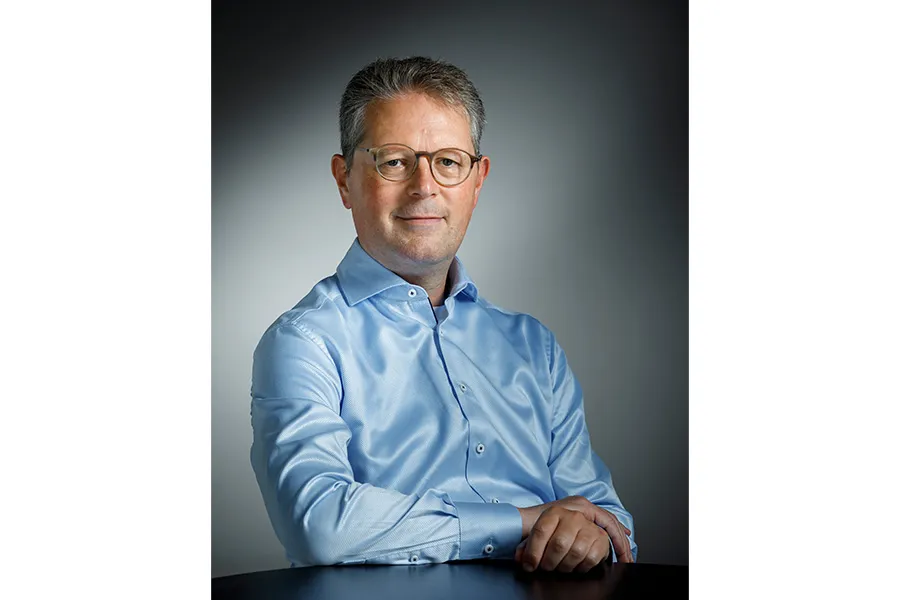
Text Björn CrulImage DELBOO Advocaten
ATAD 3: Anti-Tax Avoidance Directive aims to tax passive companies
The new European Anti-Tax Avoidance Directive (ATAD 3) is expected to enter into force in 2025. The legislation is part of the European Union’s efforts to create a fair system of corporate taxation. With the new directive, the EU aims to prevent profits and income from dividends or property from going untaxed through so-called ‘shell companies’ or passive companies.
Europe is serious about collecting corporate taxes more fairly. Alongside the agreement in principle to make multinationals pay a minimum tax of 15%, the new ATAD 3 directive is now in its final stages. It aims to tackle shell companies, or companies and holding companies with no genuine economic activity, and introduce a reporting obligation. The intention had already been announced, but the final details of the directive are being worked out over the coming weeks. It will then have to be transposed into national law by the member states.
Three criteria
Business lawyer Mark Delboo: “Three criteria are used to determine whether a holding company is effectively an empty shell. First, does passive income, such as income from dividends, interest, shares, royalties and property, account for more than 65% of the holding company’s income? Second, is more than 55% of its income generated through cross-border transactions? Or are 55% of the assets’ book value located outside the state in which the company is established? And third, are day-to-day operations and decision-making outsourced to a third party?”
If the answer to all three questions is yes, ATAD 3 presumes that the company is a shell company and imposes a new reporting obligation in its tax return. “In Europe’s view, such a company does not have substantial activity in the country where it is established. It may lose its right to the benefits of the Parent-Subsidiary Directive. Moreover, such a company will no longer qualify for the application of a double tax treaty. This means it could still be taxed twice: in the country where it is established and in the country where its director lives. That could have a considerable impact.”
Take action now
Although the directive is not expected to enter into force until 2025, it is best to take action now. “That is because the criteria will be applied to the two years before the new directive enters into force. So, from 2023,” says Delboo. “In our country in particular, we know that ATAD 3 could pose a problem for quite a few families whose assets are structured through a holding company that also includes a Luxembourg company.”
A solution will therefore need to be found in those cases. “It is possible to prove that the alleged shell company does in fact have sufficient substance. But that requires a genuine office in Luxembourg, with staff, and you must also manage the company’s day-to-day operations yourself. For someone living in Belgium, that seems difficult. There is also a risk that the establishment could nevertheless be regarded as a Belgian company by our tax authorities,” warns the business lawyer. “Liquidation is probably not an option either, because of the additional taxes.”
Repatriating the company
According to DELBOO Advocaten, the best option is to repatriate the Luxembourg company to Belgium. “From a tax perspective, it does not really make much difference: Belgium is a good country for holding companies. Repatriation can also ensure legal and accounting continuity. The holding company may be a little easier for third parties to identify, but that is about the only difference.”
Time is therefore running out for anyone with a Luxembourg company that may come under scrutiny under the new directive. Mark Delboo: “Our firm believes it is better to move the registered office sooner rather than later. In such cases, we first assess whether the company is actually covered by ATAD 3. If it is, we prepare the file and apply for an advance tax ruling from the Belgian tax authorities. You then need to allow around six months to get everything sorted administratively. The Luxembourg accounting firms responsible for day-to-day management do not always cooperate. They are not keen to see a client leave, so you need to be a little more patient.”
Een zakelijke vraag aan DELBOO Advocaten? Get in touch
Companies in this story
Keep following this
Get an email when a new story is published. No account needed.
- ThemeFinancial and legal decisions
- SubjectGeneral
- CompanyDELBOO Advocaten







