




Eurometropolis Lille-Kortrijk-Tournai turns 15
Text Björn CrulImage Eurometropool, Alexandre Traisnel
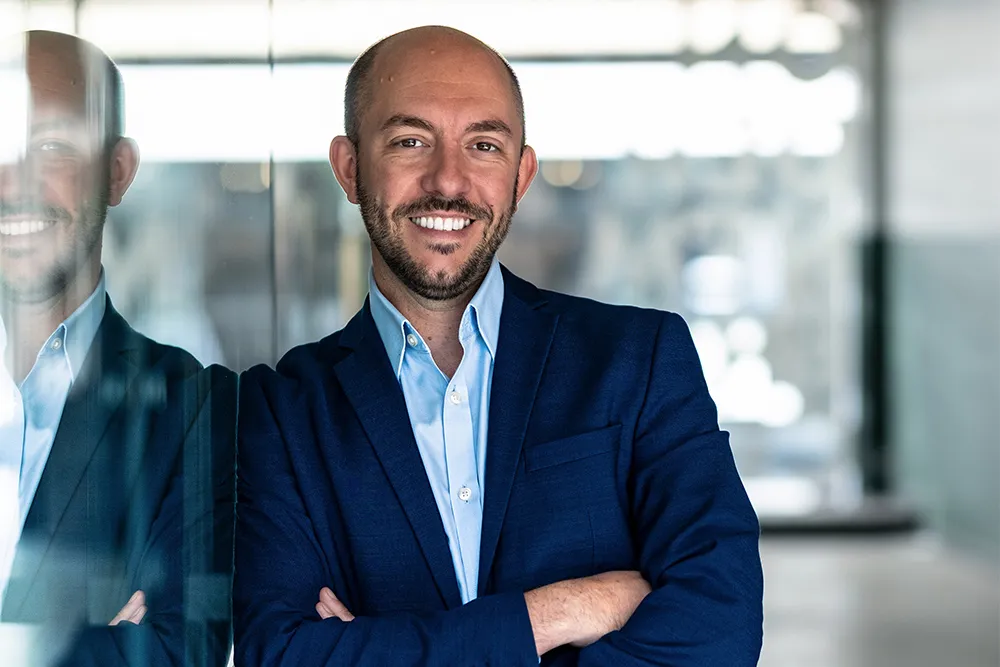
“We need a permanent dialogue within and about the region”
The Eurometropolis Lille-Kortrijk-Tournai was formally established in 2008. The partnership brings together various public authorities, experts and civil society organisations in a forum for consultation, with the aim of facilitating cross-border contacts and information exchange. A number of tangible projects also show what Europe and greater cooperation mean for the 2.2 million residents.
The national border between Belgium and France and the language border between Flanders and Wallonia exist not only on paper, but often still prove to be a real barrier in people’s minds. A case in point: although Flemish people do their shopping at Auchan just across the border, they are otherwise not very familiar with northern France. Tournai can also sometimes feel like a foreign country, even though it is closer to Kortrijk than Bruges.
Patience, consultation and trust are essential
The idea for a ‘Eurometropolis’ first emerged in the 1990s, with the aim of intensifying contacts in the Lille-Kortrijk-Tournai border region. Thanks to the impetus provided by committed politicians such as Stefaan De Clerck, Rudy Demotte and Pierre Mauroy, a concrete project and permanent structure took shape. With EU funding, the first EGTC, a European Grouping of Territorial Cooperation, was established in 2008.
After a promising start, the organisation had to keep navigating different levels of government, diverging visions and different cultures. In a recent interview with Made in West-Vlaanderen, founder Stefaan De Clerck said: “It remains astonishing how little we know about what is happening 15 kilometres away. It takes a great deal of patience, consultation and trust to convince the complex state structures on both the Belgian and French sides to work together. The Eurometropolis is indispensable, but the enthusiasm of the early years needs to return.”
Even so, the Eurometropolis has established its reason for being. And it has certainly made progress in a number of areas. Loïc Delhuvenne, Managing Director of the Eurometropolis Agency, said: “One important area of activity is water. Water sources and waterways do not recognise borders, and the challenges are the same in France and Belgium: protecting water sources, ensuring water quality and supply, and preserving fauna and flora.”
The Blue Park
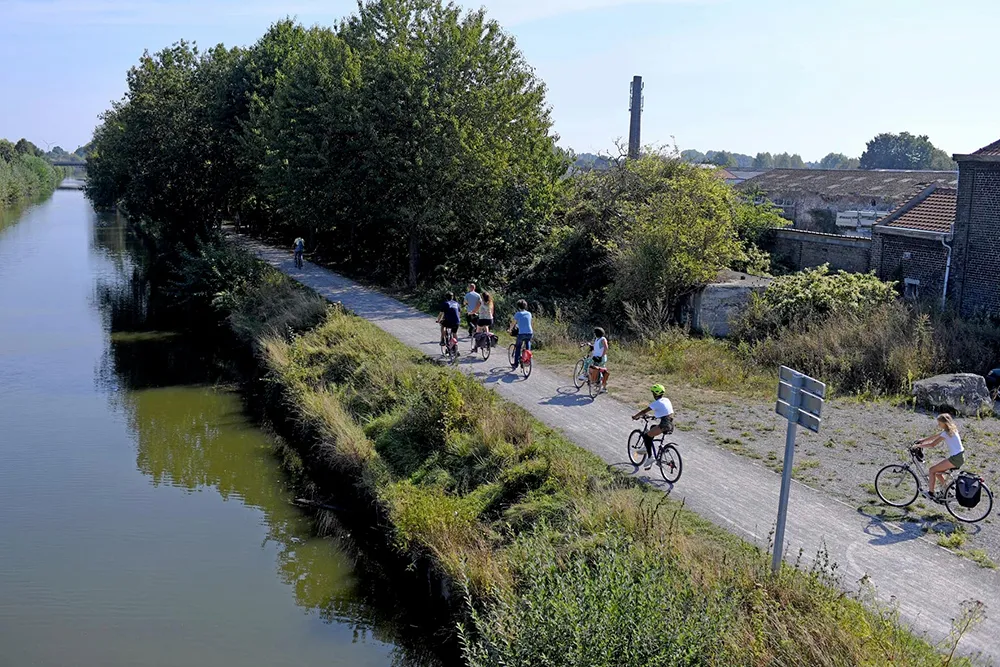
That is why the Eurometropolis Blue Park was established. “There are no fewer than 5,440 kilometres of waterways in our region, of which 300 are navigable. They help create an attractive open space that brings people together across borders. We therefore work with our local authority partners and technical experts to identify solutions to shared problems. We also work to make the Blue Park visible in practical terms,” Delhuvenne explains.
For example, the entire area was mapped in collaboration with knowledge institutions. “We also launched the Blue Loop, a 90-kilometre cycling route along waterways that can be completed in one or two days and follows towpaths along the main navigable waterways: the Scheldt, the Lys, the Deûle, the Bossuit-Kortrijk Canal, the Spiere Canal and the Roubaix Canal.” This tourist route is one of the Eurometropolis’s most tangible achievements.
Short-term Erasmus programme
A second area where progress has been made is consultation between local politicians. The Eurometropolis Agency brings together the mayors and aldermen of the 23 municipalities along the French-Belgian border in person twice a year and also organises online meetings. Loïc Delhuvenne said: “These local authorities do not talk to each other enough. We want to encourage the exchange of information. That way, they can hear about each other’s spatial development plans or share experiences on issues such as waste or water. Through these meetings, we want to establish a permanent dialogue within and about the entire region.”
There have also been cross-border contacts in education for some time. One of the most recent projects in the pipeline is the creation of an ‘Erasmus Eurometropolitan’ programme. “The EU has selected us to develop a short-term Erasmus programme for students looking to gain international experience. Together with educational institutions such as Howest, Vives, UCLouvain Tournai and Sciences Po Lille, we are considering which course might be suitable. Ideally, we will find a subject offered at several universities of applied sciences, so that students can get to know the whole region better. Discussions are ongoing, and we hope to have everything in place by 2026,” concludes Loïc Delhuvenne.
Question about this story? Ask your question
Keep following this
Get an email when a new story is published. No account needed.
- SubjectGeneral







