




Cycle leasing shifts up a gear
Tekst Bavo BoutsenBeeld Ellio, Callant

The number of people leasing a bike through their employer has surged in recent years. This has not only sent bike sales soaring, but also prompted leasing companies and insurers to get in on the act. “Make sure you have a broad HR policy that puts cycling mobility firmly in the spotlight,” advise industry experts.
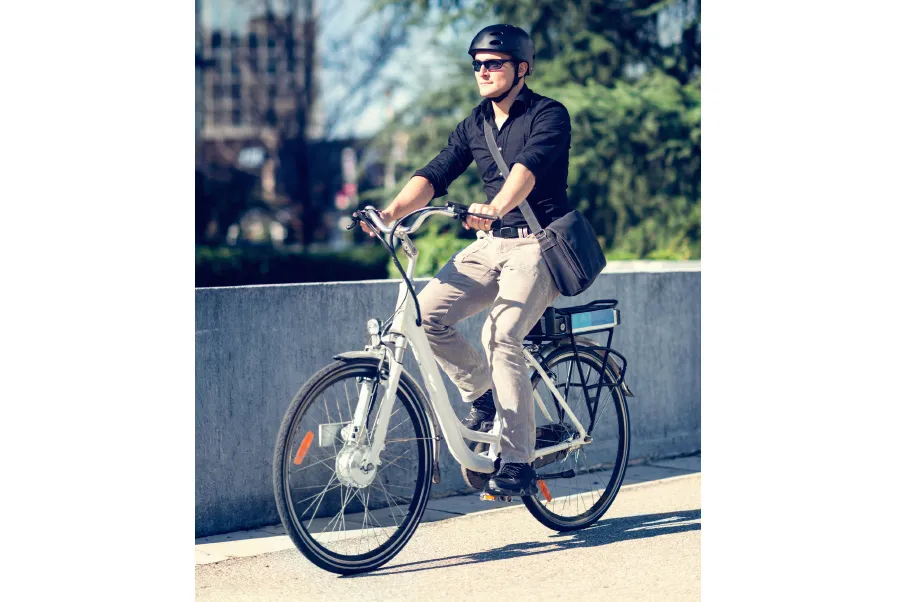
One finding crops up in every mobility survey: more and more people are cycling to and from work. This is, of course, partly down to the rise of the e-bike. “What stands out in particular is that people are cycling further. One in five Flemish bike commuters now covers more than 30 kilometres a day,” says Marine De Mey of Pro Velo, an organisation that aims to make cycling more accessible in our country.
Another important factor is the regulatory framework, which provides a range of incentives for two-wheelers. These include the mobility budget, the changing landscape around company cars and the cycle mileage allowance, which has been compulsory for all employees who cycle to work since May 2023.
A win-win
“Our research also shows that more and more people are leasing a bike through their employer,” De Mey continues. “This means that part of their gross salary is made flexible. The budget freed up can then be spent on a bike,” explains Charlotte Thijs, mobility expert at social secretariat Acerta. “The arrangement benefits everyone. For employees, it is a way to spread the cost of buying a bike at a favourable rate and receive a cycle mileage allowance. For employers, it is a budget-neutral measure that makes them more attractive at a time of labour shortages.”
Employers wishing to offer this model can choose to buy a fleet of bikes themselves. “In practice, however, they more often work with leasing companies. The main advantage is that these deals always come with an insurance package. The company can also return the bikes at the end of the lease, although employees can buy their own bike themselves for its residual value,” Thijs adds.
Insurance broker Callant launched the first-ever comprehensive bike insurance policy in our country. “Both companies that provide bikes to their employees and leasing companies can come to us. The customer chooses which cover to include, with theft as standard and accidental damage and cycle assistance as optional extras,” says Toon Cochez, Cycle Insurance Manager at Callant. “Premiums are calculated based on the insured value, fleet size and type of bike.”
A growing market has its growing pains
Bike leasing is on the rise. “As we have seen such a sharp increase in enquiries, we now have a dedicated team of lawyers focused solely on mobility-related questions,” says Charlotte Thijs of Acerta. “There are many of these questions, because changing gross salary arrangements naturally has consequences. Salary is linked to a number of derived entitlements, such as allowances and the end-of-year bonus. That is why we aim to provide companies with as much information and support as possible.”
Bike manufacturers continue to see demand for two-wheelers rise. “We currently sell around 60 per cent of our bikes to leasing companies. This is certainly an important part of our growth story,” says Jorrit Heidbuchel, CEO and co-founder of Ellio, a Belgian start-up that has been developing and selling speed pedelecs since 2020, focusing on commuting.
The flipside is that several bike manufacturers have run into difficulties. The story of the Dutch company VanMoof, once seen as the undisputed rising star of the e-bike world but forced to file for bankruptcy at the start of the summer, is a case in point.
Only the beginning
“By focusing more on after-sales service and deliberately choosing a hybrid sales model that includes physical outlets, we are working to avoid operational difficulties. Delivery now takes less than four weeks,” says Jorrit Heidbuchel. “Despite the difficulties faced by some of our peers, we still believe in the potential of cycling for commuting. This is only the beginning.”
According to Heidbuchel, companies are the main enablers of this trend. “My strongest advice is to make sure you have a broad HR policy that puts cycling mobility firmly in the spotlight.” Marine De Mey of Pro Velo agrees: “Take a look at your entire cycling policy and recognise that this is a long-term commitment. Also listen to the concerns of cyclists within the company. They are your strongest ambassadors and know better than anyone what is needed.”
Vraag over dit verhaal? Stel je vraag
Blijf dit volgen
Bij een nieuw verhaal krijg je een e-mail. Geen account nodig.
- ThemaTransforming business mobility
- OnderwerpGeneral







