




Commercial property is becoming more sustainable
“See the renovation obligation as an opportunity”
Since 1 January 2022, non-residential buildings have been subject to a renovation obligation. This means that anyone who becomes the owner, holder of a right of superficies or emphyteutic lessee of an older commercial building is now required to make it energy-efficient within five years. “That is good for both the environment and the company. Alongside a number of financial benefits, it also helps create a better working environment for employees,” says Siska Dejonghe of Dewaele Vastgoed’s commercial property division.
Flanders has a severely outdated building stock, and if we are to achieve climate neutrality by 2050, the pace of renovation needs to pick up. The Flemish Government has therefore introduced a renovation obligation, which requires new commercial buildings to meet a minimum energy performance level. Roof insulation must have a minimum R-value of 0.75 m²K/W, high-performance glazing must be installed, and cooling and heating systems more than 15 years old must be replaced within five years.
Siska Dejonghe: “Both large and small non-residential buildings must comply with these new measures. What’s more, these rules were tightened on 1 January 2023, and large non-residential buildings must now obtain at least 5% of their energy from renewable sources. An EPC for large non-residential buildings is also now required. And it is precisely this EPC rating that is causing owners and employers a great deal of concern: how much does it actually cost to make a commercial building energy-efficient?”

More than a workplace
To answer that question, Dewaele Vastgoed has developed a tool that maps out all the costs involved in a renovation. “Setle was originally designed for private individuals, but it can also be used perfectly well to calculate the cost of renovating a commercial building. It is a welcome tool for many companies that apply ESG criteria and seek to balance profitability, social interests and the environment,” Siska continues. “And as a lifelong partner in work and business, we want to ensure companies are not caught out, so we offer them this tool free of charge.”
Today, many factors affect a building’s price. Its location, for example, continues to have a major impact. “Bear in mind, too, that employees do not want to waste time commuting unnecessarily. Offices are now places where colleagues meet, brainstorm and find inspiration, but also get together to enjoy a healthy lunch, exercise and unwind,” Siska explains.
A leading project
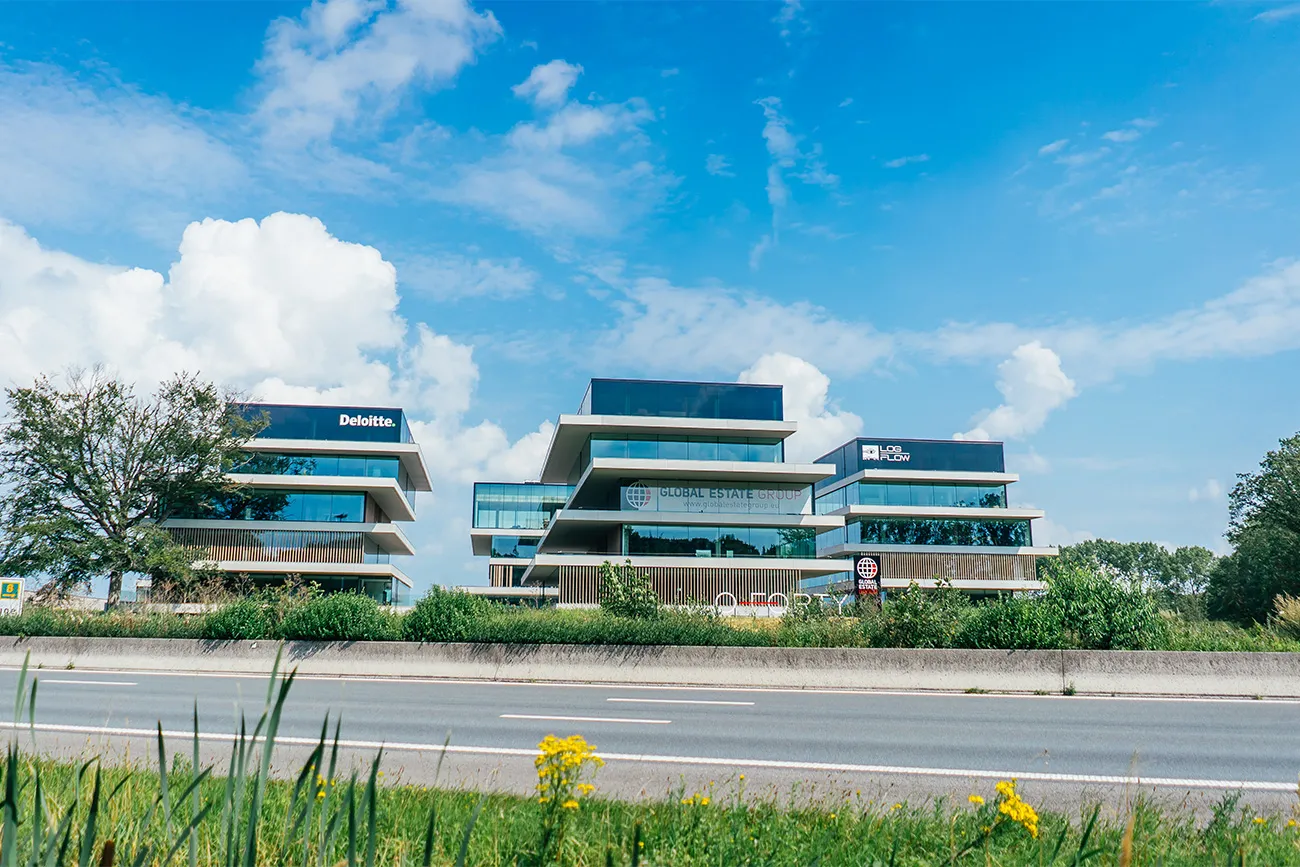
One example of an office building that already meets these expectations is O-Forty in Oostkamp. “This is a leading project, and its success shows that the decentralisation of large companies’ offices is continuing. Companies are increasingly looking for local hubs that are easy for their employees to reach. With its prime location on the E40, O-Forty is ideally placed to meet that need. A sports centre and a padel court have also been built, where employees can take group classes.”
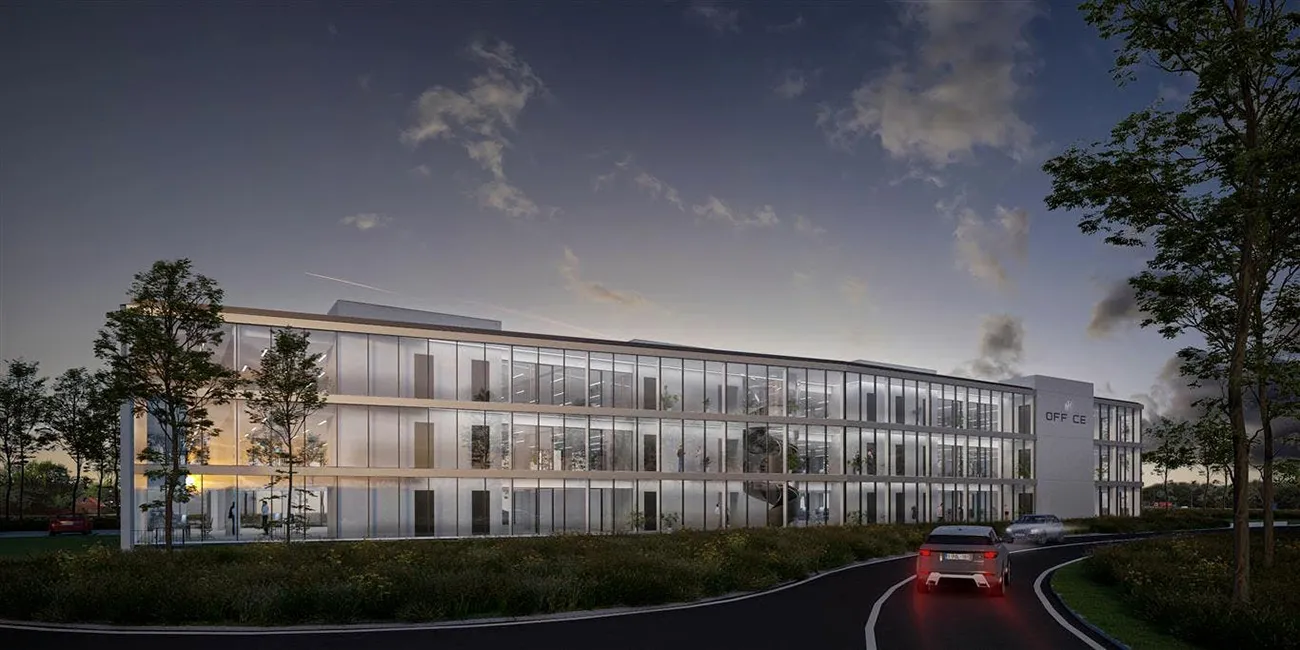
The first three towers at O-Forty are now fully occupied, and work has begun on the second phase, which will see three more office blocks built. This development by Global Estate Group is expected to fill up quickly. “But O-Forty is not the only example of innovative office construction. Kortrijk has ‘Kortrijk Business Park’, Lokeren has ‘Office Park’, and Ghent has ‘Alides’ and ‘Forum’, all future-focused office complexes. The new way of working can flourish in these buildings too, with a strong emphasis on sustainability and circularity,” concludes Siska Dejonghe.
Question about this story? Ask your question
Companies in this story

Keep following this
Get an email when a new story is published. No account needed.
- ThemeBuilding and using business premises
- SubjectGeneral
- CompanyDewaele







