




Coffee remains a workplace essential
Text Bavo BoutsenImage De Witte Zwaan, Miko Coffee Service
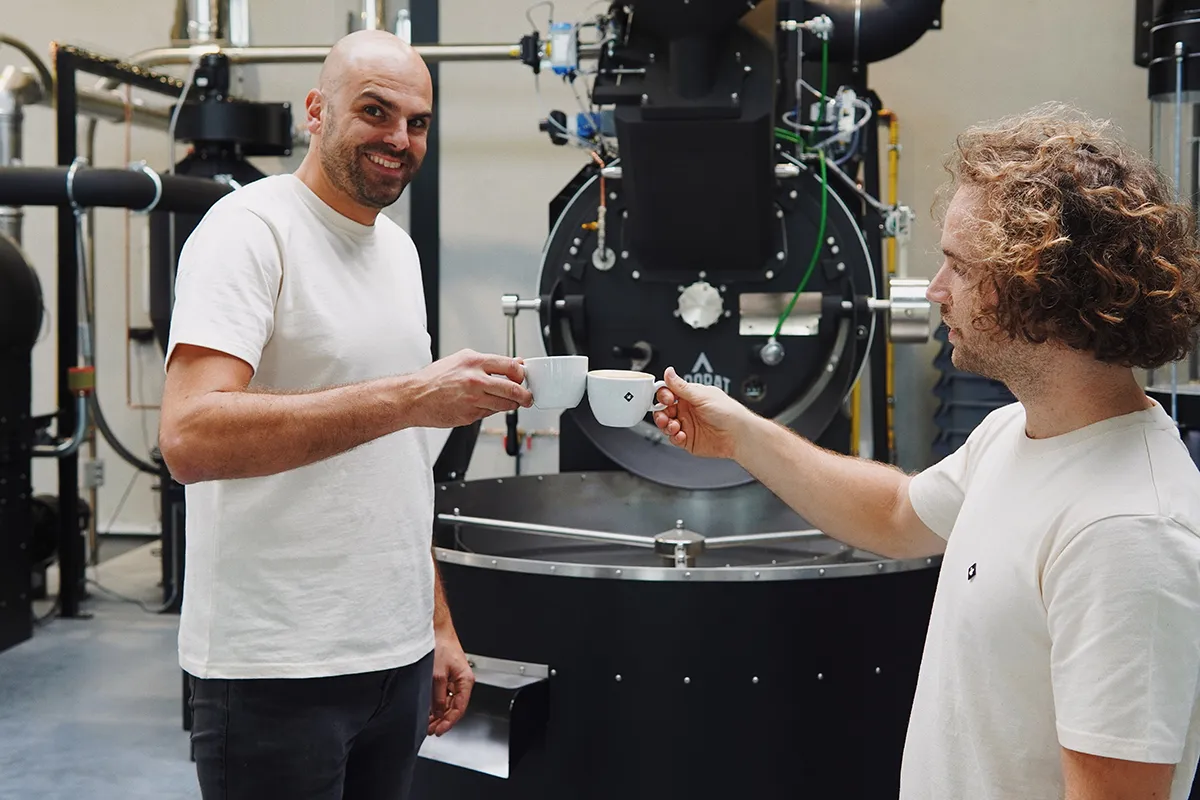
“People will always choose quality and will continue to be willing to pay for it”
Few things are as closely linked as coffee and the workplace. In fact, in recent years there has been growing recognition that coffee at work is about much more than just a hot drink. That is precisely why coffee suppliers are optimistic about the future of office coffee, despite historically high coffee prices. “It has a direct impact on wellbeing at work.”
Although working from home has become commonplace since the coronavirus pandemic, companies are investing more than ever in quality facilities in the workplace. Good coffee is one result of this. Coffee suppliers have mainly diversified and expanded their offering. “There is an upgrade underway in terms of quality. Machines using instant or freeze-dried coffee are becoming increasingly rare. More and more people are opting for bean-to-cup machines,” says Kim Van Rossem, who is responsible for the office and hospitality markets in Belgium at Miko Coffee Service. “We can see that people drink better-quality coffee at home and expect the same at work.”
“We have seen, for example, that when an employer provides only low-quality coffee, colleagues often take the initiative to pool their money so they can have better, higher-quality coffee. This is certainly true of younger employees, who generally place greater importance on quality than quantity,” adds Pieter-Jan Goemaere. He is co-owner of De Witte Zwaan, a smaller coffee supplier in Eeklo that specifically targets smaller SMEs.
The coffee-shop experience
This boost in quality has generally also led to more conscious use of the coffee beans that go into these machines. “Sustainability and fair prices are hot topics. In the office market, certified coffee already accounts for 50 per cent of our business, and we expect that share to continue to grow,” says Van Rossem, a view wholeheartedly shared by Goemaere: “Quality and the story behind fair-trade coffee are especially important. People today want to know where their coffee comes from and how it is processed.”
The physical space occupied by coffee machines at work is also changing. “More and more companies are opting for dedicated coffee corners instead of having lots of machines dotted around the workplace. In large companies, there is an increasing trend towards concepts with an in-house barista, bringing the feel of a coffee shop into the workplace,” says Kim Van Rossem. “Above all, companies want to offer a moment of calm and a boost. It brings people together and motivates them, and therefore has a direct impact on wellbeing at work,” adds Goemaere.
Prices at historic highs
It may seem obvious that coffee occupies an important place at work, both literally and figuratively, but that takes on added significance when we factor in the cost. The historically high prices of raw materials in recent years, and especially in recent months, have sent coffee prices to unprecedented levels. “Since November last year, we have seen increases of up to 50 per cent in the cost of raw materials, partly due to speculation in the market,” says Pieter-Jan Goemaere.
Moreover, there are currently no signs that prices will fall again any time soon. Kim Van Rossem says: “Climate change means many coffee plantations are having to move to higher ground. This makes mechanical harvesting more difficult, so picking is once again being done by hand, which is of course more expensive. Meanwhile, demand for coffee in Asia continues to rise. That is also pushing up prices.”
Coffee suppliers have no choice but to pass some of these price increases on to their customers. Even so, this has not yet led to a reduction in the number of workplaces offering free coffee. “Business leaders and facilities managers are well aware that many employees directly associate coffee with wellbeing, and that is not something they are likely to cut back on in the current climate,” explains Van Rossem.
De Witte Zwaan echoes that sentiment. “I don’t think the price per cup outweighs what would happen if you took away your employees’ quality coffee today, because that would, so to speak, spark a revolt. People will always choose quality and will continue to be willing to pay for it. I’m 100 per cent convinced of that,” concludes Goemaere.
Question about this story? Ask your question
Keep following this
Get an email when a new story is published. No account needed.
- SubjectGeneral







