




Businesses are increasingly looking for an environment in which to grow and co-create
Text Christina Van GeelImage Leiedal
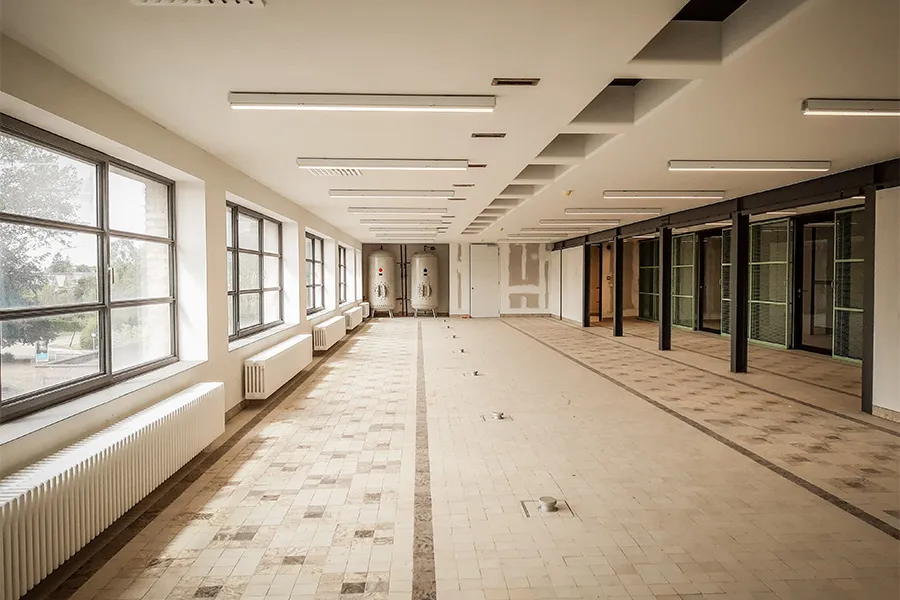
Redevelopment creates a unique, sustainable environment for SMEs
Space is scarce in Flanders. Demand for space to do business exceeds supply. This is also the case in the Kortrijk region, both for SMEs and for companies seeking larger plots on regional business parks. The intermunicipal organisation Leiedal, which operates as an area developer in South West Flanders, supports local authorities and businesses in the region’s sustainable transition.
“The need for space to do business is unlikely to diminish any time soon,” says managing director Filip Vanhaverbeke. “But the requests Leiedal receives are becoming more diverse. Companies, for example, are attaching greater importance to sustainability or are looking not for a standalone plot, but rather for an environment in which they can grow and co-create.”
This inspires Leiedal to develop creative, innovative projects in which sustainability, circularity, stacking business premises, multiple use and shared facilities all play an important role. In this context, Leiedal aims to develop Blauwpoort in Waregem and Evolis II in Harelbeke through a support programme for entrepreneurs that sets out a number of key sustainability principles. In its ambitions for spatial neutrality, Leiedal also continues to focus primarily on reuse, including of buildings and sites with heritage value, and the redevelopment of former business sites.
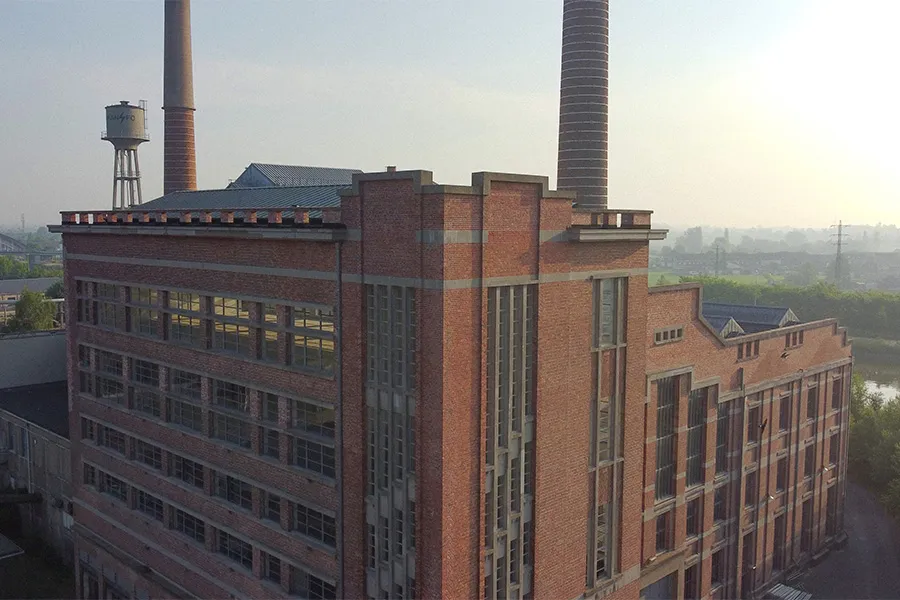
Doing business in a unique heritage setting
Since 2002, the public partners, Zwevegem Municipality, West Flanders Province and Leiedal, have worked closely together to restore the former Transfo power station in Zwevegem and give it a new, multifunctional purpose. The turbine hall, boiler house, diving tank and mechanics’ building are among the key developments that have breathed new life into the Transfo site. Adventure, business and culture are the pillars of Transfo.
Leiedal renovated the Nieuw Transfo building and is now selling the offices to ambitious, creative entrepreneurs looking to base their business in a unique heritage setting. The quality of the renovation is exceptional, making the Transfo site an impressive ensemble with national and international appeal.
“The Nieuw Transfo building provides a unique, inspiring setting for creative and innovative entrepreneurs: architects, design studios, marketing and event agencies, digital experts, energy specialists, you name it,” says Stijn Vannieuwenborg, project manager for strategic and redevelopment projects at Leiedal. Construction company Meuleman carried out the extensive renovation, under the supervision of Sileghem & Partners and Coussée Goris Huyghe architecten.
“The spaces are being sold floor by floor and range from 320 to 400 square metres net. The building has five such floors. The top floor offers a phenomenal view of the entire surrounding area. The ground floor will have a multifunctional purpose, providing space for reception, meetings and collaboration. Leiedal has developed an inspiring office layout concept for each floor. Wherever possible, heritage features have been incorporated into the interiors to preserve a spark of the building’s monumental past,” says Stijn Vannieuwenborg.
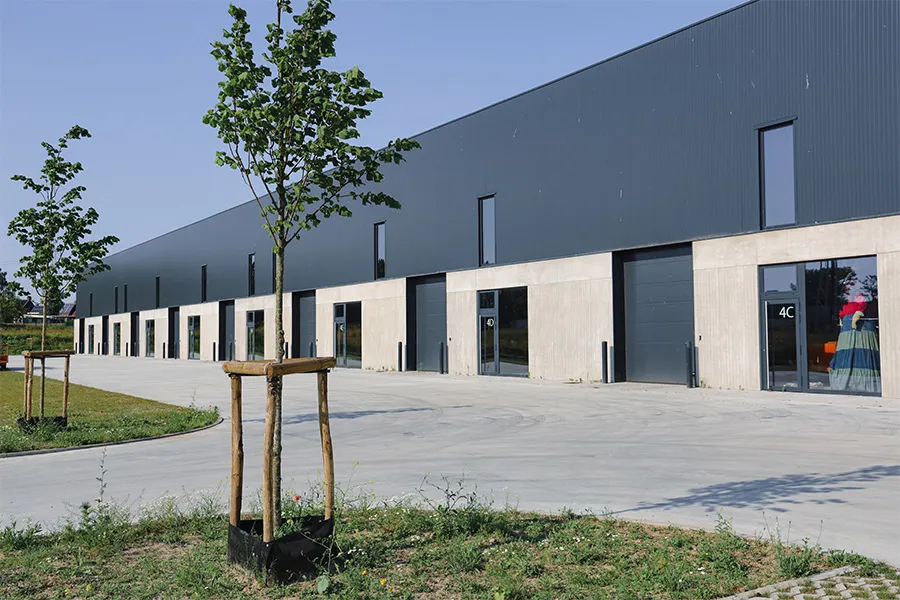
A red carpet for entrepreneurship
In Lendelede, Leiedal renovated an old factory building to create a contemporary business centre. The former Nelca carpet factory went bankrupt fifteen years ago, and a major fire broke out in 2011. Much of the site has since been remediated and redeveloped to a high standard. Almost all the plots have been sold. The Den Tuft business centre is the final part of the site that Leiedal is putting on the market.
Den Tuft is a business centre comprising eleven units ranging in size from 231 to 1,231 square metres. The name refers to tufting, a method of producing deep-pile textiles, including wall-to-wall carpeting, the former Nelca factory’s speciality.
It is a pioneer in renewable energy and the sharing economy for SME units. Leiedal is having around 90 solar panels installed on the building’s roof. The system will power shared facilities, including an electric forklift and six charging points for electric cars. Surplus energy will be stored in two batteries.
“Owners will be able to use these facilities,” says project manager Stijn Vannieuwenborg. “This means small businesses do not each have to invest in this kind of infrastructure, which is a major advantage. The project therefore sits at the intersection of renewable energy and circularity. From next spring, not only businesses but also local residents will be able to charge their cars on the site.”
Question about this story? Ask your question
Keep following this
Get an email when a new story is published. No account needed.
- ThemeBuilding and using business premises
- SubjectGeneral







