




“A new electric car is still too expensive for most consumers”
Text Björn CrulImage Joren De Weerdt
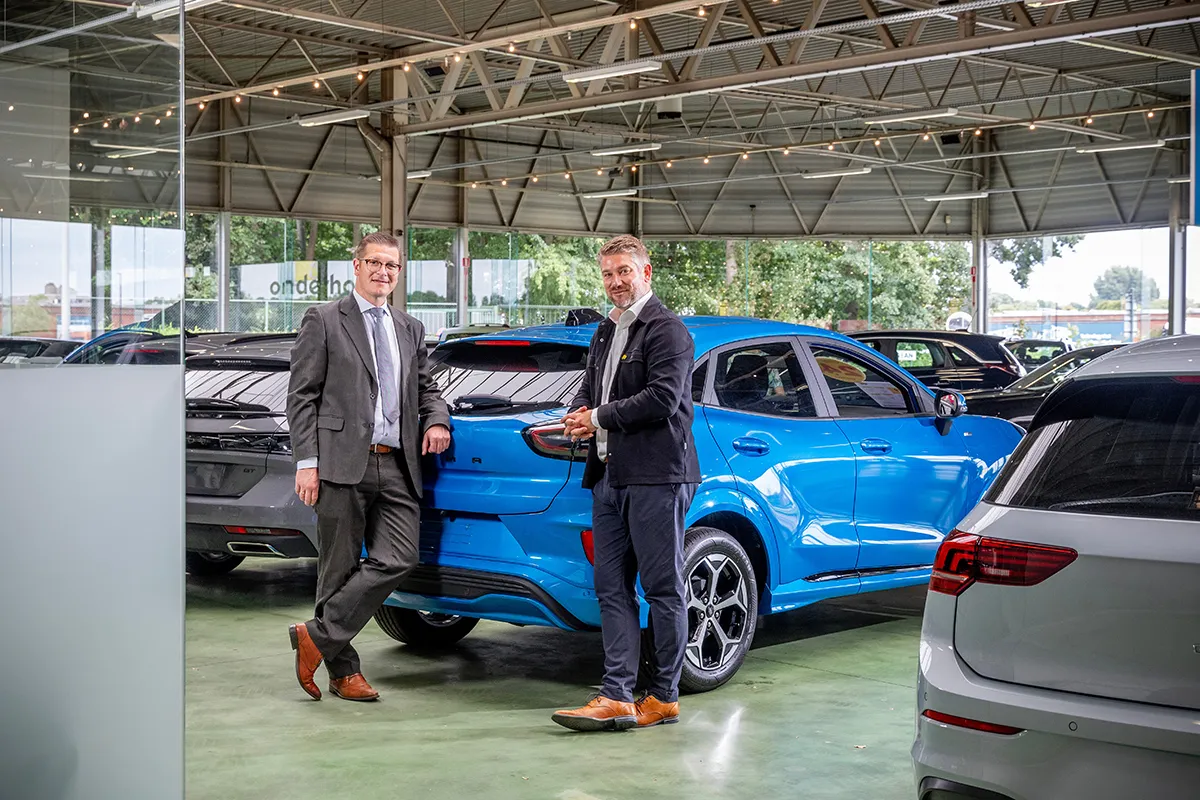
Koen Claesen and Matthias Gommeren on developments in the garage sector
The world of garages and car dealerships has undergone major change in recent years. On the one hand, carmakers themselves are trying to gain more control over sales. On the other, the steady rise of electric driving presents a challenge: investing in the new equipment and expertise needed to service these cars. A wave of consolidation in the sector is creating ever-larger garage groups, while foreign players have also set their sights on the Belgian market. What are the challenges today, and what does the future hold for car sales? We brought together Koen Claesen, CEO of Van Mossel Automotive Group België en Luxemburg, and Matthias Gommeren, CEO of Cardoen, for an open conversation.
Car sales remain sensitive to economic conditions. The number of newly registered vehicles fell by almost 10% between January and the end of July 2025. But the private sales market is growing again this year, according to figures from automotive federation Febiac. What has your experience been?
Koen Claesen: Our group represents 32 car brands in Belgium across more than 150 locations. We sell around 35,000 new cars and 12,000 used cars a year. 2025 has been a challenging year. We got off to a good start thanks to the Autosalon, which was a success both at Heizel and in our showrooms. But it is still a weekly struggle to hit our budgeted order targets. We are also seeing private buyers become more active. To illustrate: last year, the B2B to B2C split was 70-30; this year it is 60-40. The used-car segment is growing strongly, up 20%. And that is no coincidence: new cars have become significantly more expensive over the past three to four years.
Matthias Gommeren: Cardoen has 16 branches and remains primarily a car supermarket for private customers. B2B sales account for barely 5% of our revenue. And because consumers look for the best deal when the economy is uncertain, we are doing well this year: so far, we have recorded double-digit growth. We are also seeing growing interest in refurbished cars. We have our own department that reconditions used cars, bringing them as close as possible to their original quality. The quality and warranty we stand behind are leading more and more people to choose these cars.
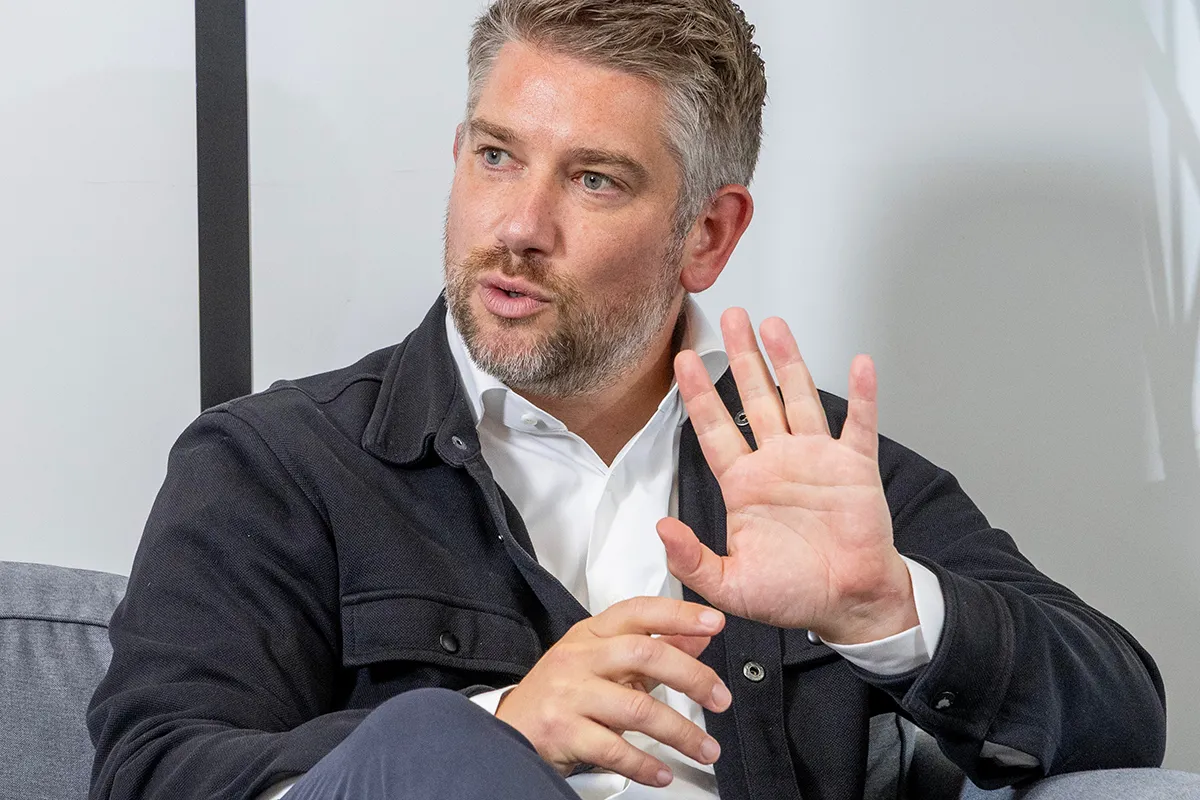
Electric driving is on the rise. Last year, the Flemish government offered a grant of up to 40,000 euros to stimulate private sales of electric cars. But it was scrapped early, at the end of 2024. Did that have a lasting impact on sales?
Koen Claesen: I don’t think so. There are no reliable figures, but I suspect few private buyers were persuaded to go electric by the grant. Most consumers still choose a petrol car, simply because it is cheaper. And the range of smaller electric cars remains a psychological barrier. I do think we are gradually reaching a turning point, though. The KIA EV3 and Renault 5 E-Tech, for example, have a range of 350 to 400 km. Recently, we have seen private customers account for half of sales of these two models.
Matthias Gommeren: We too have noticed more customers asking about electric cars for some time now. You are increasingly likely to find them in our showroom. But new models are still quite expensive. That is why interest in compact second-hand EVs is growing. Naturally, this comes with questions about battery quality. We test the batteries in-house and issue a certificate. I have found that the results are encouraging, even for cars that are four to five years old. We recently had a Hyundai Ioniq that still had 100% battery capacity after five years.
Yet demand for second-hand electric cars in Belgium remains fairly limited, while the supply of used electric fleet cars is growing rapidly. What do you think the solution is?
Koen Claesen: We need to align the B2B and B2C markets much better. Used Car Centers are currently left with large stocks of EVs. The problem lies in the high residual values of vehicles that business owners have driven for three or four years: there are no buyers for an expensive second-hand Audi or Tesla. I am glad that at Van Mossel we took a forward-looking approach and estimated the residual value of these electric cars low from the outset. But clearly, something will have to be done to stimulate this market. Personally, I think a tax incentive from the government is essential. To achieve a lasting effect, we could consider a system like the housing bonus, with the deduction spread over several years. That would get these second-hand EVs sold and keep them on the road, which is ultimately the best way to speed up the greening of the private car fleet.
Matthias Gommeren: At present, we are experiencing few problems with second-hand EVs. We continually adjust our range to customer demand and only buy in when there is a need. As part of the international Aramis group, we can also easily pool and exchange cars. That said, I agree with Koen that something needs to be done to stimulate this market. Electrification is the future, and all European brands are working hard on it.
Let’s talk about your sector. The automotive retail sector has seen a clear wave of consolidation in recent years. Dutch-founded Van Mossel Automotive Group was one of the driving forces behind it. Do you see further opportunities to grow in terms of the number of locations?
Koen Claesen: I think our network in Flanders is nearly complete: we have a dealership in every major city, a body shop in each of the larger regions, and our leasing companies give us sufficient market coverage. I see further opportunities only in a few places in Wallonia. The aim should be to service and repair all our leased cars there ourselves as well, so that we can guarantee customers the best service.
Matthias Gommeren: With 11 branches in Flanders and 5 in Wallonia, we have good coverage. Each location has its own body shop and after-sales service department. There may be room for another location in the south of the country, but Walloon consumers are more willing to travel further to buy a car. Our main aim is to grow in a controlled way, focusing on both online sales and showrooms.
How important is it to maintain an extensive showroom network? Or will cars become a product that we simply buy online?
Matthias Gommeren: Cardoen has taken an omnichannel approach for years. We can draw on the experience of the Aramis group, which, for example, has retail outlets in France but sells exclusively online there. Today, 10% of our cars are sold online without the customer ever setting foot in the showroom. They buy their car online or via a video call, and have it delivered to their home. Even used cars sell this way. We are also very transparent about the vehicle’s condition, and show photos of any imperfections on our website.
Koen Claesen: Customers looking for a second-hand car usually make their choice online, but still want to check that it is the right car. I don’t see online sales of new cars taking off for now. Our customers want to find out about the options, configure their car and take a test drive. After all, it is an emotional purchase. After a house, a car is the most expensive purchase most people make. 95% of our transactions still take place in the showroom, where we often also make an offer on the customer’s current car. And we want to see that car ourselves.
Finally, electric vehicles require less maintenance. What does this mean for a garage group’s business model in the long term?
Koen Claesen: In the past, oil was the gold of the workshop. That is changing, of course, as electric cars do not need oil and require much less maintenance. But the transition is gradual: Belgium now has 500,000 EVs in a total fleet of 6 million cars. What we are seeing, however, is an increase in the average cost of body repairs: every component in an electric car is much more expensive. And the more technology a car contains, the greater our responsibility to ensure that the driver leaves the workshop in a 100% safe car. But service will always be crucial, whatever the vehicle’s powertrain, if you want the customer to buy their next car from your garage too.
Matthias Gommeren: I completely agree: EVs require different maintenance, and there are major differences from one brand to another. Take our reconditioning centre, where we refurbish 300 cars every week: everyone there needs the right know-how to get the cars back into shape. Training our staff is therefore crucial, and we need to keep investing in it.
Question about this story? Ask your question
Keep following this
Get an email when a new story is published. No account needed.
- SubjectGeneral







