




10 years of Formula E: the innovation that gets too little attention
Text and images Bavo Boutsen
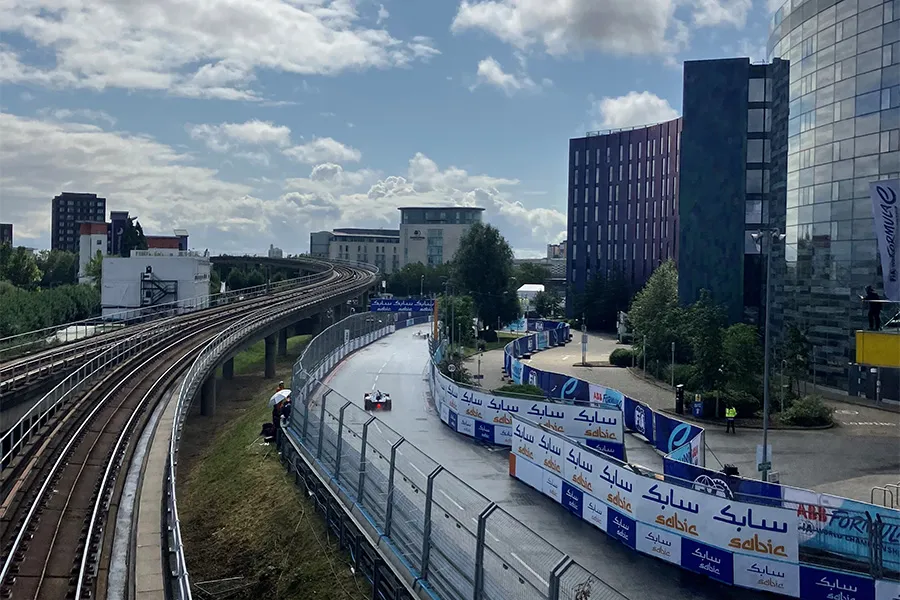
Formula E, the world's first fully electric motor racing series, celebrates its 10th anniversary next year. This first decade has undoubtedly accelerated the electrification of the vehicle fleet, both on and off the racetrack. But the sport's failure to break through with the wider public could put the brakes on this innovation engine. Our editor went to the London ePrix at the end of July to see for themselves.
Formula E, the first fully electric motor racing series, is held on street circuits in cities around the world. Insiders say it should be seen above all as an entertaining showcase for state-of-the-art technology in electric cars. “The sport is a platform that shows us what is possible in the future,” says Julia Pallé, sustainability director of Formula E.
“It takes account of the principles of sustainability and the circular economy. Every car component is designed with the end of its life cycle in mind,” Pallé continues. “For example, the tyres are made partly from recycled rubber, and we use plastic from older racing cars to build the current generation. All the electricity consumed by Formula E also comes from renewable sources. That is why, from the day it was founded, we have been the first sport to hold a net zero certificate.”
Race-to-road transfer
By creating a hyper-competitive environment that pushes carmakers to their limits, Formula E drives technological innovation at a breathtaking pace. What is more, and this is essential, the regulations are designed to ensure that all these innovations also contribute to the development of “ordinary” electric cars.
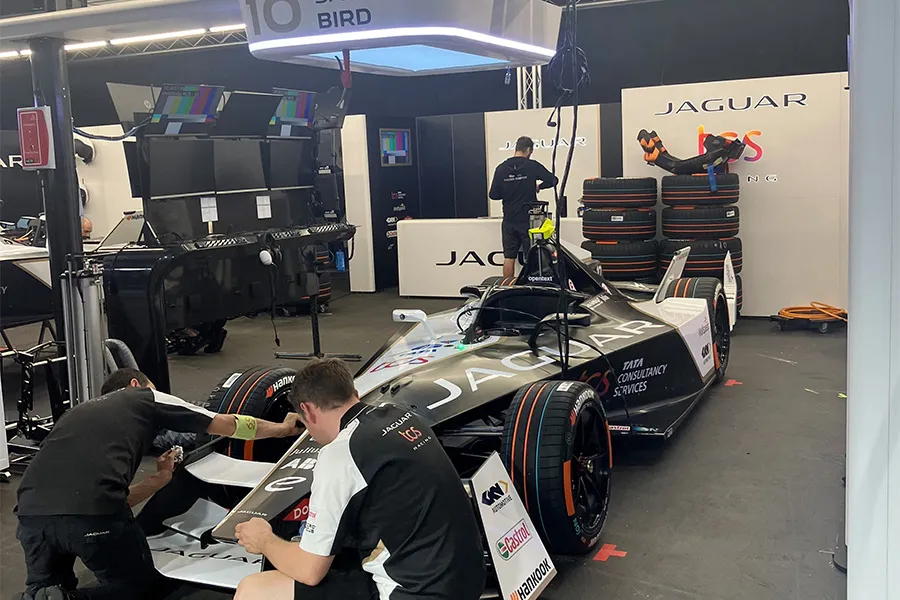
All competing teams must use cars with the same chassis, battery and tyres. The amount of energy available in each race is also limited. “That is why we are constantly looking for new ways to convert the available energy into extra speed as efficiently as possible,” says Jack Lambert, Research & Innovation Manager at Jaguar TCS Racing, the team that finished second in this year's Formula E constructors' championship.
“That is fundamentally different from Formula 1, where teams invest most of their resources in seeking aerodynamic gains. Those investments cannot be transferred to everyday life off the circuit.”
Major advances in batteries and software
The results of this innovation race are impressive. Alongside the cars' top speed, which has risen to almost 300 km/h, the evolution of the battery stands out in particular. In the early years, Formula E drivers had to change cars halfway through a race because the battery had run out. Today, they reach higher speeds in one and the same car. “The championship is almost unrecognisable. In 2014, we hardly knew what we were doing,” says Sam Bird, who has competed in the series since its early days.
Thanks to race-to-road technology transfer, we are already reaping the benefits of these innovations in ordinary cars. “The biggest advances have been in the software the cars run on,” says our compatriot Stoffel Vandoorne, who became Formula E world champion in 2022. “But it goes much further than that. Nearly all the electric vehicles currently rolling off production lines are equipped with a silicon carbide (SiC) inverter. It was first designed in Formula E,” adds James Barclay, Team Principal of Jaguar TCS Racing.
Regenerative braking
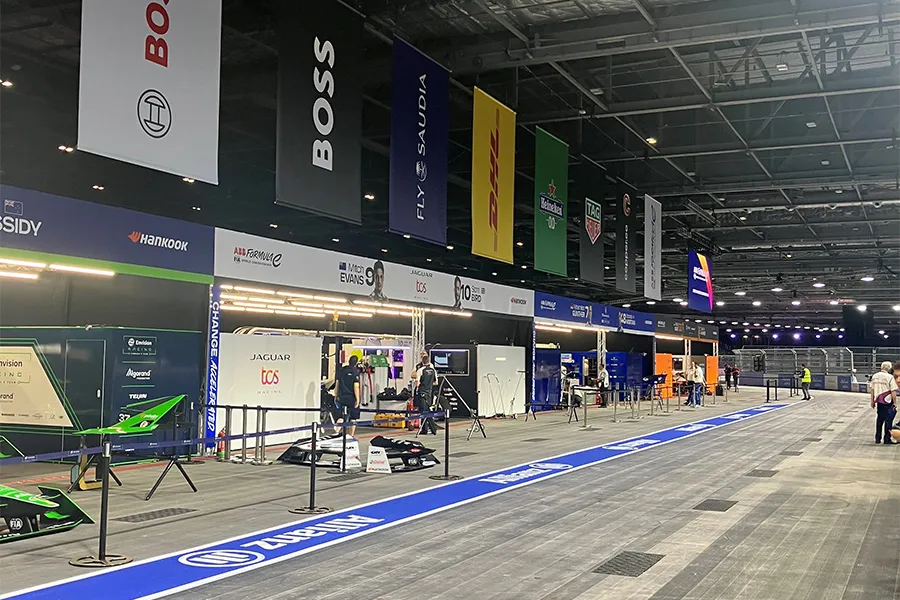
The most impressive and impactful innovation arrived at the start of this season, with the introduction of the Gen3 racing car. It is equipped with regenerative braking technology, which allows the car to reuse some of the braking force generated during a race. This enables the car to generate 40 to 50 per cent of the energy it needs itself, meaning it does not have to use conventional hydraulic rear brakes.
“These racing cars are therefore partly generators on wheels. They start with an amount of energy that is actually too low to get them to the finish. But by producing energy themselves, they make it to the line. In fact, everything in this sport revolves around energy management,” says Barclay. The principle of regenerative braking is already used in many electric and hybrid vehicles. The expectation is that insights from the sport will significantly improve this technology in the coming years.
There are also hopes of creating similar momentum around fast-charging technology. Formula E aims to facilitate this in the coming years by introducing pit stops that allow the batteries to be topped up in around thirty seconds.
Data and cloud technology are key enablers here. All the teams work with major technology companies that make the vast amounts of data collected during each race available to the engineering teams. “That can amount to as much as 3 TerraByte of data per race,” says Varun Kapur of Tata Consultancy Services (TCS), the IT services and consultancy company that works with Jaguar. “We use that data to create a digital twin of both the car and the circuits. This not only improves the quality of simulations for drivers, but ultimately also increases our understanding of how electric cars can tackle challenges in the real world.”
Netflix effect
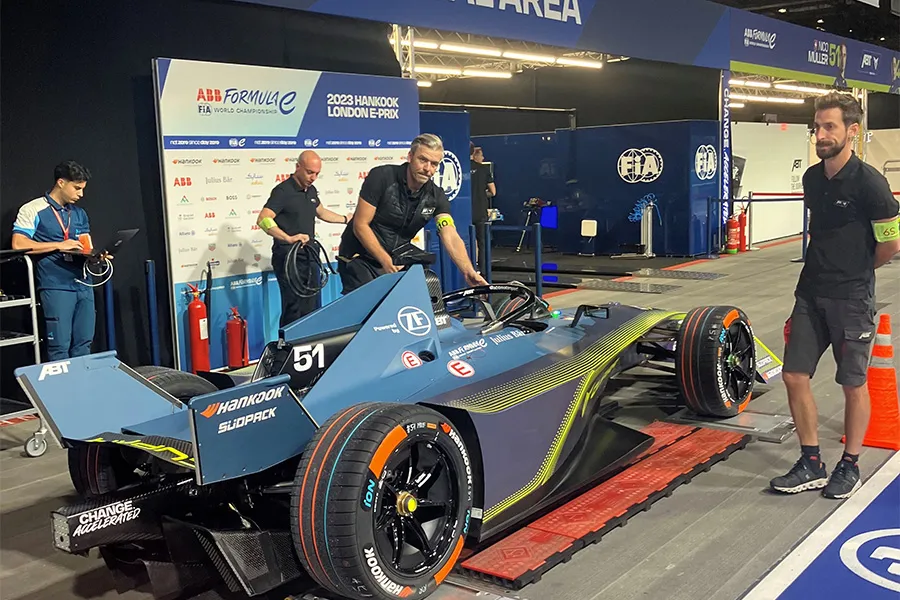
Despite its impact, exciting races, highly talented drivers and inventive machinery, this young branch of motorsport has so far failed to win over the wider public. While spectator numbers at the circuits are rising, the sport has yet to make a major breakthrough in the media. Formula 1, by contrast, has seen a global surge in popularity in recent years, thanks to the successful Netflix series Drive to Survive. This makes it even harder for its electric counterpart to attract fans.
At the same time, this is holding back the sport's ambition to be a global platform for a better, more sustainable future. It also has a direct impact on the make-up of the pit lane. Mercedes, BMW and Audi, all of which previously competed in the sport and are leading EV manufacturers on the road, have since left Formula E. Stoffel Vandoorne, who was crowned world champion in a Mercedes car in 2022, knows this better than anyone. “Because Formula 1 is so popular today, Mercedes decided to focus on it again,” he says.
In practice, that focus can be understood as slowing the shift to electrification. As Formula E holds the exclusive rights to a fully electric racing series until 2039, the traditional pinnacle of motorsport is looking elsewhere for now. F1 is already partly hybrid and plans to increase that share in the coming years. It is also paying closer attention to the potential of synthetic fuels, or e-fuels. But since these fuels are produced using electricity, it is debatable whether this is a desirable development. Finding ways to harness the popularity of Formula E as a catalyst for innovation and electrification seems more important than ever.
Question about this story? Ask your question
Keep following this
Get an email when a new story is published. No account needed.
- ThemeBusiness growth and entrepreneurship in Flanders
- SubjectGeneral







